What should you look for when choosing?
First compare the energy content of equal amounts, then check the ingredients and choose a portion size and pack that suit how you plan to use it.
| What to consider |
What should you check? |
Who should consider this? |
| Energy per equal amount |
Compare kcal per 100 grams on the labels and calculate the figures for the same weighed portion. The Netherlands Nutrition Centre lists 40 kcal per 20 grams of prunes and 65 kcal per 20 grams of raisins. |
If you mainly want to know how much energy your portion provides, compare the same weight in grams. Around 42% of consumers prioritise calories per equal-sized portion. |
| Added sugar |
Read the ingredients list as well as the nutrition table; ‘of which sugars’ is not the same as a measure of added sugar. The Netherlands Nutrition Centre advises having no more than a handful of dried fruit with no added sugar. |
If you want to avoid added sugar, check the ingredients carefully and assess the calories separately. Around 33% of consumers prefer a variety with no added sugar. |
| Portioning and storage |
Decide on the amount in advance and weigh individual pieces if you want to calculate more precisely; the Netherlands Nutrition Centre’s calorie checker uses a weight of 9 grams for one dried apricot. Follow the storage instructions on your pack. |
If you want to take fruit with you or measure it out in advance, consider the shape, packaging and instructions for after opening. Around 25% of consumers prioritise practical use and portioning. |
Dried fruit at Joybuy
This selection includes dried prunes and jujubes; compare the stated energy per 100 grams with the amount you weigh out.
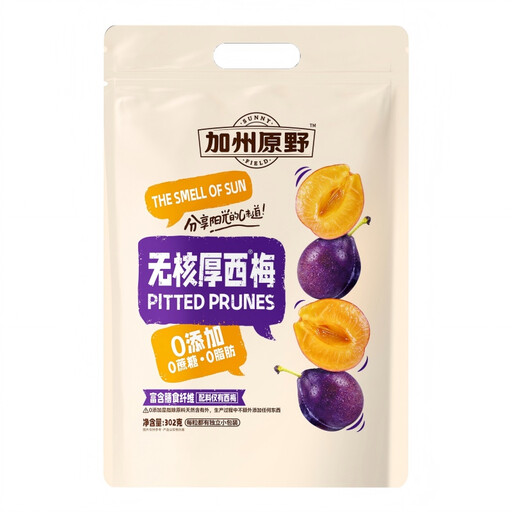 Image unavailable
Jiazhouyuanye Thick Pitted Prunes 302g
A relevant option if you want to assess the energy content of prunes by weight; the product information lists 224 kcal per 100 g.
The ingredients list states 100% prunes. The prunes are individually wrapped; the product information recommends storing them in a cool, dry place and consuming them immediately after opening.
View at Joybuy
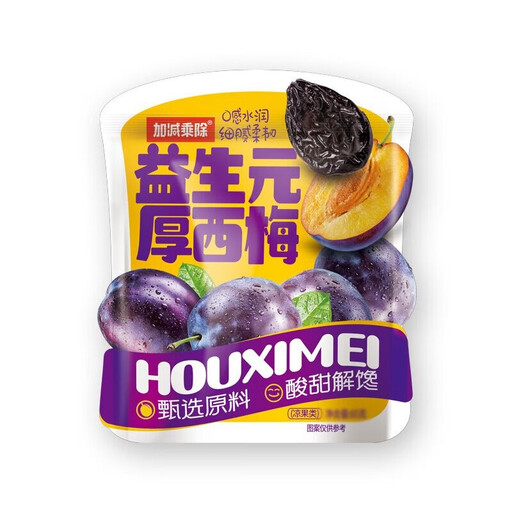 Image unavailable
Jia Jian Cheng Chu Prebiotic Thickened Prunes 65g
A relevant option if you want to assess a ready-to-eat prune snack; the product information lists 214 kcal per 100 g and a pack size of 65 g.
The ingredients list includes fructose syrup and oligofructose. This variety therefore does not have no added sugar.
View at Joybuy
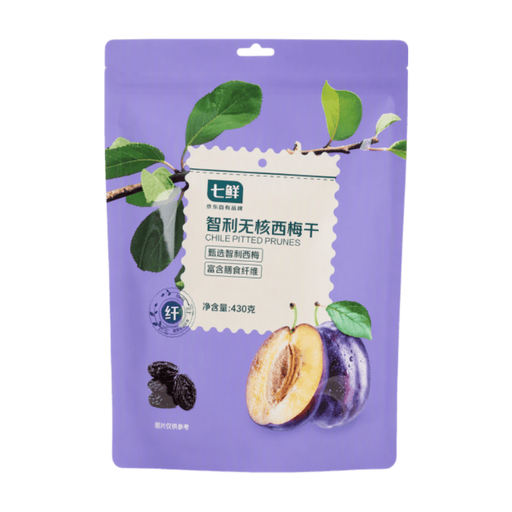 Image unavailable
7FRESH Pitted Prunes 430g
A relevant option if you want to compare the stated nutritional value of prunes; the product table lists 283 kcal per 100 g.
The ingredients list states dried prunes. The pack contains 430 g; the product information recommends storing it in a cool, dry place.
View at Joybuy
 Image unavailable
Haoxiangni Pitted Jujubes 500g
A relevant option if you want to assess the energy content of jujubes by weight; the product information lists 300 kcal per 100 g.
The ingredients list states 100% red jujubes. The product information recommends storing below 15 °C.
View at Joybuy
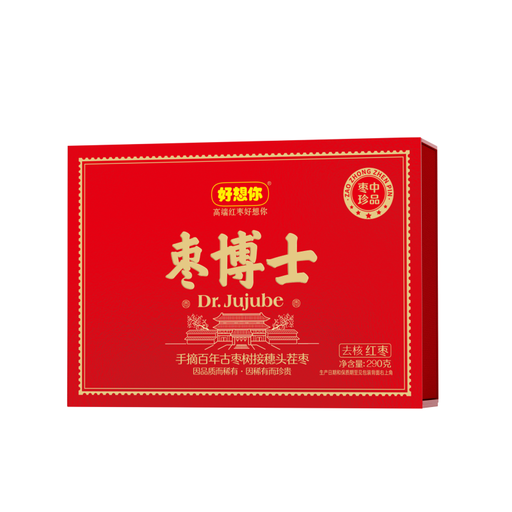 Image unavailable
Haoxiangni Dr.Jujube Premium Grade Pitted Jujubes 290g
A relevant option if you want to compare the stated nutritional value of jujubes; the product information lists 319 kcal per 100 g.
The ingredients list states 100% jujube. The product information recommends consuming the product as soon as possible after opening.
View at Joybuy
Frequently asked questions
Can dried fruit with 40 kcal per portion be called low-calorie?
Not on the basis of that portion figure alone. For the low-calorie nutrition claim on solid foods, the European Commission sets a limit of no more than 40 kcal per 100 grams. So the general figure of 40 kcal per 20 grams of prunes doesn’t show that the product meets this limit.
Is 20 grams a required daily amount?
No. In the Netherlands Nutrition Centre’s calorie checker, 20 grams is a reference portion for prunes and raisins, not a legal limit. The Netherlands Nutrition Centre advises having no more than a handful of dried fruit with no added sugar; weighing it helps you work out how much you’re eating.
How do I calculate the calories in my own portion?
Use the nutritional information on your pack: kcal per 100 grams × the number of grams eaten ÷ 100. Weigh your portion; for example, the general figure for a dried apricot is based on one weighing 9 grams, but your apricots may be a different size.
How should I store an opened pack of dried fruit?
Follow the instructions on the pack of the product you have. For the Jumbo prunes examined, the official product information says to store them in a cool, dry, dark place; this instruction doesn’t provide a general storage period for other types of dried fruit.
What should I look for if I want to avoid sulphites?
Check the ingredients and allergen information on every pack. The Food Allergy Foundation states that sulphites can be used as preservatives and may be present in dried fruit. If fruit is sold unpackaged or loose, ask the retailer for the available allergen information if needed.
What should I do if the product information doesn’t match the packaging?
Before eating the product, check the packaging of the item you received and contact customer services if you have any questions. Albert Heijn and PLUS note that ingredients, nutritional values and allergen information can change, so always refer to the information for the specific variety.


