If you’re planning a picnic in the park and want to keep fat intake low, compare the fat per 100 g and check the storage instructions. Product information from Jumbo and PLUS lists 0.5 g of fat per 100 g for their apricots; Albert Heijn lists 0.6 g for its soaked version. For solid foods, the European Commission sets a maximum of 3 g of fat per 100 g for a ‘low fat’ claim. ‘Reduced fat’ means a comparison with similar products, so it isn’t the same thing. Also check the sugar, energy and portion size, and bear in mind that opened, soaked Albert Heijn apricots need to be kept refrigerated.
Who is this guide for?
Snackers looking for low-fat options
For shoppers who prioritise a low fat content while also wanting to compare sugar and energy per 100 g. Product information from Jumbo, PLUS and Albert Heijn shows why it’s worth looking at these figures separately.
Picnickers who want something easy to carry
For shoppers whose choice depends on how easy a product is to transport and store. Jumbo and PLUS give different storage advice for their regular dried apricots from Albert Heijn’s guidance for its opened, soaked version.
People sharing snacks who check portions and ingredients
For shoppers choosing a snack for a group who want to consider portions, sulphites and any warnings about nuts, peanuts or sesame in advance.
What should you look for when choosing?
| What to consider |
What to look for |
Who is this most relevant to? |
| Fat content and claims |
Compare the fat per 100 g. For solid foods, the European Commission’s limit for a ‘low fat’ claim is 3 g per 100 g. For ‘reduced fat’, also check which product it’s being compared with. |
If I want a low-fat option, I want to see the nutritional values rather than rely on a claim alone. For around 29% of shoppers, absolute fat content is the top priority. |
| Portion, sugar and energy |
Check the sugar and energy per 100 g, and decide in advance how much you want to take and eat. |
When I choose a snack for on the go, I want to be able to measure out my portion and take sugar and energy into account. Around 24% of shoppers prioritise portion size and energy intake. |
| Storage while you’re out |
Follow the product-specific instructions. The opened Albert Heijn version should be refrigerated at a maximum of 7°C; the Netherlands Nutrition Centre recommends using a cool bag for chilled picnic foods. |
If I’m travelling for a long time or have limited space to keep food cool, I want to know in advance how to store the pack. For around 23% of shoppers, transport and storage are deciding factors. |
| Ingredients and allergens |
Check the label for sulphites and any ‘may contain’ warnings. Jumbo says its apricots may contain nuts, peanuts and sesame. |
If I’m sharing a snack, I want to check that the ingredients and warnings are suitable for everyone eating it. Around 12% of shoppers give allergen information top priority. |
| Quantity for the group |
Compare pack sizes: the Jumbo and Albert Heijn packs mentioned contain 250 g; PLUS lists 375 g. Also consider how to store any leftovers. |
For a group, I want to choose an amount that suits the number of people eating and that I can store properly afterwards. Pack size is the top priority for around 12% of shoppers. |
Common pitfalls
-
Confusing low fat with low calories
A low fat content doesn’t tell you how much energy or sugar a portion contains. Jumbo lists 237 kcal and 51.0 g of sugars per 100 g for its regular apricots; PLUS lists 254 kcal and 53.4 g of sugars per 100 g.
Compare fat, sugar and energy separately, and decide in advance how much you want to take with you.
-
Storing an opened, soaked version like regular dried fruit in the cupboard
Albert Heijn says its soaked apricots must be refrigerated at a maximum of 7°C after opening and have a limited shelf life. This is different from the storage advice for Jumbo and PLUS’s regular apricots.
Read the instructions on the pack and keep the opened version chilled while you’re out. The Netherlands Nutrition Centre recommends using a cool bag for chilled foods on a picnic.
You’ll need space to keep the opened Albert Heijn pack and any leftovers cool.
-
Assuming a shared fruit snack is suitable for everyone
Product information from Jumbo, PLUS and Albert Heijn lists sulphites. Jumbo also warns that its apricots may contain nuts, peanuts and sesame.
Choose a snack that takes account of any relevant allergies or sensitivities among the group, and keep the original label available.
-
Assuming a fruit and nut bundle is the same as a pack of apricots
Joybuy Netherlands describes a bundle of different snacks, including nuts, banana chips, plums and dates. It isn’t the same product as a bag of apricots.
Check the full contents and nutritional information if you’re looking for a specific type of fruit.
A bundle may also include snacks that aren’t part of your original choice.
Relevant brands for comparison
Albert Heijn
The Albert Heijn product information here is for its 250 g pack of soaked dried apricots.
- Albert Heijn lists 0.6 g of fat and no added sugars per 100 g for this version.
- The apricots contain water and sulphites. Albert Heijn says to refrigerate them at a maximum of 7°C after opening.
Jumbo
The Jumbo product information is for a 250 g pack of regular dried apricots with the stones removed.
- Jumbo lists 0.5 g of fat per 100 g and says to store the apricots in a cool, dry, dark place.
- The apricots contain sulphites. Jumbo warns that they may contain nuts, peanuts and sesame, and that stone fragments may be present.
Lidl
Lidl describes Alesto mango strips as a dried fruit snack for between meals and on the go.
- According to Lidl, the mango strips described contain no added sugars.
- Lidl also notes that mango contains naturally occurring sugars. This description alone doesn’t tell you the nutritional values for a specific pack.
Aldi
The Dutch ALDI product page lists TRADER JOE’S Sun-Dried Apricots in a 250 g pack.
- ALDI describes the apricots as softly dried fruit.
PLUS
The PLUS product information is for a 375 g pack of dried apricots.
- PLUS lists 0.5 g of fat and 0 g of added sugars per 100 g.
- The same product information lists 53.4 g of total sugars per 100 g and sulphites. The term ‘stand-up pouch’ doesn’t confirm that the pack is resealable.
Dirk
The Dutch Dirk page lists 1 de Beste Apricots in a 375 g pack.
- Dirk describes the apricots as soft and suitable as a snack between meals.
Products at Joybuy
This selection includes dried guava, mango and apricots for anyone weighing up low fat content against sugar, energy, portion size and ease of carrying.
 No image available
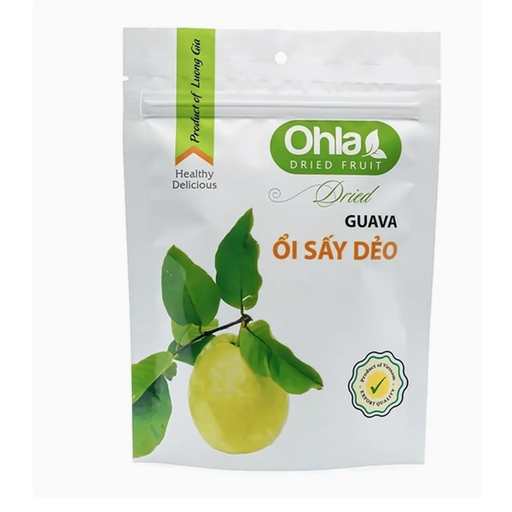
OHLA dried guava 180 g
An option to take with you if you want to consider the fat content per 100 g.
Joybuy product information lists 1.73 g of fat per 100 g and a pack size of 180 g. The ingredients include sugar and a preservative.
View product
 No image available
PHILIPPINE BRAND dried mango 100 g
The description mentions individually wrapped portions for a snack on the go.
Joybuy product information lists 0 g of fat, 378 kcal and 56 g of sugar per 100 g. The pack contains 100 g; the ingredients list sulphites.
View product
 No image available
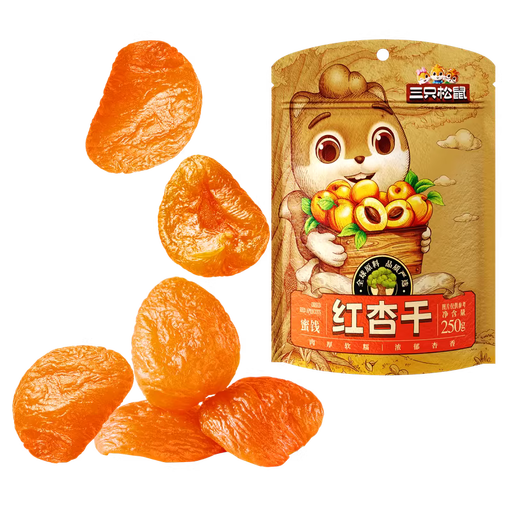
Three Squirrels dried red apricots 250 g
A 250 g pack that product information describes as resealable, for anyone wanting to take apricots with them or share them.
Joybuy product information lists 0 g of fat, 311 kcal and 62 g of sugar per 100 g. The ingredients list sulphites.
View product
 No image available
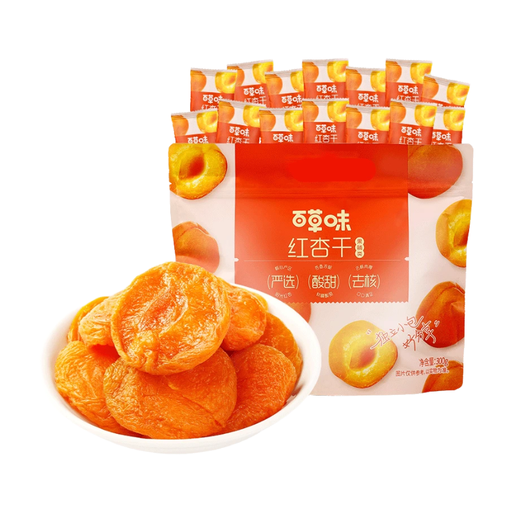
Be&Cheery dried red apricots 300 g
An option for anyone looking for dried apricots as a snack on the go.
Joybuy product information lists 1.0 g of fat, 327 kcal and 64.5 g of sugar per 100 g. The pack contains 300 g and the ingredients list sulphites.
View product
 No image available
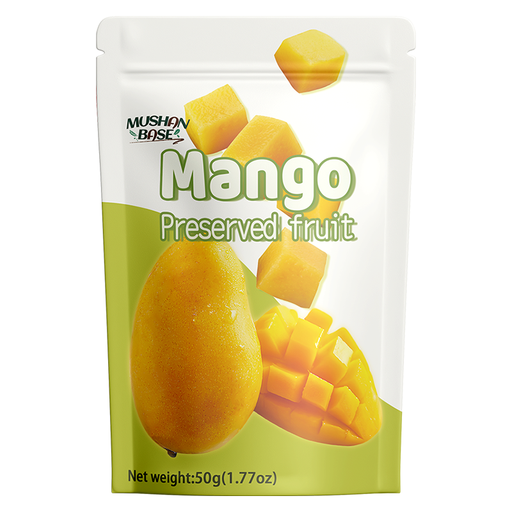
MUSHAN BASE dried mango 50 g
The product description mentions individually wrapped portions to take with you.
Joybuy product information lists 2.2 g of fat, 343 kcal and 36.3 g of sugar per 100 g. The pack contains 50 g; the ingredients list sulphites.
View product
Frequently asked questions
Does ‘reduced fat’ mean the same as ‘low fat’?
No. ‘Low fat’ is an absolute claim: for solid foods, the European Commission sets a maximum of 3 g of fat per 100 g. ‘Reduced fat’ compares a product with similar products; the Netherlands Bakery Centre explains that the reference products used for this comparison must be stated. A low fat content alone doesn’t prove a relative reduction.
Does a product with no added sugars also mean it’s sugar-free?
No. PLUS lists 0 g of added sugars for its dried apricots, but also 53.4 g of total sugars per 100 g. So check both the ingredients and the nutritional information for sugars.
Does all dried fruit need to go in a cool bag?
Follow the storage advice on the specific pack. For the regular apricots checked, Jumbo and PLUS recommend storing them in a cool, dry, dark place; Albert Heijn says to refrigerate its soaked apricots at a maximum of 7°C after opening. The Netherlands Nutrition Centre recommends using a cool bag for foods that need to stay chilled during a picnic.
What should I look out for when sharing dried fruit?
Check the label for ingredients and allergen warnings, even when it’s fruit. Product information from Jumbo, PLUS and Albert Heijn lists sulphites; Jumbo also warns that its apricots may contain nuts, peanuts and sesame. According to the Netherlands Food and Consumer Product Safety Authority, allergen information for prepacked products is shown on the label.
Are apricots with the stones removed guaranteed to be free of stone fragments?
No. Jumbo warns that a piece of stone or stone fragments may still be present despite checks. Read the product warning and take care when eating or sharing the apricots.


