
Snack chooser keeping an eye on fat
You want to serve dried fruit and compare the fat content of the specific variety. A claim or fruit name alone won’t tell you how much sugar or energy the product contains.


For a garden party, compare the fat content per 100 g on the exact pack, and check the sugar, energy and portion size too. According to the European Commission, the ‘low fat’ claim applies to solid foods containing no more than 3 g of fat per 100 g. Low fat does not automatically mean low in sugar or energy.
You want to serve dried fruit and compare the fat content of the specific variety. A claim or fruit name alone won’t tell you how much sugar or energy the product contains.
You want to offer sweet bites and decide in advance how much your guests can help themselves to. The amount per portion is a separate consideration from the fat content.
You want to check ingredient and allergen information, and make allowances for any chilled additions. Sulphites may be present in dried fruit; the Food Allergy Foundation describes them as a potential preservative.
First compare the nutritional information for the exact variety, then decide on portion size and how to serve it. The European Commission sets a maximum of 3 g of fat per 100 g for the ‘low fat’ claim on solid foods. This does not confirm the values for any particular product.
| What to consider | What to look for | Who is this most important for? |
|---|---|---|
| Fat content | Compare the fat per 100 g on the pack of the exact variety. | If I’m mainly looking to reduce fat, I check the nutrition table rather than judging by the type of fruit alone. An estimated 31% of consumers put fat content first. |
| Sugar and energy | Check both values and decide in advance how much you want to serve. | If by ‘lighter’ I also mean less sugar or energy, I want to see those values alongside the fat content. An estimated 25% of consumers put portion control first. |
| Ingredients for guests | Read the ingredients and allergen information on the exact pack. | If guests have different needs, I want to be able to check the ingredients and clearly serve different products separately. An estimated 19% of consumers put suitability for guests first. |
| Serving and storage | Follow the storage instructions and allow for any chilled additions. | If I’m preparing snacks in advance, I want to know which items need to stay chilled and how to serve them. An estimated 13% of consumers prioritise serving food simply and safely. |
| Pack size | Choose a net weight that fits the number of portions in your serving plan. | If I’m shopping for a group, I want to have enough ready without too much left over. An estimated 12% of consumers put quantity first. |
The fat value on a nutrition label doesn’t tell you how much energy or sugar is in a portion. The Netherlands Nutrition Centre lists 26 kcal and 0 g of fat as shown for one 9 g piece of dried apricot. This general value is not a product guarantee for every pack.
Check the energy and sugars as well as the fat, and match the amount to your serving plan.
A category may include both plain dried fruit and fruit-and-nut mixes. The name of a fruit alone also doesn’t tell you which ingredients or nutritional values apply to the variety you’ve chosen.
Check the full product name, ingredients and nutrition table on the pack you’re buying.
Sulphites may be present in dried fruit. Keeping the pack makes it easier for guests to check the information for that specific variety.
Keep the pack handy and clearly serve products with different ingredients separately.
Storage and serving requirements may change when you combine the fruit with chilled ingredients. The instructions for those ingredients still apply.
Follow the guidance for the ingredients you use, and top up chilled snacks in small amounts.
Chilled additions may require extra preparation and fridge space.
Albert Heijn lists products such as AH Soaked Dried Apricots and has a dried fruit category.
Jumbo lists Organic Dried Apricots 250 g as a product variety.
Lidl presents Alesto as a range of dried fruit and nuts, including apricots.
ALDI lists Trader Joe’s Sun-Dried Apricots in a 250 g pack.
PLUS lists dried apricots in a 375 g stand-up pouch.
Dirk lists pitted apricots in its dried fruit and nuts category.
These product picks are dried fruits that, according to their product descriptions, can be eaten as a snack. Compare the nutritional values, ingredients and portion information for each variety.
 No image available
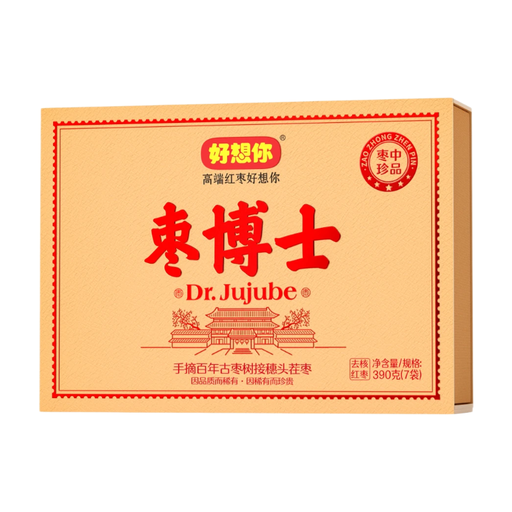
An option to compare if you want to serve pitted red dates as a ready-to-eat snack.
The product description lists 0 g of fat, 50,0 g of sugars and 327 kcal per 100 g. Net weight: 390 g.
 No image available
The product description says these red dates are ready to eat, making them suitable for a serving bowl with no preparation needed.
The ingredients are listed as 100% red dates. The product description lists 0,5 g of fat, 60 g of sugar and 300 kcal per 100 g. Net weight: 500 g.
 No image available
The individual 14 g snack boxes may be handy when you want to offer small portions.
According to the product description, no sugars have been added and the sugars are naturally occurring; the description also states that the product contains no sulphites. Store in a cool, dry, dark place. According to the product information, suitable only for children over 12 months old, and not for children with swallowing difficulties; supervise children while they eat. Net weight: 140 g.
 No image available
A ready-to-eat fruit option to compare if you want to check the ingredients as well as the fat content.
The product description lists 95% guava, 1,73 g of fat and 308 kcal per 100 g. Sugar and a preservative are listed in the ingredients. Store in a cool, dry place. Net weight: 180 g.
 No image available
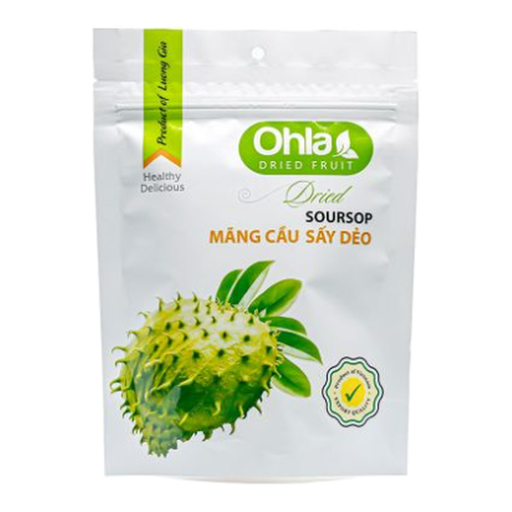
The product description presents the dried soursop as a snack; check the ingredients if you’re choosing this variety for guests.
The product description lists 2,21 g of fat, 348 kcal and 72,6 g of sugars per 100 g. The ingredients include white sugar, glucose and sodium metabisulphite. Net weight: 180 g.
No, these are different nutrition claims. According to the European Commission, ‘low fat’ for solid foods means no more than 3 g of fat per 100 g; ‘low energy’ means no more than 40 kcal per 100 g. Check the values on the exact pack for the product you’re buying.
Don’t use the claim as your only basis for comparison. Check the conditions that apply to the claim, and compare the product’s nutritional values per 100 g with the information the claim refers to.
Plan the portions in advance and consider what guests might eat at other times that day. The World Cancer Research Fund advises eating no more than 20 g of dried fruit a day; this is dietary advice, not a legal limit or a fixed party portion.
Check the ingredients and allergen information on the exact pack, and keep it available when serving. Sulphites may be present in dried fruit. A general fruit name or an organic label is no substitute for product information.
Follow the storage instructions on the pack you’ve chosen. If you combine the fruit with chilled ingredients, follow the guidance for the combined snack too. The Netherlands Nutrition Centre advises taking chilled barbecue dishes out of the fridge in small quantities; don’t automatically apply this advice to dried fruit.