
Regular lunch eaters
You regularly have dried fruit with lunch and want to match the pack size to how much you use. Jumbo lists several pack sizes in the same sultana range, so you can compare different sizes of that product.


Choose a large bag if you regularly eat the same type of dried fruit; individual bags are a better choice if you prefer to open your supply gradually. Check the weight per pack, how much you actually use, and the ingredients and allergens for the exact product. A multipack is not automatically made up of individual portions.
You regularly have dried fruit with lunch and want to match the pack size to how much you use. Jumbo lists several pack sizes in the same sultana range, so you can compare different sizes of that product.
You want to know what has been added to a lunchbox snack and also check total sugars and allergens. Albert Heijn lists both added and total sugars for its organic Blue thompson raisins; the NVWA notes that allergen information for pre-packed products appears on the label.
You eat dried fruit irregularly or would rather not open all the bags at once. Albert Heijn’s multipacks contain individual bags, while PLUS lists sultanas in a 375 g stand-up pouch.
First, work out how much you usually use and whether you want to keep your supply in one pack or split it between several bags. Then check the ingredients and portion information for the specific product.
| What to consider | What to check | Who values this? |
|---|---|---|
| Pack size and how much you use | Compare the net weight and the number of individual bags. Choose an amount that suits how often you eat the product. | If I mainly want to avoid buying more than I’ll use, I check the weight per bag and how much I usually eat. Around 37% of consumers put quantity and usage first. |
| Ingredients | Read the ingredients, nutritional values per 100 g and allergen information on the exact pack. | If the ingredients are my main concern, I check both added and total sugars and look out for allergens. Around 27% of consumers make ingredients and suitability for their individual needs their top priority. |
| Lunch portion | Check the portion information and consider whether you want to weigh it out yourself. A larger pack is not automatically a portion. | If I want a small addition to my lunch, I check whether the pack contains an eating portion or whether I’ll need to weigh it out myself. Around 18% of consumers prioritise portion convenience. |
| Opening and storage | Check the weight of each inner pack and follow the storage instructions on the packaging. | If I’d rather open my supply gradually, I look for individual inner packs and check how to store the product after opening. Around 18% of consumers prioritise managing their supplies. |
A larger pack may contain more than you need for the way you use it.
Check the total weight and match it to how often you eat that particular fruit.
A larger supply also needs space for proper storage after opening.
Albert Heijn’s organic Blue thompson raisins contain 0 g of added sugars, but also 70 g of total sugars per 100 g.
Read both the ingredients and the nutritional values; they provide different information about the same product.
Albert Heijn’s multipacks contain individual 500 g bags, not individually weighed portions.
Check the weight of each inner pack and decide for yourself how much to have with lunch.
You’ll need to portion out the amount you want yourself and store any opened bags.
According to the product information, Albert Heijn’s organic Blue thompson raisins may contain peanuts and various nuts.
If you have an allergy, check the ingredients and precautionary warnings on the exact pack before choosing a product.
Worth considering if you’re looking for organic raisins in individual bags for your supplies.
Worth considering if you want to compare pack sizes in the same sultana range.
Worth considering if you’re looking for a single bag of raisins.
Worth considering if you’re looking for a smaller pack of sultanas.
Worth considering if you want to compare different pack sizes of raisins.
A place to shop for dried fruit.
This selection includes small packs of raisins and dried fruit, as well as a mixed bundle of nuts and dried fruit. Check the ingredients, pack format and any warnings for each product.
 No image available
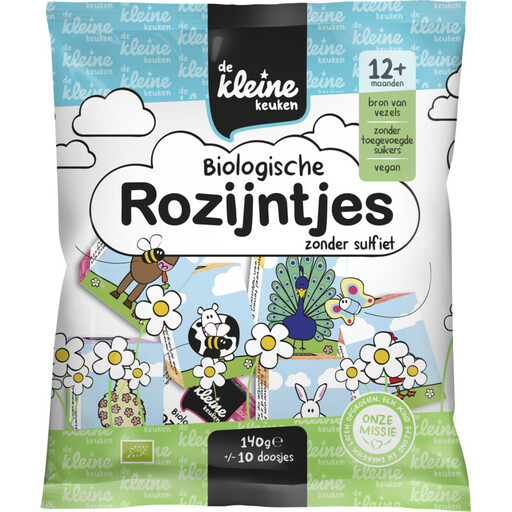
The individual boxes are handy if you want to take small amounts with you for lunch.
The pack contains ten 14 g snack boxes. The product description presents it as baby food for children aged 12 months and over; supervise children while they eat. Not suitable for children with swallowing difficulties.
The product description states that these are organic raisins with no added sugars or sulphites.
 No image available
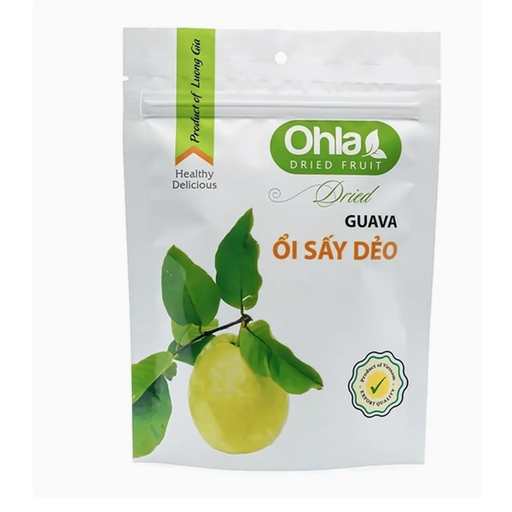
A pack of dried guava for anyone who wants to enjoy fruit as a snack or use it as an ingredient.
The product information lists guava as 95% of the product, alongside sugar and a preservative.
 No image available
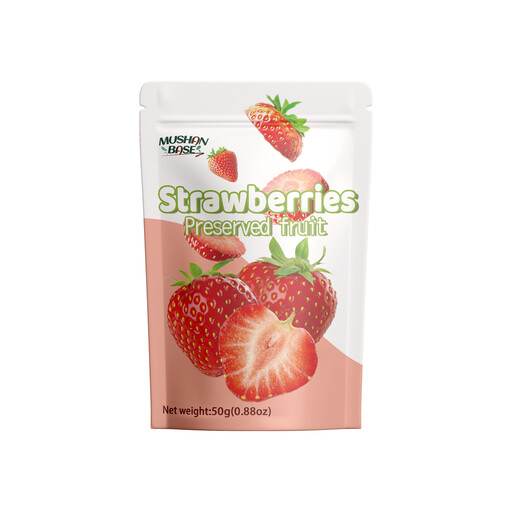
This small pack is a good fit if you’re looking for a little dried strawberry, perhaps as a snack or topping.
The ingredients are dried strawberries and sugar. The listed sugar content is 57,4 g per 100 g.
 No image available
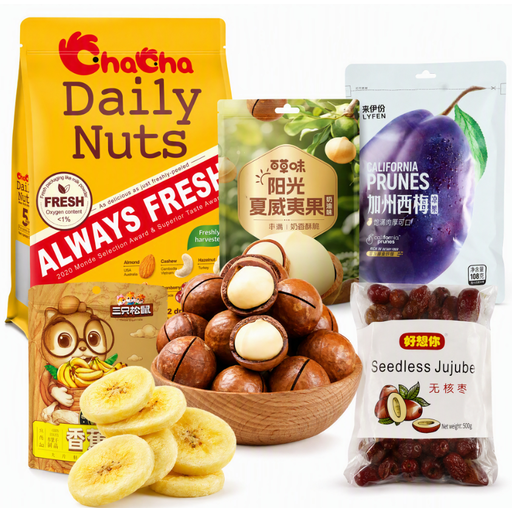
This bundle contains several snacks and is suitable if you want to share a variety of products at work; it is not a bundle of dried fruit alone.
The description lists five different snack products. The ingredients include tree nuts, added sugars and prunes with aspartame, a source of phenylalanine.
No. Albert Heijn’s multipacks contain individual 500 g bags, not individual lunch portions. The World Cancer Research Fund advises eating no more than 20 g of dried fruit a day; this is dietary advice, not a legal limit on how much you can buy. So you’ll need to take a small amount from a larger bag yourself.
Follow the instructions on the pack. For Blue thompson raisins, Albert Heijn recommends storing them in a cool, dark and dry place and sealing the bag properly after use. The Storage Guide says opened raisins can be kept in a kitchen cupboard for 6–9 months; don’t automatically apply this timeframe to other dried or soaked fruit.
No. Albert Heijn lists 0 g of added sugars and 70 g of total sugars per 100 g for its organic Blue thompson raisins. So read both the ingredients and the nutritional values; the organic label does not tell you how much total sugar the product contains.
According to the Netherlands Food and Consumer Product Safety Authority, allergen information for pre-packed products must appear on the label. The legally defined list of allergens includes sulphites, peanuts and nuts. If you have an allergy, check the exact pack rather than relying on the type of fruit or an organic label.
This type of wording is a precautionary warning about possible cross-contamination; it is not the same as an ingredient that has been deliberately added. Since 1 January 2026, the NVWA has overseen Dutch labelling rules; according to the NVWA, a warning must be based on a risk assessment. Check the wording and information on the pack of the product you choose.