What should you look for in dried fruit for the office?
First check which substance a colleague needs to avoid, then consider how you can offer and store the product separately. A general label such as vegan or organic is no substitute for checking the specific ingredients and warnings.
| What to consider |
What to look for |
Who is this important for? |
| Specific dietary need |
Check the substance to be avoided, the full ingredients list, the relevant dietary claim and any warnings on the current packaging. |
If you’re buying fruit for a colleague who needs to avoid a specific substance, you’ll want to assess whether that exact variant is suitable. Around 33% of consumers prioritise suitability for a specific dietary need. |
| Serving separately |
Choose between individual packs and portioning from a larger pack; use clean hands and utensils. |
For anyone managing a shared snack area, the main consideration is whether portions can be offered separately and kept from coming into contact with other snacks. Around 27% of consumers prioritise serving snacks separately. |
| Sugars and portions |
Compare total and added sugars per 100 g and consider how much will actually be offered. |
If you want to offer a clearly defined portion, the difference between total and added sugars matters. For the AH Sun-Dried Raisins reviewed, Albert Heijn lists 59 g total sugars and 0 g added sugars per 100 g. Around 20% of consumers prioritise checking sugar and portion sizes. |
| Stock and storage |
Match the pack size to how much is used and follow the storage instructions on the packaging. |
If you’re replenishing supplies regularly, you’ll want to choose an amount that suits office usage and the storage space available. Around 20% of consumers prioritise stock management. |
Joybuy products for individual fruit snacks
These Joybuy products are freeze-dried jackfruit for serving as an individual fruit snack. Check the current product information against the specific dietary need; the listed ingredients aren’t a general guarantee of allergy suitability.
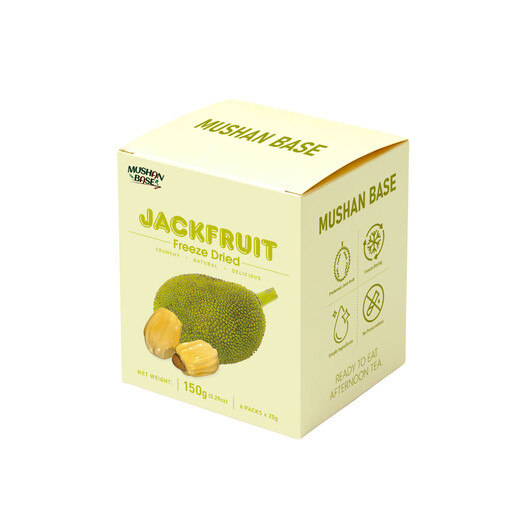 Image unavailable
MUSHAN BASE freeze-dried jackfruit 150 g (6 × 25 g)
The six individual packs may be handy if you want to offer separate portions; the packaging doesn’t prove that the product is suitable for every allergy.
The product description lists jackfruit as the only ingredient and says no sugar has been added. According to the product description, the contents should be consumed immediately after opening.
View at Joybuy
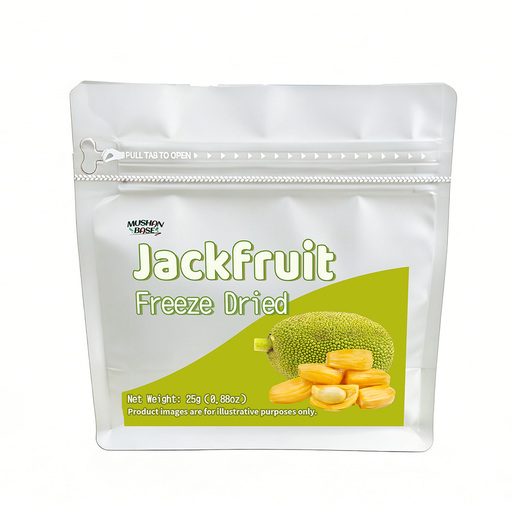 Image unavailable
MUSHAN BASE freeze-dried jackfruit 25 g
This pack may be a good option if you want to offer a small fruit snack separately; check the product information against the recipient’s dietary needs.
The product description lists jackfruit as the only ingredient and says no sugar has been added. It also suggests using it as a topping for yoghurt, cereal or desserts.
View at Joybuy
Frequently asked questions
Is lactose-free enough if a colleague has a milk allergy?
No. Lactose intolerance concerns milk sugar; a milk allergy concerns milk proteins. The Netherlands Nutrition Centre explains the difference. So don’t use a lactose-free label as proof that a product is suitable for someone with a milk allergy. Check the full ingredients and allergen information.
Does sulphite on the label mean everyone should avoid this product?
No, sulphites aren’t automatically a reason for everyone to avoid the product. The European Commission lists sulphur dioxide and sulphites above 10 mg/kg or 10 mg/l as substances that must be included in allergen information. The Netherlands Nutrition Centre identifies sulphite sensitivity as an exception; the Jumbo and PLUS apricots reviewed contain sulphites.
Can I put suitable raisins in the same tin as biscuits and nuts?
If there’s a relevant allergy, offer them separately and prevent contact with other products. The Food Allergy Foundation advises using clean hands and thoroughly cleaned crockery and cutlery. A separate clean container or individual snack pack is a practical way to follow this advice, not a guarantee that a snack is suitable for everyone.
What information should I check on dried fruit?
Read the full ingredients list, the relevant dietary claim and any warnings about the possible presence of allergens on the current packaging. The European Commission explains European allergen labelling; assess a claim only in relation to the substance it covers.
What allergen information is relevant when a caterer serves snacks in the office?
Prepacked foods should have allergen information on the label. The Netherlands Food and Consumer Product Safety Authority says that applicable providers of unpackaged food must inform customers about the relevant 14 allergens. This doesn’t automatically mean that every informal office snack tin counts as catering.


