
Office snackers watching their fat intake
You’re looking for dried fruit that’s low in fat, but you also want to consider the sugar and energy values per portion.


For an office snack supply, you can choose varieties whose labels show a fat content below the threshold for the ‘low fat’ claim; AH Raisins and PLUS Dried Apricots each list 0.5 g of fat per 100 g. ‘Reduced fat’ is a comparative claim and does not follow from a low absolute fat content alone: check sugar, portion size, ingredients and storage too. AH Soaked Dried Apricots must be refrigerated after opening, so this variety is only suitable for the snack tin if you can follow the storage instructions.
You’re looking for dried fruit that’s low in fat, but you also want to consider the sugar and energy values per portion.
You’re choosing between making up portions yourself, handing out individual boxes and buying products with different storage instructions.
You want colleagues to be able to check the ingredients and allergens in their chosen variety. If someone needs to avoid sulphites, pay particular attention to the label.
For solid foods, the European Commission sets a maximum of 3 g of fat per 100 g for the ‘low fat’ claim. This threshold says nothing about sugar or energy and, on its own, does not prove a reduction compared with another product.
| What to consider | What should you check? | Who should consider this? |
|---|---|---|
| Fat content | Compare the fat per 100 g on the label of the exact variety. A low absolute value is not proof of a ‘reduced fat’ claim. | If I mainly want to assess the fat content, I check the nutrition table rather than just the product name. Around 33% of consumers put fat content at the top of their list. |
| Portion, sugar and energy | Compare the values per 100 g and per the portion that will actually be served. | I want to know how much is in a snack portion, because low fat doesn’t automatically mean low sugar or energy. Around 27% of consumers give portion size and nutritional values top priority. |
| Storage and serving | Pay particular attention to what’s required after opening, and adjust the amount in the snack tin accordingly. | For me, the supply needs to suit the available storage and the time colleagues will eat the snack. Around 27% of consumers prioritise keeping stock management simple. |
| Ingredients and allergens | Read the ingredients and allergen information on the specific pack, and keep it if you decant the fruit. | If someone in the team needs to avoid an ingredient such as sulphites, I want to be able to check the ingredients in that exact variety. Around 13% of consumers put ingredient and allergen information at the top of their list. |
A low fat content doesn’t automatically mean a portion is low in sugar or energy; the amount you put out also determines how much someone eats.
Check fat, sugar and energy side by side, and think carefully about how much you put in the snack tin.
AH Soaked Dried Apricots must be refrigerated after opening at a maximum of 7°C, and then have a limited shelf life.
Follow the storage advice for the exact variety, and keep the rest refrigerated if the pack says to.
If your available storage doesn’t suit the storage advice, some of the supply may go unused. Match the amount you put out to the storage space and snack time.
Colleagues will no longer be able to check the ingredients and allergens in the chosen variety.
Keep the pack, or make sure the information remains available with the supply. Don’t assume that all dried apricots have the same ingredients.
The product ranges mentioned include raisins and soaked dried apricots.
The raisin products mentioned include a bag of blue raisins and boxes of individual portions.
PLUS Dried Apricots is sold in a 375 g stand-up pouch.
The product description mentions Trader Joe’s Sun-Dried Apricots, 250 g.
The dried fruits mentioned are described as varieties with blueberries and cherries.
The range overview lists several types, including sultanas, golden raisins, apricots and pitted prunes.
These products are options for office snacks, but not every variety meets the threshold for the ‘low fat’ claim. So compare the fat per 100 g for the exact product, and check the ingredients and storage instructions too.
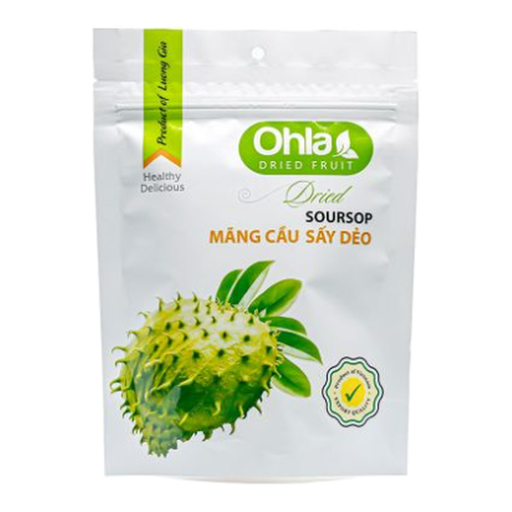 No image available
An option if you want to compare the fat and sugar values before preparing portions.
The product information lists 2.21 g of fat and 72.6 g of sugars per 100 g.
The ingredients list includes white sugar, glucose and sodium metabisulphite (INS 223). Seal well or refrigerate after opening.
 No image available
The larger pack may suit you if you want to prepare portions yourself for the office supply.
The product information lists 0.5 g of fat per 100 g and a pack size of 500 g.
According to the description, the product is made from 100% red dates. Store in a cool, dry place and seal the pack well after opening.
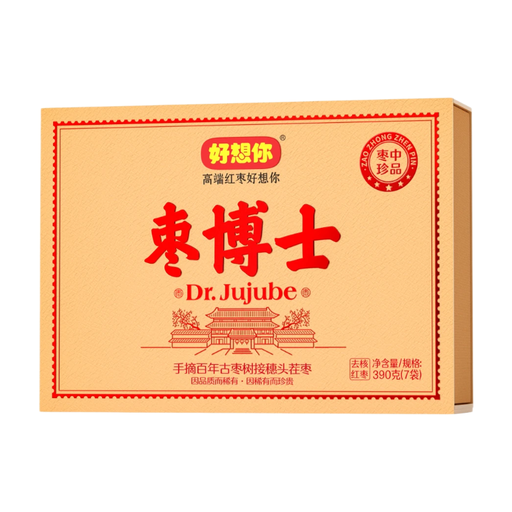 No image available
The description says it’s ready to eat, making it suitable for serving without any preparation.
The nutrition information lists 0 g of fat per 100 g, and the pack contains 390 g.
The instructions say to consume the product immediately after opening.
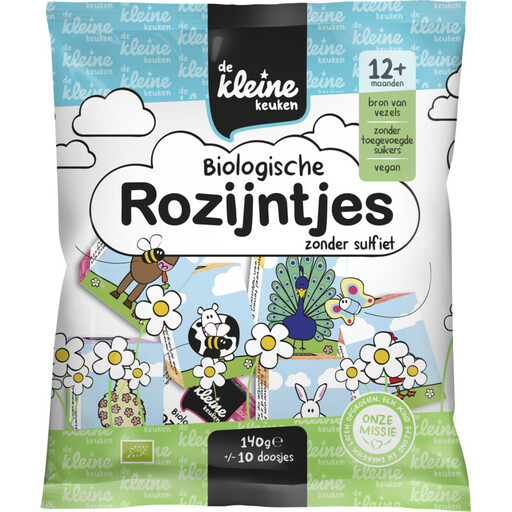 No image available
The individual boxes may suit you if you want to portion the snacks in advance.
The pack contains 10 boxes of 14 g each.
The product description says it’s suitable for babies over 12 months; check whether this variety is right for the intended users.
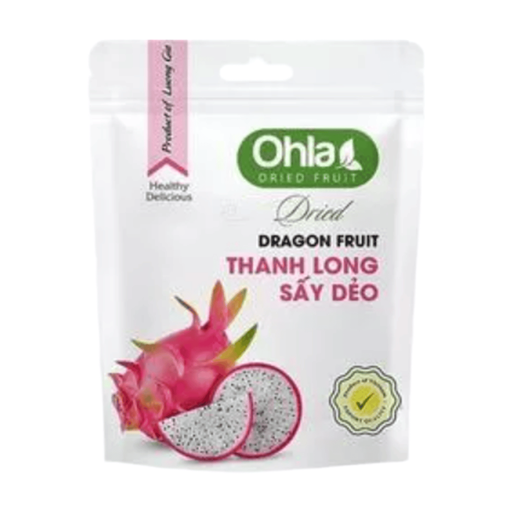 No image available
You can only assess this variety by considering the fat content on the exact pack.
The nutrition table lists 3.75 g of fat per 100 g, above the threshold set by the European Commission for the ‘low fat’ claim on solid foods.
Seal well after opening; the description says to store in a cool, dry place.
No, that doesn’t follow from the fat content. AH lists 0.5 g of fat and 59 g of sugars per 100 g for AH Raisins; assess these nutritional values separately.
The Voedingscentrum recommends a maximum of 20 g of dried fruit per day. This is general dietary advice, not a legal limit or a requirement to give every colleague the same amount.
Follow the storage advice for the exact variety. AH Soaked Dried Apricots must be refrigerated after opening at a maximum of 7°C; PLUS Dried Apricots should be stored in a cool, dry, dark place.
Keep the packaging so colleagues can check the ingredients and allergens. The NVWA sets out allergen information requirements for professional food businesses selling packaged and unpackaged foods; those requirements don’t automatically apply to every informal office supply.
The European Commission sets a maximum of 3 g of fat per 100 g for the ‘low fat’ claim on solid foods. This is a condition for making the claim, not proof of weight loss or a recommended daily fat intake.