
Bulk buyers with regular night shifts
If you regularly prepare snack portions and use the rest at home too, check the net weight and whether it suits your usage. A larger pack means you’ll need to portion it out and store it yourself.


Choose a pack size that suits what your household actually gets through. A larger bag can be handy if you regularly portion it out, while individually packed items help you keep supplies separate. Weigh out a small portion before your shift and check the ingredients, allergens and storage instructions for the exact variant; a multipack isn’t automatically a single snack portion.
If you regularly prepare snack portions and use the rest at home too, check the net weight and whether it suits your usage. A larger pack means you’ll need to portion it out and store it yourself.
If you want to take a small amount with you on shift, don’t treat a large bag as one serving. Also check the difference between naturally occurring sugars and added sugar.
If ingredients, organic credentials or your personal allergen requirements influence your choice, check the exact variant. A label such as organic or unsulphured does not in itself mean a product is allergen-free.
First, work out how much your household actually uses and how you want to take your supplies with you. Then check the product information for the specific variant to make sure the pack size, portion and ingredients suit your needs.
| What to consider | What to look for | Who is this most relevant to? |
|---|---|---|
| Stock and usage | Compare the net weight with how much you use at home and during your shifts. If there are different pack sizes, you can compare the contents of each pack. | If I mainly want to avoid buying more than our household gets through, I look at the pack size and our usage. Having the right amount in stock is a priority for around 25% of consumers. |
| Small snack portion | Weigh out a portion in advance and check the nutritional values per 100 g. A serving size shown on a pack is not automatically dietary advice. | If I want to take something small with me and avoid mindlessly eating from a large bag, weighing out a portion in advance helps. Portion control is the main reason for around 25% of consumers. |
| Storage and taking it with you | Check how many individual packs are included in a multipack and follow the storage instructions for the exact variant. | If I want to keep some in stock and take a small amount with me, I check how the product is packed and how it should be stored. Convenience is the main consideration for around 25% of consumers. |
| Ingredients and allergens | Read the ingredients list, allergen information and any warnings about traces on the exact pack. | If ingredients or my personal allergen requirements determine my choice, I check the full label. For around 25% of consumers, this is the most important consideration. |
Dried fruit with no added sugar can still contain naturally occurring sugars. The Netherlands Nutrition Centre also recommends eating only a small amount of dried fruit with no added sugar. So don’t just compare the pack sizes; also consider the portion you’ll actually take with you.
A large bag won’t tell you how much you want to eat during one shift. Dried fruit contains sugar, and the pack doesn’t automatically determine a suitable portion.
Before your shift, put a small amount in a separate container or bag so the size of the pack doesn’t determine your portion.
These labels don’t mean a product is sugar-free or suitable for everyone with an allergy. The Smaakt Blue Thompson variant at PLUS warns that it may contain traces of peanuts, nuts and milk, among other things.
Check the ingredients list and the allergen and traces information on the exact pack.
A best-before date shown on a product page doesn’t tell you the date or storage life of your opened pack.
Check the date on the pack and follow the storage instructions for the specific variant. If necessary, make a note of when you open it.
According to Albert Heijn’s product information, its range includes sun-dried raisins in a 750 g pack and a multipack containing two separately packed 500 g items.
Jumbo’s range information lists sultanas in several pack sizes, including 250 g, 500 g and 750 g.
Belbake Raisins is a relevant product line within the stated grocery range.
ALDI’s product information lists TRADER JOE'S Raisins in a 500 g pack.
PLUS stocks Smaakt Blue Thompson organic raisins in a 500 g pack; the product page also describes them as unsulphured.
Dirk’s product information lists a 750 g pack of raisins and other dried fruit products in its range.
This selection includes dried fruit snacks and small packs to take with you; the type of fruit and ingredients vary by product.
 No image available
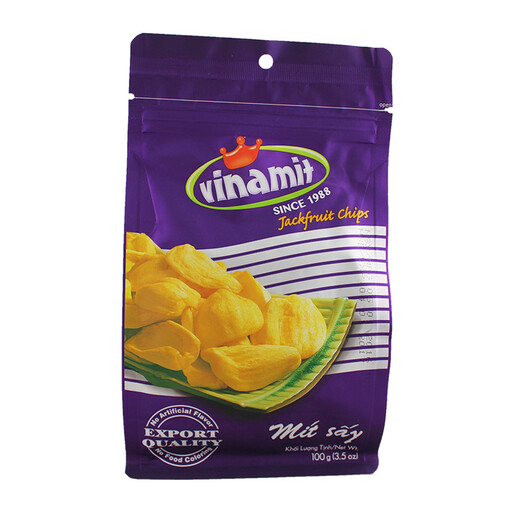
A 100 g pack of ready-to-eat jackfruit pieces, ideal if you want to take a fruit snack with you.
The product description lists 98% jackfruit and vegetable oil as ingredients. According to the description, the pack can be resealed and stored after opening.
 No image available
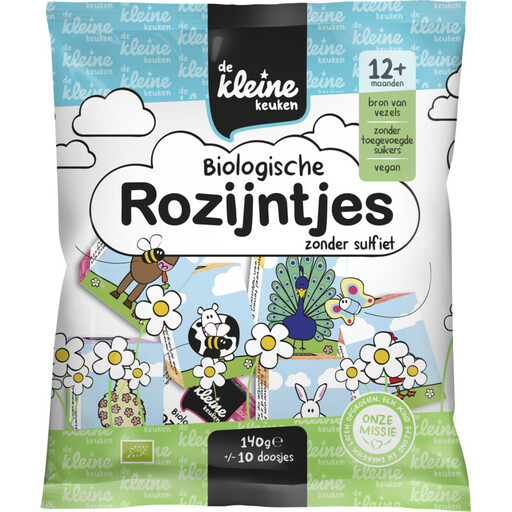
The ten individual 14 g boxes are designed for taking small portions with you.
The product description lists organic raisins with no added sugars or sulphites. Store the boxes in a cool, dry, dark place, as instructed.
 No image available
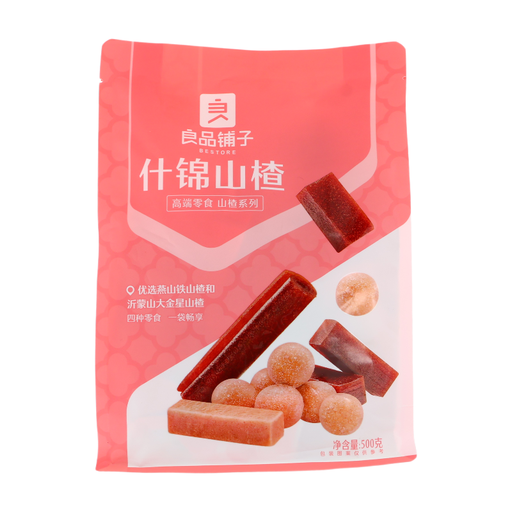
According to the product title, the pack contains 25 small bags, a practical way to organise several snack breaks.
This is a hawthorn fruit snack, not the same type of product as regular dried raisins. The description lists sugar and, depending on the variety, maltose or glucose.
 No image available
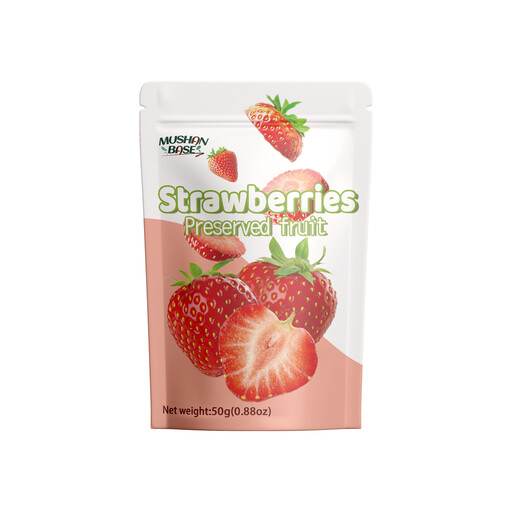
A 50 g pack of dried strawberries for anyone looking to take a small fruit snack with them.
The listed ingredients are dried strawberries and sugar. The description says the pack can be resealed after opening.
 No image available
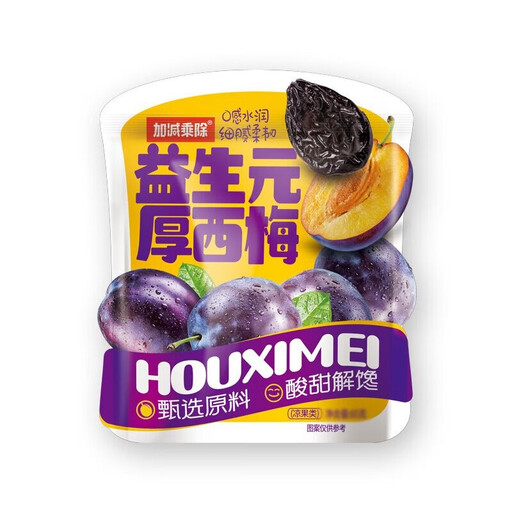
A 65 g pack of ready-to-eat prunes for anyone looking for a small portion.
The description lists prunes, fructose syrup and oligofructose. It also gives a best-before date of 23 September 2026, which had passed by 13 October 2026. Before buying, check the current product information and the date on the pack; don’t base a purchase on the expired date.
No. A serving size shown on a pack is product information, not automatically dietary advice. The World Cancer Research Fund recommends eating no more than 20 g of dried fruit a day; treat this as dietary advice, not a legal limit on what you can buy.
No. Dried fruit can still contain naturally occurring sugars, even when no sugar has been added. The product information for the AH raisins reviewed lists 0 g of added sugars and 59 g of sugars per 100 g. The Netherlands Nutrition Centre also recommends eating only a small amount of dried fruit with no added sugar.
Treat dried fruit as a snack choice, not as a replacement for a complete eating plan. VGZ describes separate eating occasions for night workers and suggests options such as wholemeal bread or muesli with protein and fruit after a shift. This guidance doesn’t establish any specific effect of dried fruit on alertness.
Follow the instructions on the pack for the exact variant. For the Smaakt Blue Thompson raisins reviewed, PLUS recommends storing them in a cool, dry, dark place in a sealed pack. This instruction doesn’t automatically apply to every type of dried fruit.
Read the ingredients list and the allergen and traces information on the exact pack. The Netherlands Food and Consumer Product Safety Authority states that the allergens required by law must be listed in the ingredients list; you should also check for yourself whether the information meets your specific requirements.