What should you look for when buying?
First decide whether you’re buying for your baby’s first foods or for an occasional snack later on. Then compare the packaging, ingredients and storage instructions with how you plan to use the product.
| What to consider |
What to look for |
Who is this most important for? |
| Eating stage and safety |
Consider whether your child is ready for an occasional snack; bear the risk of choking in mind and don’t offer lots of raisins at once. |
If your baby has only just started eating solid foods, you’ll want to know first whether raisins are suitable and how to factor in the risk. Around 36% of consumers prioritise eating stage and safety. |
| Number and size |
Compare both the number of boxes and the weight of each one; that weight is not a recommended portion for a baby. |
If you’re sharing or packing a lunchbox, you’ll want to know in advance how many individual boxes you can set aside. Around 29% of consumers consider packaging convenience most important. |
| Ingredients and portion |
Read the ingredients, total sugars and allergen information for the exact product variant; take extra care if there’s a known sensitivity. |
If you want to weigh up the ingredients and quantity carefully, you’ll need product information for each variant. Around 21% of consumers give this top priority. |
| Stocking up and storage |
Choose a total weight that suits your needs and follow the label; store raisins in a cool, dry, dark place in a tightly sealed container. |
If you portion the product yourself at home, you’ll want packaging that can be stored properly after opening. Around 14% of consumers prioritise managing their stock. |
Products at Joybuy
This product selection features a multipack of plain raisins for shoppers who want to take small amounts with them for occasional use later on. The product information states that it’s suitable from 12 months and that children should be supervised while eating; this doesn’t replace the Netherlands Nutrition Centre’s advice on eating stage and choking risk.
 No image available
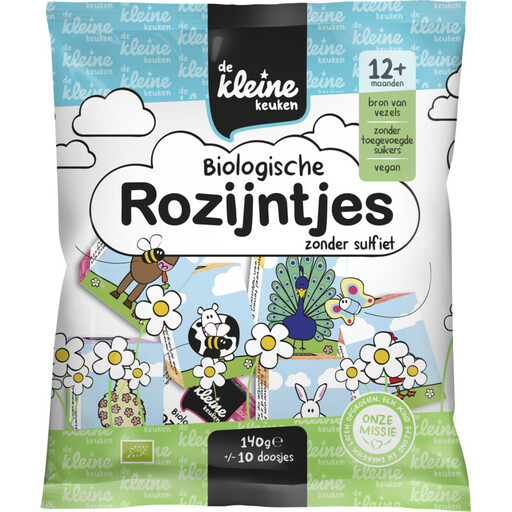
De Kleine Keuken organic raisins 12M+ 140 g
For shoppers looking for a multipack of plain raisins to take along for occasional use later on; the product information states that it’s suitable from 12 months.
The pack contains 10 boxes of 14 g. The product information says children should be supervised while eating and that the product isn’t suitable for anyone with swallowing difficulties.
View at Joybuy
Frequently asked questions
When are raisins suitable as an occasional snack?
The Netherlands Nutrition Centre mentions raisins as an occasional option around your child’s first birthday, once they’re eating meals with the family. For first foods, it advises waiting before offering snacks; this is nutritional advice, not a legal age limit.
Is a 14 g box a recommended portion for a baby?
No. 14 g is the stated pack weight of the boxes mentioned, not a recommended portion for a baby. The Netherlands Nutrition Centre advises offering a small amount and not giving lots of raisins at once; the information cited doesn’t specify a set portion in grams for babies.
What allergen information appears on packaging in the Netherlands?
According to the Netherlands Food and Consumer Product Safety Authority, allergen information for prepacked products must appear on the label. Sulphite is one of the designated allergens; the AH mixes with apple and apricot that were reviewed list sulphites. Always check the exact pack.
Does child-friendly packaging make a box suitable for baby-led weaning?
No. Assess your child’s eating skills and the contents separately. The Netherlands Nutrition Centre advises offering larger pieces only once your child can sit upright and chew and swallow well. It also describes a gradual move from mashed to lumpier foods.
How should you store opened raisins?
The Netherlands Nutrition Centre advises storing raisins in a cool, dry, dark place in a tightly sealed container. For opened raisins, the Storage Guide recommends 6–9 months in a kitchen cupboard; also follow the instructions on the pack you’ve bought.


