
Mindful snackers in marathon training
You’re looking for a balanced fruit snack between training sessions and want to compare calories per serving, without assuming that fewer calories automatically mean better training food.


For a balanced snack, the verified AH Soft Dried Apricots contain less energy at 182 kcal per 100 g than the verified raisins and apricots from AH, Jumbo and PLUS. For fuel during a long run, the amount of carbohydrate per serving matters more: according to the label, AH raisins contain 80 g of carbohydrate per 100 g, compared with 37 g in the soft dried apricots. The lower energy value doesn’t automatically make any of these products more suitable for your training.
You’re looking for a balanced fruit snack between training sessions and want to compare calories per serving, without assuming that fewer calories automatically mean better training food.
You’re looking for carbohydrates you can take with you, and want to know how much fruit you’ll need to get the amount of carbohydrate you’re aiming for.
Your choice depends on the ingredients, whether sulphites are listed and the storage instructions for an opened pack.
First decide whether you want fruit for a snack outside training or to take with you on a long run. Then compare serving weight, nutritional information and product instructions.
| What to consider | What should you check? | Who is this important for? |
|---|---|---|
| Energy per serving | Compare kcal per 100 g and work out the amount for the weight you’ll actually eat. | If I want a small snack between training sessions, I weigh my portion rather than comparing individual pieces or whole packs. Around 34% of consumers prioritise energy per serving. |
| Carbohydrate for your long run | Check the grams of carbohydrate per 100 g and calculate how much product you’ll need for your planned amount. | For a long run, I want to be able to plan my carbohydrate intake per serving. Around 33% of consumers give this fuelling need top priority. |
| Taking it with you and storage | Compare the product weight you’ll need and follow the storage instructions on the specific pack. | If I take fruit with me on a run, I consider how much weight I’ll need to carry and how to store an opened pack. Around 20% of consumers consider taking it with them and storage the most important factors. |
| Ingredients and sulphites | Read the ingredients and allergen information on the specific pack. | If ingredients or a sulphite listing affect my choice, I check the label before buying. Around 13% of consumers give this information top priority. |
Among the products checked, AH soft dried apricots contain fewer kcal per 100 g than AH raisins, but they also contain less carbohydrate per 100 g. You may therefore need to carry more product to get the same amount of carbohydrate.
First decide whether you want a small snack or carbohydrates for a long run. For a snack, compare energy per weighed serving; for training fuel, compare carbohydrate per serving.
A lower carbohydrate content per 100 g may mean you need to take more fruit with you to meet the same carbohydrate target.
The AH raisins checked list 0 g of added sugars, but contain 344 kcal and 59 g of sugars per 100 g, according to the label.
As well as checking the ingredients, compare the full nutritional information and work it out for your portion size.
The AH Soft Dried Apricots checked need to be kept chilled after opening; the AH raisins checked have different storage instructions.
Follow the storage instructions on the pack you buy, and choose a pack size that suits how quickly you’ll use it.
For the dried apricots checked, Jumbo warns that occasional stone fragments may be present.
Read the product warning and check the apricots before eating them.
The product information checked lets you compare sun-dried raisins with soft dried apricots.
Jumbo Dried Apricots, Pitted, 250 g is an option for comparing label values and serving sizes.
The Dutch Alesto brand page describes dried mango strips as a snack.
ALDI Netherlands lists TRADER JOE'S Sun-dried Apricots 250 g and TRADER JOE'S Raisins 500 g.
PLUS Dried Apricots, Per Pouch, 375 g is an option for comparing the label values of dried apricots.
Dirk sells 1 de Beste Apricots 375 g; 1 de Beste is Dirk’s own brand.
These Joybuy products provide nutritional information to help you compare dried fruit for portion control and carbohydrates on the go. Check the ingredients and any restrictions relevant to your choice for each product.
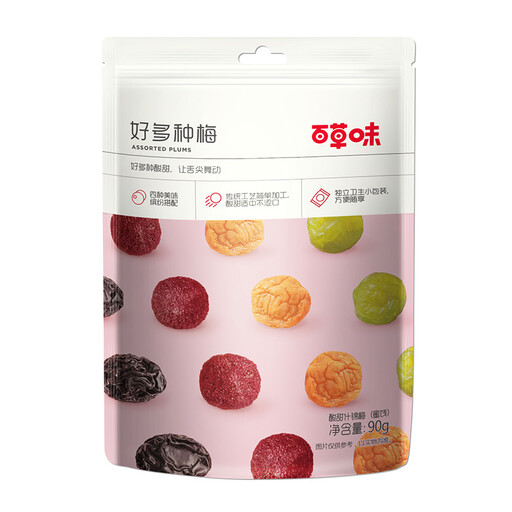 No image available
The nutritional information can help you work out the energy and carbohydrate content of a weighed serving.
Per 100 g: 68 kcal, 16.5 g of carbohydrate, 16.0 g of sugars and 3.0 g of salt.
The salt content is worth considering when comparing products.
 No image available
The nutritional values per 100 g provide a basis for comparing a weighed snack portion.
Per 100 g: 308 kcal and 80.3 g of carbohydrate.
The ingredients list guava (95%), sugar and a preservative.
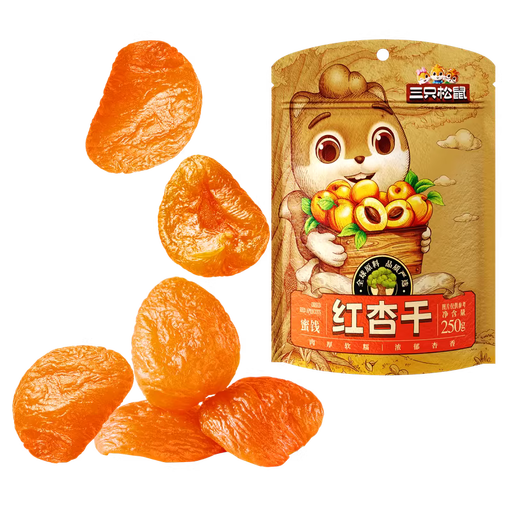 No image available
The nutritional information can help you calculate the carbohydrate content of a weighed serving.
Per 100 g: 311 kcal and 75.5 g of carbohydrate.
The ingredients list apricot, sugar, maltose syrup and sulphites.
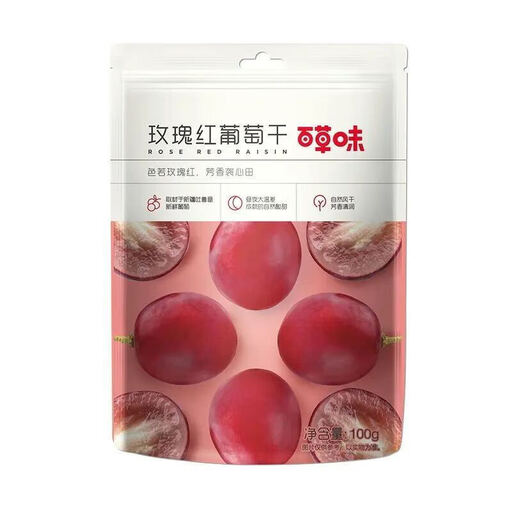 No image available
The carbohydrate content per 100 g provides a basis for calculating a portion to take with you.
Per 100 g: 330 kcal, 78 g of carbohydrate and 30 g of sugars.
Store in a cool, dry place, away from direct sunlight.
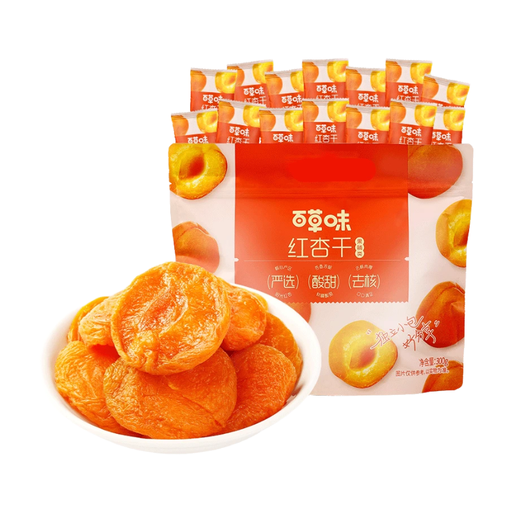 No image available
The nutritional values per 100 g help you compare the carbohydrate and energy content of a weighed serving.
Per 100 g: 327 kcal and 77.4 g of carbohydrate.
The ingredients list apricot, sugar, maltose syrup and sulphites.
Store in a cool, dry place, away from direct sunlight.
No. For solid foods, the commercial claim ‘low energy’ and claims with the same meaning are limited to a maximum of 40 kcal (170 kJ) per 100 g. The European Commission explains this requirement; a smaller serving doesn’t change the threshold for the claim.
No. The AH raisins checked list 0 g of added sugars, but according to the label they contain 59 g of sugars and 344 kcal per 100 g. So compare the full nutritional information and the weight of your portion.
Not necessarily. The Netherlands Nutrition Centre says that sports bars and gels can help during prolonged, intense training, but aren’t needed for exercise lasting less than an hour. This is general sports guidance, not personal advice on how much dried fruit you should eat.
No. Follow the instructions on the specific pack. AH Soft Dried Apricots need to be kept chilled after opening at a maximum of 7 °C and have a limited shelf life. The AH raisins checked are labelled to be stored in a cool, dark and dry place.
Check the ingredients and allergen information on the specific pack. The AH Soft Dried Apricots, Jumbo Dried Apricots and PLUS Dried Apricots checked all list sulphites. The NVWA identifies sulphite as an allergen that must be declared and says allergens must be clearly highlighted in the ingredients list.