Choose according to the specific dietary requirement: Albert Heijn and PLUS list certain raisin and mango products as gluten-free and lactose-free. This is not a general guarantee that a product is free from all allergens, so check the ingredients and warnings on the exact packaging and ask the parent or carer if you’re unsure. When handing out snacks, also consider how well the child can chew and make sure they eat while sitting down calmly.
Who is this guide for?
Party hosts with guests who have allergies
You want to know which substances a child needs to avoid and whether ingredients or cross-contamination warnings affect your choice. The Netherlands Food and Consumer Product Safety Authority explains how allergens are listed on labels.
Parents avoiding sulphites
You’re looking for specific information about sulphites in dried fruit. Stichting Voedselallergie lists E220–E228 as sulphite designations; a product being labelled organic or unsweetened does not, by itself, mean it is sulphite-free.
Hosts catering for young children
You want to choose portions and pieces that suit how well children can chew. The Netherlands Nutrition Centre advises taking the size of pieces, eating calmly and supervision into account for young children.
What should you look out for when choosing?
Start with the substance a child needs to avoid, then consider how you’ll serve the snack, portion sizes and how much you’ll need.
| What to consider |
What should you check? |
Who is this important for? |
| Suitable for the specific allergen |
Check the ingredients and warnings on the exact packaging; if you’re unsure, ask the parent or carer. |
If I’m shopping for children with different allergies, I want to know which substances they need to avoid and whether any warnings are relevant. Around 29% of consumers make suitability for a specific allergen their top purchasing priority. |
| Avoiding sulphites |
Check for sulphites, sulphur dioxide and E220–E228; don’t rely on a label such as organic alone. |
When sulphites are a concern for a child, I want to be able to assess the information for that specific product. Around 23% of consumers put avoiding sulphites first. |
| Pieces and eating calmly |
Consider how well the child can chew; if in doubt, cut pieces smaller and make sure children sit down calmly while you stay nearby. |
When young children are eating too, I want to be able to choose a snack shape that suits how well they can chew. Around 18% of consumers give serving food appropriately and supervision top priority. |
| Sugars and portions |
Check total sugars separately from added sugars and plan small portions. |
For a party treat, I want to serve small portions and distinguish between total and added sugars. Around 18% of consumers look at this first. |
| Quantity and storage |
Compare the pack size with the number of portions you need and follow the storage instructions on the packaging. |
If I’m shopping for a group, I want to choose a pack that suits the portions planned and store any leftovers properly. Around 12% of consumers put quantity and storage first. |
Buying and serving pitfalls
-
Assuming ‘free from’ means ‘suitable for every child with an allergy’
A gluten-free or lactose-free label relates only to that specific substance. Other allergens and warnings about possible cross-contamination need to be assessed separately.
Check the ingredients and warnings on the exact packaging, and confirm which substance the child needs to avoid.
-
Taking a short ingredients list as proof there’s no risk of cross-contamination
Jumbo lists dried mango as an ingredient, but also warns that this product may contain nuts and peanuts, among other things.
Read the warnings as well as the ingredients list and follow the parent or carer’s agreed approach.
-
Confusing unsweetened with low in sugar
AH Raisins lists 0 g of added sugars and 59 g of total sugars per 100 g. These are different nutritional details; the Netherlands Nutrition Centre advises keeping portions of dried fruit small.
Read both the ingredients and the nutritional information, and plan small portions.
-
Prioritising the ingredients over serving the snack appropriately
Even when a snack meets the dietary requirements, the size of the pieces, how well a child can chew and eating calmly all matter. PLUS warns that, despite careful checks, its Sultana raisins may contain small stalks and stones.
If in doubt, cut pieces smaller, make sure children sit down calmly and stay nearby while they eat.
Brands and product information for reference
Albert Heijn
Dutch product pages list specific features for several dried fruit products.
- AH Raisins is listed as gluten-free and lactose-free; its ingredients are raisins and sunflower oil.
- AH Organic Dried & Unsweetened Mango is listed as gluten-free and lactose-free, with dried mango as its ingredient.
- These product features are not a general guarantee that the products are free from all allergens.
Jumbo
Jumbo Dried Mango 125 g lists dried mango as its ingredient.
- The ingredients information lists dried mango.
- Jumbo says the product may contain almonds, other nuts and peanuts, among other things.
PLUS
PLUS Sultana raisins is a listing for raisins in a 375 g bag.
- PLUS lists the product as gluten-free and lactose-free; its ingredients are raisins and sunflower oil.
- The product information warns that, despite careful checks, small stalks and stones may be present.
ALDI
ALDI Netherlands lists Trader Joe’s Raisins in a 500 g pack.
- The pack size can help you plan how much you need.
Dirk
Dirk lists 1 de Beste Sultana raisins as its own-brand product.
- The product listing gives a pack size of 375 g.
Lidl
Lidl has a product page for dried fruit.
- The retailer says the product is available in selected stores.
- The selected-store condition is worth bearing in mind when planning a shopping trip.
Joybuy products
These Joybuy products are freeze-dried jackfruit in individual portion packs.
 No image available
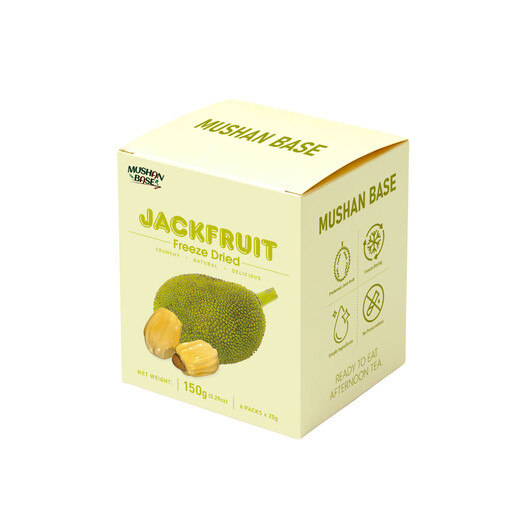
MUSHAN BASE Freeze-Dried Jackfruit 150 g (25 g × 6)
The six 25 g sachets are a good choice if you want to hand out individual portions.
The product information lists jackfruit as the only ingredient and says no sugar has been added. The nutritional information lists 65 g of sugars per 100 g.
View at Joybuy
 No image available
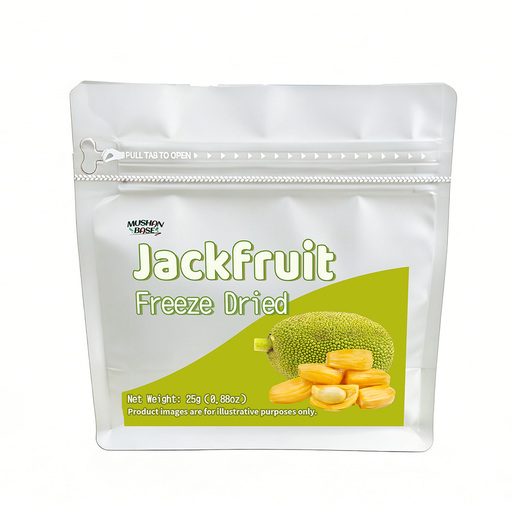
MUSHAN BASE Freeze-Dried Jackfruit 25 g
The individual pack is a good choice if you want to offer one sachet per portion.
The product information lists jackfruit as the only ingredient and says no sugar has been added.
View at Joybuy
Frequently asked questions
Does lactose-free mean suitable for someone with a cow’s milk allergy?
No. Lactose intolerance affects the body’s ability to digest lactose; a food allergy involves an immune reaction to certain substances, such as cow’s milk proteins. If a child has a cow’s milk allergy, check the information about milk and don’t base your choice on the lactose-free label alone.
What does ‘may contain nuts or peanuts’ mean?
It’s a warning about possible cross-contamination, and doesn’t necessarily mean the allergen has been deliberately added as an ingredient. Jumbo includes this kind of warning for Dried Mango 125 g. If a child has the relevant allergy, ask their parent or carer how to handle it.
How can you avoid contact with allergens when handing out snacks?
Use clean hands, crockery and utensils, and keep the agreed preparation separate. Stichting Voedselallergie warns that removing, sieving out or cutting away a prohibited ingredient is not enough; don’t give that snack to the child concerned.
Can young children eat raisins?
The Netherlands Nutrition Centre lists raisins as a possible snack around a child’s first birthday, when they start eating meals with the family. Keep the portion small, consider how well the child can chew, and make sure they sit down calmly while you stay nearby.
What allergen information must be shown on a label?
The Netherlands Food and Consumer Product Safety Authority says that the 14 legally designated allergens must be listed on the label, usually clearly identified in the ingredients list. From 1 January 2026, new Dutch rules apply to warnings about possible cross-contamination. Transitional rules apply to existing safely packaged stock, with the production date determining which rules apply.


