
Mindful party planners
You want to serve dried fruit and check the nutrition information, ingredients and portion size rather than relying on a claim on the packaging alone.


Compare the nutrition table and ingredients on the exact pack; the search term ‘reduced fat’ does not, by itself, prove that the product has a reduced fat content. The Netherlands Nutrition Centre recommends eating no more than 20 g of dried fruit a day. If you’re buying for guests with allergies, check the allergen information on the packaging.
You want to serve dried fruit and check the nutrition information, ingredients and portion size rather than relying on a claim on the packaging alone.
You want to prepare small portions in advance and tailor the amount in each bowl or party bag to your event. The pack size helps you work out how much you’ll need.
You’re buying for guests for whom ingredients and allergens matter. You want to be able to check the information on the original packaging and keep it available.
First compare the details for the exact variant. Then plan your portions, any allergen checks and how many packs you’ll need.
The percentages below show how the main considerations for this Halloween shop compare with one another. The Netherlands Nutrition Centre recommends eating no more than 20 g of dried fruit a day; this is not a limit set by the packaging. It also notes that dried fruit with added sugar is not included in the Dutch Wheel of Five healthy eating guidelines.
| What to consider | What to look for | Who it matters to |
|---|---|---|
| Fat content and nutrition claim | Check the nutrition table for the exact variant and see whether the claim actually appears on the packaging. | If you mainly want to assess the fat content, compare the figures per 100 g on the specific pack. Around 36% of consumers prioritise verifiable information about fat and the claim. |
| Sugar and portion size | Check whether sugar has been added and plan how many grams to serve per portion. | If you want to serve small amounts and take added sugar into account, the ingredients and portion sizes are key. This is the main concern for around 29% of consumers. |
| Ingredients and allergens | Read the allergen information on the original packaging; a product description such as ‘no preservatives’ is no substitute for checking it. | If you’re buying for someone with a relevant allergy, you’ll want to check the information on that exact pack. Suitability for allergy-aware guests is the top priority for around 21% of consumers. |
| Packaging and leftovers | Compare the net weight with the number of portions you want to serve, and follow the storage instructions on the packaging. | If you want to buy enough without having lots left over after the party, match the pack size to your portion plan. This is the main concern for around 14% of consumers. |
A search term or general product description doesn’t show whether the exact variant meets the requirements for a nutrition claim. The European Commission states that nutrition claims are only permitted when they are included on the relevant list.
Base your choice on the nutrition table and the claim on the packaging of that exact variant. Don’t assume the fat content is reduced based on the product category name.
Choosing a product based on its fat content doesn’t automatically tell you how much dried fruit to serve. The Netherlands Nutrition Centre recommends eating no more than 20 g of dried fruit a day.
Serve smaller portions and take into account any dried fruit someone has already eaten that day. Check for added sugar separately from the fat content.
That description alone doesn’t tell you whether a product is suitable for a guest with an allergy. The Netherlands Food and Consumer Product Safety Authority (NVWA) says that allergen information for prepacked products must appear on the label.
Check the information on the exact pack. Keep it available if you transfer the fruit to bowls or portion bags.
Albert Heijn has a product page for AH Soaked Dried Apricots.
Jumbo lists a 250 g pack of organic dried apricots.
Lidl has a product page for dried fruit mix.
ALDI lists 250 g packs of sun-dried apricots from Trader Joe’s.
PLUS lists dried apricots in a 375 g stand-up pouch.
Dirk lists, among other products, 375 g packs of 1 de Beste sultanas and 750 g packs of raisins.
These product picks show different types of dried fruit and packaging. The stated fat values are product information, not proof that a product meets the ‘reduced fat’ claim; check the exact packaging to confirm.
 No image available
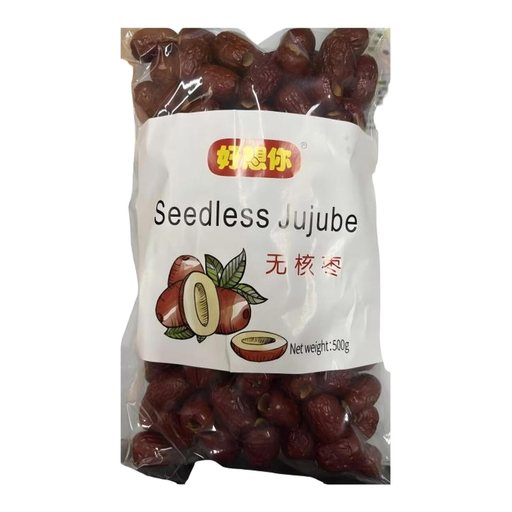
An option if you want to serve red dates as a snack; the product information lists jujube as an ingredient.
Stated fat content: 0 g per 100 g. This figure alone doesn’t show that the variant can be described as ‘reduced fat’.
 No image available
An option if you want to serve red dates as they are or use them in dishes; the product description says they’re 100% red dates.
Stated fat content: 0.5 g per 100 g. This figure alone doesn’t show that the variant can be described as ‘reduced fat’.
 No image available
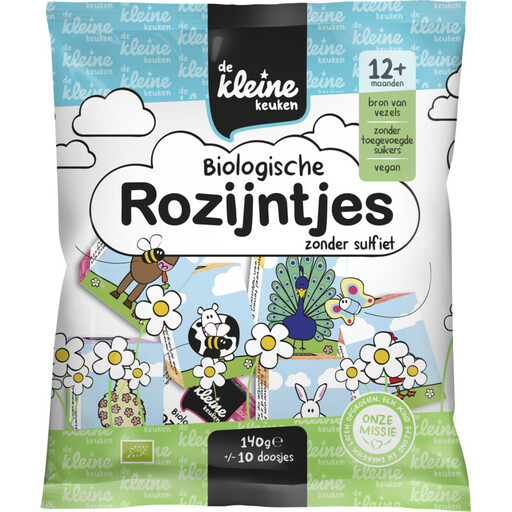
The ten individual 14 g snack boxes make these easy to hand out in portions.
The product information says no sugars have been added. It also states that the product is suitable from 12 months; supervise children while they eat. Not suitable for children with swallowing difficulties.
 No image available
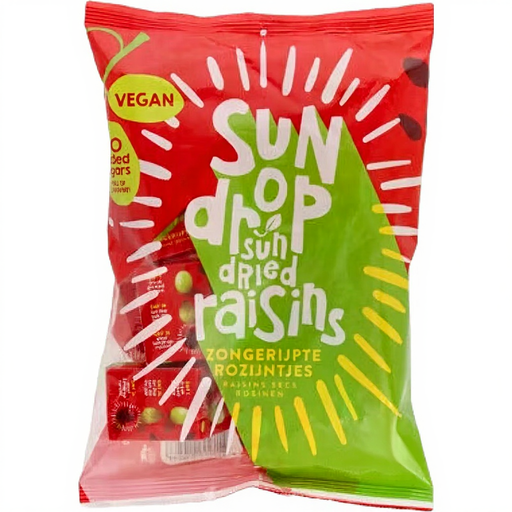
The product name describes these as raisins for handing out, making them a good fit if you want to offer individual portions.
Stated fat content: 0.7 g per 100 g. The ingredients list includes sunflower oil; check the full ingredients information on the packaging.
 No image available
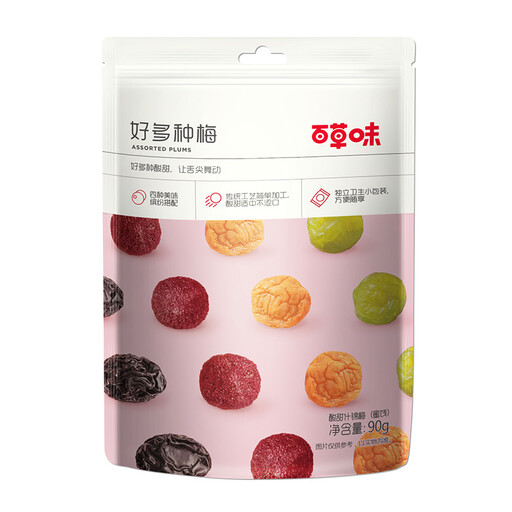
An option if you want to serve dried plums as a snack to share.
Stated fat content: 0.2 g per 100 g. The product information also lists white sugar, salt and sweeteners, so this product is not free from added sugar.
The Netherlands Nutrition Centre recommends eating no more than 20 g of dried fruit a day. Use this as nutritional guidance when planning portions, and take into account any dried fruit someone has already eaten that day; it isn’t a legal portion limit.
The Netherlands Food and Consumer Product Safety Authority (NVWA) says that allergen information must appear on the label of prepacked products. The 14 listed allergens include sulphites, nuts, peanuts and sesame, among others. If a guest has a relevant allergy, check the exact packaging; a general product name won’t tell you whether it’s suitable.
Follow the storage instructions on the exact packaging. The Netherlands Nutrition Centre’s storage guide recommends keeping opened dried mixed fruit in a kitchen cupboard for 6–9 months. This advice applies to that product type and isn’t a universal storage period for soaked apricots or other variants.
First decide how many small portions you want to serve, then compare the net weight of the packs. The product pages reviewed, for example, show 375 g packs of apricots at PLUS and 375 g and 750 g packs of raisins at Dirk. A larger pack doesn’t, by itself, prove a lower price per portion.
Use the product information on the packaging you bought. Albert Heijn and PLUS advise customers to check the current packaging and direct any questions to their customer service teams.