
Bulk buyers who portion it themselves
If your household regularly eats dried fruit, you can compare pack sizes and weigh out portions yourself, rather than letting the size of the bag dictate how much you eat.


Choose a pack based on the portion you want to eat before exercise and how much your household actually uses. Then compare the pack size and price per kilogram for the same type of fruit. A large bag is only practical if you’ll use it and weigh out smaller portions yourself: the Netherlands Nutrition Centre’s general guidance is to eat no more than 20 g of dried fruit a day. This is not a personal sports nutrition plan.
If your household regularly eats dried fruit, you can compare pack sizes and weigh out portions yourself, rather than letting the size of the bag dictate how much you eat.
If you want a small snack before a workout, the ingredients and nutritional values per 100 g can help you assess the amount you weigh out yourself.
If you don’t eat dried fruit often, a smaller pack may better suit how much you use than a large bulk bag.
| What to consider | What should you check? | Who is this important for? |
|---|---|---|
| Stock and price per kilogram | Compare the price per kilogram and net weight of the same type of fruit, and consider how much your household uses. | If you regularly keep raisins at home and portion them yourself, the balance between stock and how much you use matters. Around 33% of consumers put value for money first when buying. |
| Portion and when you eat it | Check the carbohydrates and fibre per portion you weigh out yourself; don’t treat the manufacturer’s serving size as personal advice. | If you want to choose a small snack to suit the time you’ll eat it before a workout, focus on the amount rather than the size of the bag. Around 33% of consumers prioritise choosing a snack to suit the occasion. |
| Ingredients and sugar | Read the ingredients for the exact variant and distinguish added sugars from total sugars. | If you want to check the contents of raisins or a mix, the ingredients list may be decisive. Around 17% of consumers prioritise checking the ingredients. |
| Portioning and storage | Check whether the pack is resealable and follow the storage and use-by or best-before information on the packaging. | If you take small amounts and want to store the rest, a practical closure and the storage instructions are relevant. Around 17% of consumers prioritise convenience. |
The Netherlands Nutrition Centre recommends no more than 20 g of dried fruit a day as general dietary guidance. This is not a legal limit or personal advice about what to eat around a workout. So a larger pack is no reason to have a larger portion.
A serving size given by a manufacturer isn’t automatically suited to when you plan to eat it. For example, Albert Heijn lists a serving size of 50 g, while the Netherlands Nutrition Centre’s general guidance for dried fruit is no more than 20 g a day.
Weigh out the amount you want to eat and don’t let the size of the pack dictate your portion.
A lower total price doesn’t automatically mean a lower price per kilogram. Pack sizes also vary between shops and products.
Compare the same type of fruit by price per kilogram, then check whether the amount suits how much you use.
A mix may contain different ingredients from a bag of raisins. ALDI’s product information includes variants with cashew nuts and cranberry and raisin mixes.
Check the exact variant name and ingredients before comparing products.
Shop information about ingredients and nutritional values is not a comparative sports test, and it doesn’t prove that a particular own-brand product will improve your workout.
Use product information to compare pack sizes and ingredients, not to assume a particular performance outcome.
According to Albert Heijn, AH Raisins comes in a smaller 250 g pack and includes product information about its ingredients and nutritional values.
According to Jumbo, Jumbo Sun-dried Sultana Raisins comes in a 500 g pack with label information.
Lidl has product pages for Belbake Raisins and dried fruit mix.
ALDI lists TRADER JOE'S Raisins in a 500 g pack and mixed variants in 200 g packs.
According to PLUS, PLUS Sultana raisins comes in a 375 g pack with information about its ingredients and nutritional values.
Dirk lists Raisins in a 750 g pack, which may be useful if you want to compare larger pack sizes.
These Joybuy products are suitable as dried fruit snacks; check the variant and the information on the packaging for each product.
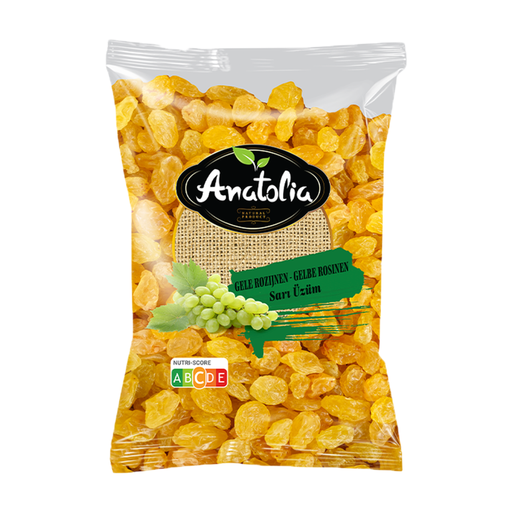 Image unavailable
A bulk pack of raisins for anyone who wants to weigh out their own snack portions.
The product information lists 100% dried grapes and says to seal the pack tightly after opening.
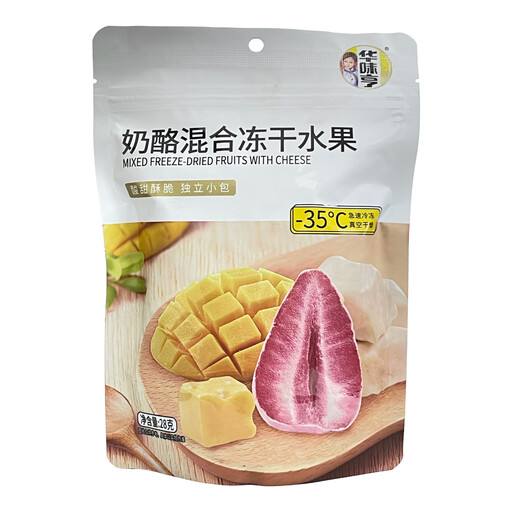 Image unavailable
Only relevant if you’re looking for a small bag of mixed, flavoured snacks; this isn’t a value pack of plain raisins.
The product information lists white chocolate and cheese, soya and milk, and 30.4 g of fat per 100 g. The Netherlands Nutrition Centre advises choosing products that aren’t high in fat before exercise.
The listed best-before date is 24 September 2026, which has passed. Don’t buy this product based on that information; first check that the current pack has a valid best-before date.
No. The Netherlands Nutrition Centre recommends no more than 20 g of dried fruit a day as general dietary guidance; it’s not a legal limit on what you can buy or an individual sports nutrition plan.
No. Albert Heijn lists 0 g of added sugars and 59 g of total sugars per 100 g for AH Raisins. Check both values on the information for the exact variant.
Follow the instructions on the packaging. Jumbo, PLUS and Albert Heijn advise storing the raisins they describe in a cool, dry, dark place; seal the pack tightly after opening if the product information says to do so.
Check the ingredients list and any cross-contamination warning for the exact variant. The Netherlands Food and Consumer Product Safety Authority (NVWA) states that the required information about 14 allergens must appear in the ingredients list; a simple ingredients list isn’t a general guarantee that a product is allergen-free.
No, there are exceptions. According to the Netherlands Authority for Consumers and Markets, online purchases generally come with a 14-day cooling-off period after delivery, but there are legal exceptions, including for products that spoil quickly. Check which terms apply to the specific product.
Compare the product, packaging and batch details with the warning from the Netherlands Food and Consumer Product Safety Authority and follow the instructions given.