
Lunchbox and snack organisers
If you want to count out portions in advance for lunchboxes or break times, a multipack of individual boxes can make planning easier. Jumbo lists 14 boxes, each containing 14 g.


For lunchboxes or handing out snacks, individually wrapped portions are easy to count: Jumbo lists boxes containing 14 portions of 14 g each. A larger bag is a better fit if you want to portion it yourself or serve it for everyone to share. Choose based on how you plan to serve it, the portion size you need, and the latest ingredients and allergen information.
If you want to count out portions in advance for lunchboxes or break times, a multipack of individual boxes can make planning easier. Jumbo lists 14 boxes, each containing 14 g.
A larger bag of raisins is suitable if you want to portion them yourself or serve them for everyone to share. Examples include 375 g, 500 g and 750 g packs from PLUS, ALDI and Dirk. The total weight won’t tell you how many portions you’ll get.
If you need to check ingredients, allergens and the amount served on each occasion, look at the latest information for the exact product variant. For professional catering, allergen information must also be accessible when you serve the product unpackaged.
First decide how you’ll serve the fruit and how many portions you need. Then check the packaging, ingredients and information for guests.
| What to consider | What should you check? | Who is this important for? |
|---|---|---|
| Handing out portions and lunchboxes | Count the inner packs and check the weight per box, not just the total weight. | If you want to prepare a pre-packed portion for every lunchbox or serving, the number of boxes and fixed portion weight are what matter most. Around 31% of consumers prioritise the convenience of handing out and counting portions. |
| Portioning it yourself | Compare the total weight with the amount you’ve planned, and allow for portioning and serving equipment. | If you want to choose the portion size yourself or put fruit out on a buffet, a larger bag gives you more flexibility, but portioning it takes extra preparation. Around 23% of consumers prioritise portioning it themselves and controlling the amount. |
| Ingredients, allergens and portions | Check the latest label for the exact variant and plan the portion size across all the servings scheduled for the day. | If you need to check the ingredients and allergen information for guests, use the packaging for the variant you’re serving. Around 23% of consumers give top priority to ingredients, allergens and portion planning. |
| Variety and packaging | Check which types of fruit are in the product and how to dispose of the packaging you use. | If you want to offer variety or collect packaging in advance, check the fruit combination and any disposal instructions for each product. Around 23% of consumers prioritise variety and packaging disposal. |
A weight of 375 g, 500 g or 750 g doesn’t tell you how many individual portions there are. Jumbo’s multipack, by contrast, is listed as 14 boxes of 14 g each.
Before planning your lunchboxes, check the total weight, the number of inner packs and the weight per portion.
With a larger bag, portioning it yourself takes extra preparation and may require separate serving cups.
The World Cancer Research Fund advises eating no more than 20 g of dried fruit a day. This is nutritional guidance, not a legal catering limit.
Add together any servings planned for the same day and include the fruit as a measured part of what you offer.
For unpackaged catering, allergen information must remain accessible, even if you don’t put the outer packaging on the buffet.
Keep the current packaging information linked to the variant you’re serving, and make allergen information accessible to guests, for example on a card or menu. The Netherlands Food and Consumer Product Safety Authority also explains how guests can ask for information verbally.
Preparing cards and keeping product information up to date takes extra work.
Albert Heijn lists varieties with apple pieces and apricot pieces, and warns that product information may change.
Check the ingredients and allergens again for each exact variant, and check the packaging you’re actually using.
Worth considering for raisins and fruit varieties in the Hamsterchef range.
A clear example of portions you can count out in advance.
A listed dried fruit mix.
A larger pack of raisins for portioning yourself.
A larger pack of sultanas.
Larger packs and a range of fruit types to compare.
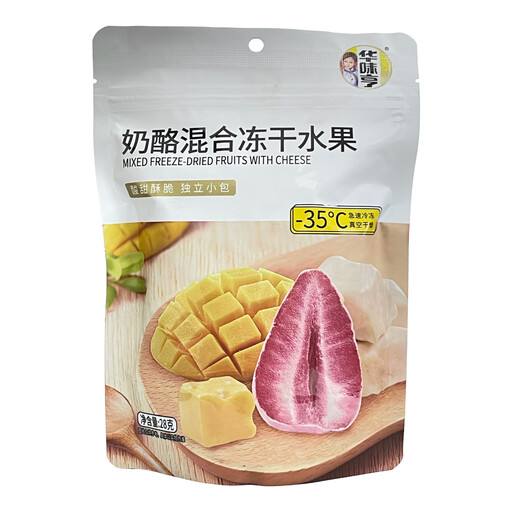
This option is an individually wrapped freeze-dried fruit mix. It’s a different type of product from ordinary raisins, so check that the ingredients and shelf life suit your catering plans.
 No image available
The description states that it comes in an individual 28 g pack, ready to eat without portioning.
According to the product description, the fruit mix contains strawberry and mango with a white chocolate and cheese coating. Soy and milk are listed as allergens.
The stated best-before date is 24 September 2026, which has now passed. Don’t use this option for catering without first checking the date and product information on the packaging actually delivered.
Divide the number of boxes you need by 14, then round up to the nearest whole multipack. For the size listed by Jumbo, work out how many you need by multiplying the number of attendees by the number of planned servings per person.
Include the total amount for the whole day in your planning. The World Cancer Research Fund advises eating no more than 20 g of dried fruit a day; one box listed by Jumbo contains 14 g. This is nutritional advice, not a legal catering limit.
According to the Netherlands Food and Consumer Product Safety Authority, allergen information for pre-packed products is shown on the label. For unpackaged food, such as catering, this information must be accessible in another way, for example on cards or a menu. The NVWA also lists sulphites among the regulated allergens.
If you prepare, process or sell food as a food business, the NVWA requires you to have an HACCP food safety plan. You can use your own plan or follow a suitable, approved hygiene code; your choice of product doesn’t replace this business requirement.
Not necessarily. Compare the current costs for the same planned quantity, and if you’re portioning it yourself, allow for the extra preparation and any serving packs you may need. The sizes mentioned range from Jumbo’s 14 boxes of 14 g to larger raisin packs of 375 g, 500 g and 750 g.