What should you look for when choosing?
Compare the portion and nutritional information first. Then consider the ingredients, how you’ll use the product and the packaging, based on what matters to you during your coffee break.
| What to consider |
What to look for |
Who is this most relevant to? |
| Calories per portion |
Compare kcal per 100 g and calculate the amount for the weight you eat. |
With my morning coffee, I want to know how much energy my usual snack portion provides; around 42% of consumers give the highest priority to calories per portion. |
| Ingredients |
Read the ingredients list and allergen information; assess kcal separately. |
If I’m looking for a particular ingredient profile, I don’t want to assume it also has the lowest energy value; around 25% of consumers prioritise suitable ingredients. |
| Use and storage |
Check the pack weight, whether the fruit contains stones and the storage instructions on the label. |
If I want to take my snack with me or portion it out in advance, convenience and storage matter; around 17% of consumers focus most on practicality. |
| Shop and packaging |
Compare the weight and price on the same basis, and check how you can buy it. |
If I do my shopping at a regular supermarket, I want the pack and purchasing options to fit in with that; around 16% of consumers prioritise where to shop and costs. |
The Netherlands Nutrition Centre’s general figures are guides by fruit type, not current nutritional tables for specific supermarket products. For solid foods, the European Commission sets a maximum of 40 kcal (170 kJ) per 100 g for a ‘low energy’ claim. That’s different from having a small snack portion: for example, the general figure for dried plums is 40 kcal per 20 g, or 200 kcal per 100 g.
Supermarket brands for comparison
These product ranges provide examples for comparing labels and practical features. A brand name or product feature doesn’t prove that a product is lower in calories.
Albert Heijn
Albert Heijn stocks products including soaked dried apricots. Check the nutritional information on the current pack.
- The product page identifies the product.
- Albert Heijn warns that ingredients and nutritional values may change. ‘Soaked’ doesn’t, in itself, tell you anything about the calorie content.
Jumbo
Jumbo lists both regular pitted dried apricots and a 250 g organic apricot variety.
- For Jumbo Organic Dried Apricots 250 g, Jumbo states that no preservatives are used.
- This product-specific feature doesn’t automatically apply to the regular variety, nor does it show that it has a lower energy content.
Lidl
Lidl describes Alesto mango strips as a snack.
- According to Lidl, the mango strips described contain no added sugars.
- Lidl also states that they contain naturally occurring sugars. This doesn’t mean they are low in calories and doesn’t automatically apply to all Alesto products.
Aldi
ALDI describes Trader Joe’s Sun-Dried Plums in a 250 g pack.
- The shop description says the plums are soft and pitted.
- These practical features don’t prove that this variety contains fewer kcal than other plums.
PLUS
PLUS lists dried plums in a 375 g bag.
- The product page lists home delivery or collection as purchasing options.
- Pack size and purchasing options don’t indicate a calorie advantage; product information may change.
Dirk
Dirk describes 1 de Beste Pitted Plums in a 375 g pack.
- The shop description says the plums are soft and suitable as a snack or for baking.
- This is a shop description, not an independent taste test or proof of a calorie or quality advantage.
Joybuy products
The Joybuy products shown are plum and date snacks, including preserved and salted plums; they are not all the same as dried fruit to have with coffee. So before choosing them as an alternative, compare the product type, portion and nutritional information on the product page.
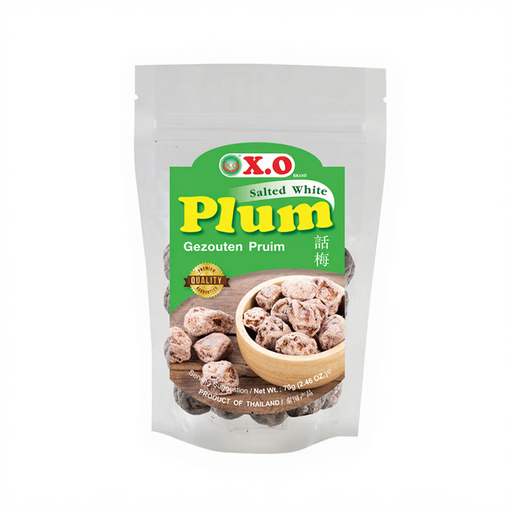 Image unavailable
X.O Salted White Plum 70 g
The product description presents this as a portable plum snack. It is a salted, preserved plum, not a regular dried plum.
The description states that it contains 86% Chinese plum and lists sugar, salt and sulphite as ingredients.
View at Joybuy
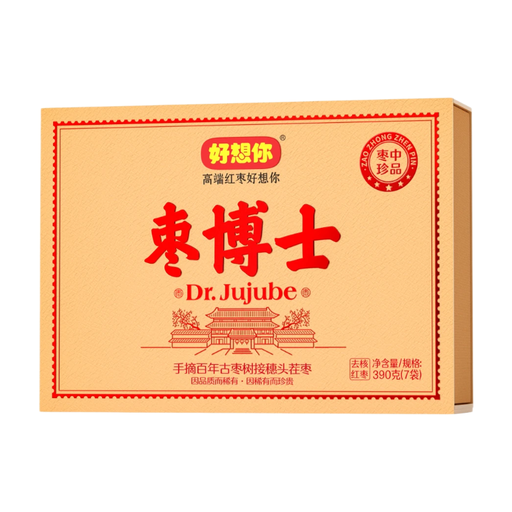 Image unavailable
Haoxiangni Dr.Jujube (Premium Gold-Grade Pitted) 390g
The product description says these red dates can be eaten straight from the pack, making them a different type of fruit from dried plums or apricots.
The stated nutritional values are 327 kcal and 50 g of sugars per 100 g.
View at Joybuy
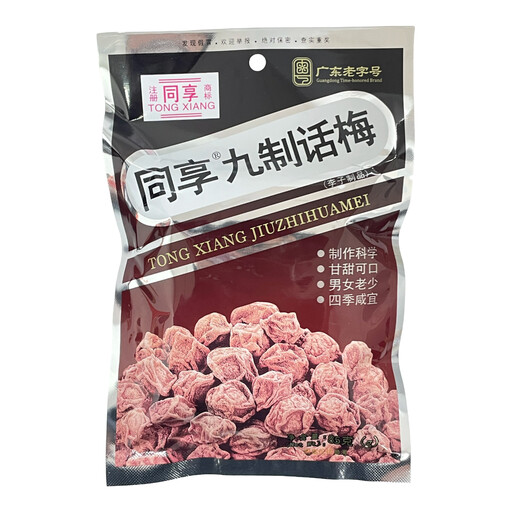 Image unavailable
Tong Xiang Jiu Zhi Salted Plums 85g
The product description says these plum snacks are individually wrapped for taking on the go; they are preserved plums.
The listed ingredients are green plum, sugar, salt, liquorice and food additives. The nutritional information states 257 kcal per 100 g.
View at Joybuy
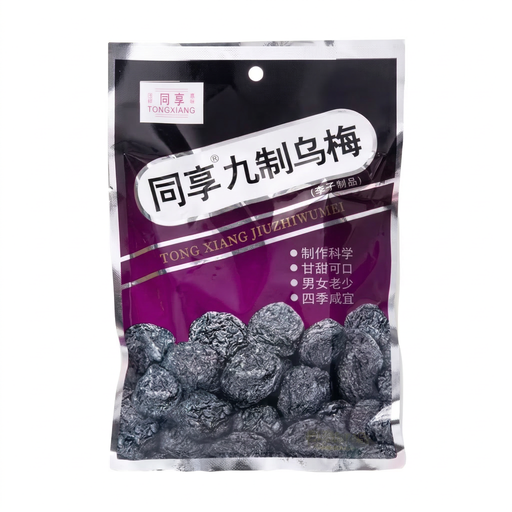 Image unavailable
Tong Xiang Multi-Stewed Preserved Dark Plum 90g
The product description says it can be enjoyed at home, at work or on the go. These are preserved plums, not a regular portion of dried fruit.
The stated nutritional value is 327 kcal per 100 g. The ingredients list includes plum, sugar, salt, liquorice, honey and sweeteners.
View at Joybuy
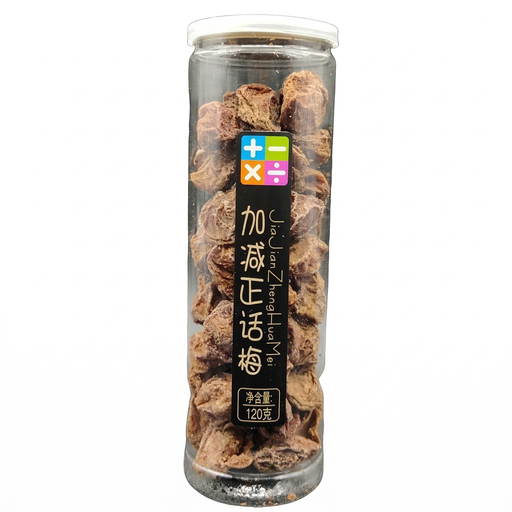 Image unavailable
Jia Jian Cheng Chu Jiajianzheng Prune 120g
According to the product description, this plum snack is ready to eat and suitable for taking with you; it is a preserved plum.
The stated nutritional values are 230 kcal per 100 g and 5 g of salt per 100 g. The ingredients list includes green plum, salt and sweeteners; the product information also states that it is a source of phenylalanine.
View at Joybuy
Frequently asked questions
Is 40 kcal per portion the same as a low-calorie product?
No. For a ‘low energy’ claim on a solid food, the limit is 40 kcal per 100 g. The general figure for dried plums is 40 kcal per 20 g, or 200 kcal per 100 g, so it doesn’t meet that claim limit.
How much dried fruit does the Netherlands Nutrition Centre recommend per day?
The Netherlands Nutrition Centre recommends a maximum of 20 g of dried fruit per day. This is dietary advice, not a legal limit on what you can buy, and it isn’t an additional amount for every individual coffee break.
How should you store an opened bag of dried plums?
For dried plums in general, the Netherlands Nutrition Centre’s storage guide recommends keeping them in a kitchen cupboard for 6–9 months after opening. Follow the storage instructions on the specific pack, as these may vary between products.
What should you check if sulphites, nuts or peanuts are relevant to you?
Read the allergen information on the specific pack. The Netherlands Food and Consumer Product Safety Authority states that allergen information for pre-packed products appears on the label. An organic label doesn’t replace this check.
How do you compare the cost of different pack sizes?
Compare packs on the same weight basis, and consider the total amount you need as well. The ALDI plum pack described is 250 g; the PLUS and Dirk packs mentioned are 375 g. So a lower total price doesn’t automatically mean a lower price per kilogram.


