Who is this relevant for?

Regular coffee-break snackers

You regularly eat dried fruit at home and want to buy an amount that suits you at a price per kilo you can check, without automatically opting for the largest pack. Jumbo lists the same type of sultanas in 250 g and 500 g packs.

Mindful portioners

You’re looking for something sweet with your coffee, but want to make an informed choice about the ingredients, sugars and amount you serve. The Voedingscentrum recommends having no more than a handful of dried fruit with no added sugar.

Stock and label planners

You don’t want to open all your supplies at once, or you’re specifically looking for organic, unsulphured products or allergen information. These details apply to the exact product variant: PLUS lists Smaakt Blue Thompson raisins as organic and unsulphured, while Albert Heijn lists sulphites in the apricots reviewed.

What should you look for when choosing?

First, work out how much you typically use and whether you’d rather open one bag or individual packs. Then compare the same type of fruit and preparation. Organic or unsulphured are separate label considerations, not pack formats.

Consideration What to look for Who might prioritise this?
Value for money Compare the net weight and price per kilo for the same type of fruit and preparation, and factor in the total pack size. If I regularly eat the same raisins, I want to know whether a larger bag suits how much I use. Around 29% of consumers in this decision-making context prioritise value for money.
Portion size and sugars Check the ingredients and nutritional information per 100 g, and decide in advance how much to put in a bowl. If I have something sweet with my coffee, I want to choose my portion mindfully and know what’s in the product. Around 29% of consumers put mindful portions and ingredients first.
Stock and storage Check whether it’s one large bag or individual packs, the instructions for storage after opening, and the use-by date. If I use dried fruit infrequently or inconsistently, I want to keep unopened packs separate and seal the rest properly. Around 21% of consumers in this decision-making context mainly want to manage their stock.
Label requirements Check the organic or unsulphured claim, the ingredients and any allergen warnings on the exact product variant. If organic, unsulphured or a relevant allergen requirement matters to me, I check the label on that specific pack. Around 21% of consumers prioritise specific label requirements like these.

Common pitfalls

  • Assuming a multipack is always the best choice

    A lower price per kilo can mean buying more and ending up with more stock than you’ll use.

    First choose an amount that suits your coffee breaks, then compare the same variant by price per kilo.

  • Assuming no added sugar means low in sugar

    Fruit naturally contains sugars. According to the nutrition table, the Jumbo sultanas reviewed contain 75,5 g of sugars per 100 g, even though sugar isn’t listed as a separate ingredient.

    Read both the ingredients list and the nutritional information, and serve a mindful portion. The Voedingscentrum recommends having no more than a handful of dried fruit with no added sugar.

  • Treating organic or unsulphured claims as an allergen guarantee

    These claims don’t automatically tell you whether a product is suitable for someone with a food allergy. The Smaakt raisins reviewed may contain traces of several allergens; according to the ingredients list, Albert Heijn’s soaked apricots contain sulphites.

    If you have a relevant allergy, check the ingredients and allergen warning on the exact pack.

  • Applying the same storage instructions to all dried fruit

    General advice for storing raisins doesn’t automatically apply to soaked apricots, which also contain water according to the ingredients list.

    Follow the instructions on the label for your chosen variant and seal an opened pack as directed.

Relevant brands and product ranges

Albert Heijn

Albert Heijn lists 250 g packs of soaked dried apricots, as well as multipacks containing individual items.

  • The multipacks contain two or four separate 250 g items, so you don’t have to open everything at once.
  • According to the ingredients list, the apricots reviewed contain water and preservatives, including sulphites, so don’t compare them directly with dry raisins.

Jumbo

Jumbo lists sun-dried sultanas in 250 g and 500 g packs.

  • The two pack sizes make it possible to compare the same type of raisins.
  • The ingredients lists for the variants reviewed include raisins and cottonseed oil; the product information isn’t an independent taste assessment.

Lidl

Lidl has a product listing for dried fruit mix in the Netherlands.

  • A fruit mix is another product option to consider if you’re looking beyond raisins alone.
  • The product listing alone doesn’t tell you about the ingredients, nutritional information or value for money.

Aldi

ALDI Netherlands lists Trader Joe's raisins in a 500 g pack.

  • The listed weight makes this pack worth considering if you’re looking for a larger supply.
  • Check the ingredients and label on the exact pack before choosing; a sales claim isn’t an independent quality assessment.

PLUS

PLUS lists 500 g packs of Smaakt Blue Thompson raisins as organic and unsulphured.

  • The product information lists the ingredients and says to store the raisins in a cool, dry, dark place in a sealed pack.
  • The page mentions natural sugars and possible traces of allergens. These details apply to this variant, not the entire PLUS range.

Dirk

Dirk lists raisins in a 750 g pack.

  • This pack size may suit households that use a larger quantity.
  • Before choosing, check the label and storage instructions for the specific pack.

Dried fruit at Joybuy

This product selection is suited to anyone looking for a larger bag of raisins to enjoy with a coffee break at home.
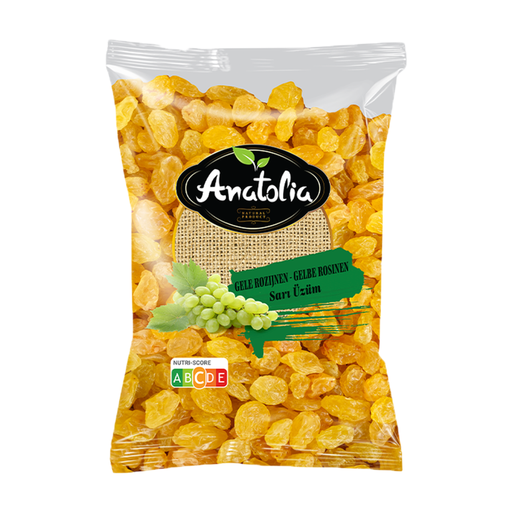
Anatolia Sari Uzum (Raisins), 500 g

Anatolia Sari Uzum (Raisins), 500 g

This 500 g bag is a good fit if you’re looking for a larger supply of raisins and that amount suits how much you use.

The product description says it contains 100% dried grapes and recommends storing it in a cool, dry place and sealing the pack securely after opening.

The description warns of a choking hazard for young children and advises keeping the product out of reach of babies and young children.

View at Joybuy

Frequently asked questions

How do I compare a large bag with a multipack?

Compare the same type of fruit and preparation by net weight and price per kilo, and also consider the total pack size and number of individual packs. A multipack lets you keep unopened items separate, but a larger total weight won’t automatically suit everyone’s consumption.

Why can dried fruit with no added sugar still contain a lot of sugars?

Fruit naturally contains sugars. Jumbo lists 75,5 g of sugars per 100 g for the sultanas reviewed, even though sugar isn’t listed as a separate ingredient. So check both the ingredients list and the nutritional information.

How long can you keep an opened bag of raisins?

The Voedingscentrum’s general advice is to store raisins in a cool, dry, dark place in a well-sealed pack; for an opened product, it gives a storage time of 6–9 months in a kitchen cupboard. Follow the label on your product too, and don’t automatically apply this advice to soaked apricots or every fruit mix.

What should I look for in terms of allergens in dried fruit?

Check the ingredients list and allergen warning on the exact pack. The Netherlands Food and Consumer Product Safety Authority lists sulphites as one of the 14 allergens that must be declared on prepacked products. Since 1 January 2026, rules have also applied to warnings about possible cross-contamination; this doesn’t guarantee that a product is suitable for your allergy.

Do you need to prepare dried fruit before serving it with coffee?

Albert Heijn describes the soaked apricots reviewed as a snack. This suggests they can be served as they are, but check the pack instructions for other products.
