The apricot varieties reviewed from Albert Heijn, Jumbo and PLUS list 0.5–0.6 g of fat per 100 g, but this absolute amount does not prove that the fat content is lower than that of a comparison product. So compare energy and sugars for the same portion, and check the ingredients and storage advice too; ‘no added sugars’ does not mean sugar-free.
Who is this relevant to?
Low-fat options with your coffee
You’re looking for a fruity snack and mainly want to assess the absolute fat content, without relying on a comparative claim. The apricot varieties reviewed from Albert Heijn, Jumbo and PLUS list 0.5–0.6 g of fat per 100 g.
A small, measured snack
You want to have a small amount with your coffee, so you also check the nutritional values for your portion. The World Cancer Research Fund advises eating no more than 20 g of dried fruit per day; this is dietary advice, not a legal purchasing limit.
Convenience and suitable ingredients
You check the ingredients and storage instructions, or want to avoid sulphites. The three apricot products reviewed list sulphites, so check the ingredients and allergen information for the variety you’re considering.
What should you look for when choosing?
Start with the fat content per 100 g, then decide on your portion and check the ingredients and storage advice.
| What to consider |
What should you check? |
Who is this relevant to? |
| Fat content |
Compare the fat per 100 g. A low absolute amount does not, on its own, show a reduction compared with a comparison product. |
When I take a coffee break, I mainly want to assess the fat content without treating a ‘light’ comparison as proof; around 36% of consumers make fat their top priority. |
| Energy and portion size |
Compare the energy for the same weight and decide in advance how much you’ll have. |
If I want to keep my snack small, I look at the energy in the amount I’ll actually eat; around 29% of consumers give energy and portion size top priority. |
| Sugars and ingredients |
Check both ‘of which sugars’ and ‘of which added sugars’, and look at the ingredients and allergen information. |
If I want to limit added sugar or need to avoid an ingredient, I read the label carefully; around 21% of consumers put ingredients or avoidance first. |
| Storage and packaging |
Follow the instructions after opening and choose an amount that suits how you’ll use it. |
I want packaging that’s easy to store and a quantity I can use up in time; around 14% of consumers name convenience and pack size as their first consideration. |
Common pitfalls
-
Assuming low fat means low in calories
The apricot products reviewed list 0.5–0.6 g of fat and 182–254 kcal per 100 g. Fat and energy therefore tell you different things about a portion.
Read both values separately and always compare products using the same snack weight.
-
Reading ‘no added sugars’ as ‘low in sugar’
PLUS lists 0 g of added sugars and 53.4 g of total sugars per 100 g. So the total sugar content can still be high.
Check both the ingredients list and the ‘of which sugars’ line, and decide on your portion in advance.
-
Using the same storage advice for every type of dried fruit
Once opened, the Albert Heijn soaked apricots reviewed should be refrigerated at a maximum of 7°C; PLUS gives different storage advice for its apricots.
Follow the instructions on the packaging of the exact variety you buy, and think about where you can store it once opened.
Brands and product ranges to compare
Albert Heijn
The AH Soaked Dried Apricots reviewed are a ready-to-eat option to enjoy with your coffee.
- Albert Heijn lists 182 kcal and 0.6 g of fat per 100 g.
- The ingredients include water and sulphites; refrigerate after opening at a maximum of 7°C.
Jumbo
The Jumbo Dried Apricots, Pitted 250 g reviewed are standard pitted dried apricots.
- Jumbo lists 0.5 g of fat, 237 kcal and 7.0 g of fibre per 100 g.
- These values apply to this variety; the label lists sulphites and notes that it may contain nuts, peanuts and sesame.
Lidl
Lidl’s Alesto range includes dried mango and other snacks.
- Lidl describes its mango strips as convenient for enjoying at home, at work or on the go.
- This is Lidl’s description, not an independent taste assessment; the range as a whole does not prove that every snack is low in fat.
Aldi
ALDI lists Trader Joe’s raisins in a 500 g pack and sun-dried apricots in a 250 g pack.
- ALDI’s product information confirms the product types and pack weights.
- Don’t use general nutritional values for raisins as exact values for these packs; ‘soft’ is a seller’s description of the apricots.
PLUS
The PLUS Dried Apricots reviewed come in a 375 g stand-up pouch.
- PLUS lists 0.5 g of fat, 254 kcal and 7.3 g of fibre per 100 g.
- The variety contains 53.4 g of total sugars per 100 g, and the product information mentions sulphites. Follow the packaging for storage instructions.
Dirk
Dirk’s catalogue includes sultanas, white raisins, prunes and apricots.
- You can choose from several types of dried fruit.
- The catalogue also includes chocolate products and fruit-and-nut mixes. Check the exact product name and nutritional information rather than searching for ‘raisins’ alone.
Dried fruit at Joybuy
The Joybuy products below are dried fruit options for a coffee break. Fruit type, nutritional values and ingredients vary, so compare the portion, sugars and composition of each product.
 No image available
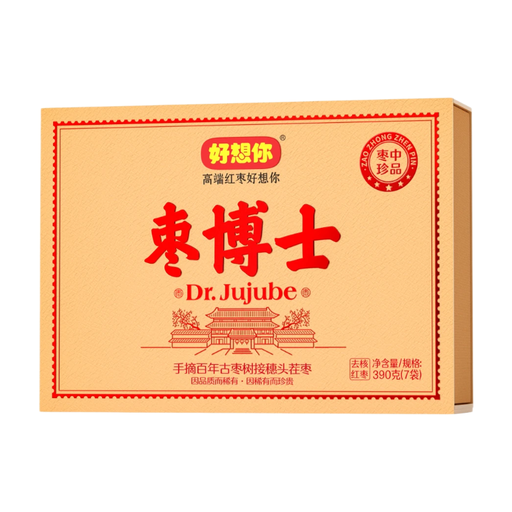
Haoxiangni Dr.Jujube (Premium Gold-Grade Pitted) 390g
An option to compare if you want to check the absolute fat content of ready-to-eat dried fruit.
The product description lists 0 g of fat, 327 kcal and 50.0 g of sugars per 100 g, and lists jujube as an ingredient.
View at Joybuy
 No image available
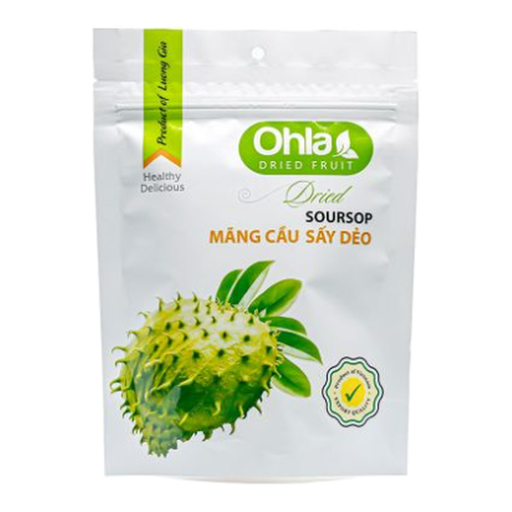
OHLA Dried Soursop 180g
This dried soursop could be a good choice if you want to compare a different type of fruit to apricots or raisins.
The product description lists 2.21 g of fat, 348 kcal, 72.6 g of sugars and 10.5 g of fibre per 100 g. The ingredients list includes white sugar, glucose and sodium metabisulphite.
View at Joybuy
 No image available
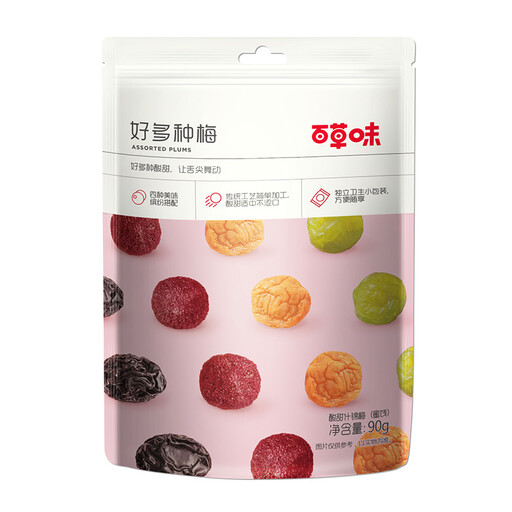
Be&Cheery Various Dried Plum 90g
A dried plum is an alternative to compare with apricots when looking at fat per 100 g.
The product information lists 0.2 g of fat, 68 kcal, 16.0 g of sugars and 3.0 g of salt per 100 g. The ingredients list includes sweeteners.
View at Joybuy
 No image available
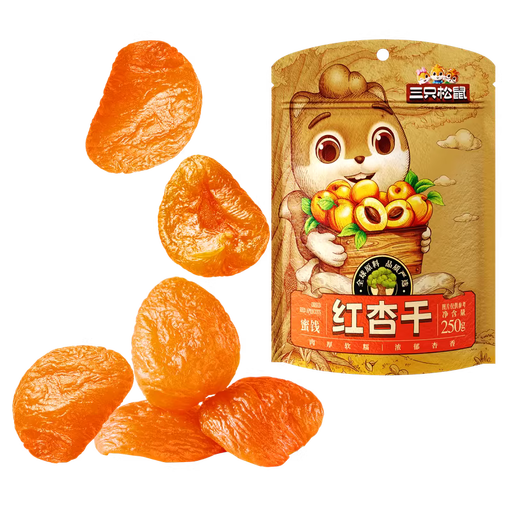
Three Squirrels Red Apricot Dried 250g
According to the product description, these dried apricots are ready to eat, but check the ingredients if you want to limit added sugars.
The nutritional information lists 0 g of fat, 311 kcal and 62.0 g of sugars per 100 g. The ingredients list includes added sugar, maltose syrup and sulphites; according to the description, the product should be eaten immediately after opening.
View at Joybuy
 No image available
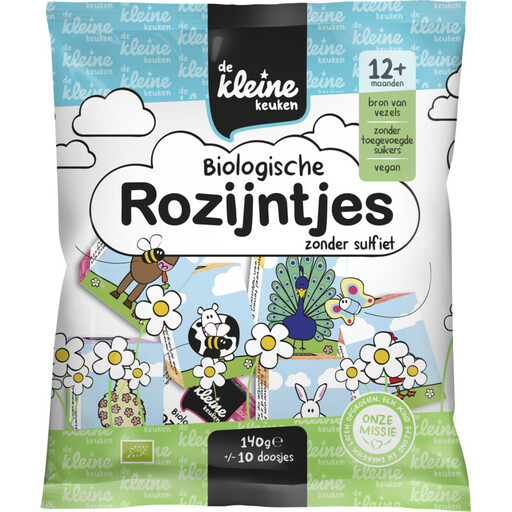
De Kleine Keuken Organic raisins 12M+ 140g
The individual 14 g boxes could be handy if you want to take a small amount of dried fruit with you.
The product description says these organic raisins contain no added sugars or sulphites, and advises storing them in a cool, dry, dark place. According to the description, the product is suitable from 12 months; children should be supervised while eating.
View at Joybuy
Frequently asked questions
Does ‘no added sugars’ mean dried fruit is sugar-free?
No. This claim means that no sugars or other ingredients used for their sweetening properties have been added. For example, PLUS lists 0 g of added sugars and 53.4 g of total sugars per 100 g.
How much dried fruit should you have during a coffee break?
The World Cancer Research Fund advises eating no more than 20 g of dried fruit per day. This is dietary advice, not a legal limit; the 50 g portion shown on the AH packaging is a different amount and does not replace that advice.
Can the soaked apricots reviewed be kept in a desk drawer after opening?
Not the AH variety reviewed: Albert Heijn advises refrigerating it after opening at a maximum of 7°C. Always follow the instructions on the packaging of the exact product you have; PLUS gives different storage advice.
Can you call these apricots ‘reduced fat’ based on their fat content?
Not based on the absolute amount of fat per 100 g alone. A comparative claim requires a clearly defined comparison product; the absolute fat content by itself does not show a reduction.
What should you look for if you need to avoid sulphites?
Check the ingredients and allergen information on the exact pack. All three apricot products reviewed list sulphites. The NVWA explains how allergens must be labelled; Stichting Voedselallergie describes reactions to sulphites as intolerance reactions.


