For a Christmas table where keeping fat intake low is a priority, compare the fat content per 100 g of the exact product, then check the sugars, portion size and ingredients too. According to product information from Albert Heijn, Jumbo and PLUS, the apricots reviewed contain 0.5–0.6 g of fat per 100 g. However, this does not automatically substantiate a comparative claim such as ‘reduced fat’, nor does it mean you can snack on them without limits.
Who is this relevant to?
Party shoppers watching their fat intake
You want to serve dried fruit and compare the fat content on the label, rather than relying on the type of fruit or the look of the packaging. The European Commission sets a maximum of 3 g of fat per 100 g for a ‘low-fat’ claim on solid foods.
Snackers who want to measure out portions
For you, a lighter snack is mainly about keeping an eye on portion size, sugars and energy. The World Cancer Research Fund recommends a maximum of 20 g of dried fruit a day; this is dietary advice, not a fixed party portion.
Hosts catering for guests with dietary requirements
You’re buying for guests who may need to watch out for sulphites, nuts or peanuts, for example. Check the packaging for the exact product; Jumbo warns that its apricots may contain nuts, peanuts and sesame.
What should you look for when choosing?
The European Commission sets a maximum of 3 g of fat per 100 g for a ‘low-fat’ claim on solid foods. Product information from Albert Heijn, Jumbo and PLUS lists 0.5–0.6 g of fat per 100 g for the apricots reviewed. A low fat content alone does not substantiate a comparative claim such as ‘reduced fat’.
| What to consider |
What to look for when buying |
Who is this important for? |
| Fat content and claims |
Compare the fat per 100 g on the label of the exact product. Don’t treat ‘low-fat’ and ‘reduced fat’ as the same claim. |
If fat is my main consideration for the party, I compare the labels first. Around 38% of consumers put fat content top of their list. |
| Portions, sugars and energy |
Compare the values per 100 g, then decide how many grams to serve. Distinguish between total sugars and added sugars. |
If I want to keep an eye on how much guests help themselves to, I also check the sugars and energy per portion. Around 31% of consumers say portion control is their top priority. |
| Guests’ dietary requirements |
Read the ingredients and allergen warnings on the exact packaging, and keep different products clearly separate. |
If a guest has specific dietary requirements, I check the packaging before serving the fruit. Around 16% of consumers prioritise requirements specific to their guests. |
| Packaging and storage |
Choose a pack size that suits your serving plans and follow the storage instructions, including after opening. |
If I want to choose an amount that’s easy to serve and store, I check the pack size and instructions. Around 15% of consumers say this is their most important consideration. |
Common pitfalls
-
Confusing low fat with low sugar
A low fat content doesn’t tell you how much sugar or energy a portion contains.
Compare the sugars and energy too, and decide in advance how much you want to serve.
-
Assuming all dried fruit is the same
Nutrition values vary by product and how it’s processed. The Netherlands Nutrition Centre lists an average of 5.9 g of fat per 20 g of banana chips; this isn’t a specification for another pack.
Use the nutrition table for the exact product, rather than relying only on the product category or image.
-
Taking ‘pitted’ as an absolute guarantee
Jumbo warns that an occasional piece of stone or stone fragment may be present.
Bear this warning in mind when handing out and serving the fruit.
-
Throwing away the packaging before guests have chosen
Without the packaging, information about ingredients, allergens and storage is less readily available.
Keep the label and make sure different products are easy to tell apart.
Brands to consider
Albert Heijn
The AH Soaked Dried Apricots reviewed come in a 250 g pack and contain added water.
- The product information lists the ingredients and nutrition values, and says to refrigerate after opening at a maximum of 7 °C.
- This product contains sulphites; the information does not automatically apply to other AH fruit products.
Jumbo
Jumbo Dried Pitted Apricots are a non-soaked product in a 250 g pack.
- The product information lists 99.8% apricots and E220.
- Jumbo warns that the product may contain nuts, peanuts and sesame, and that occasional stone fragments may be present.
Lidl
Lidl offers dried tropical fruit in several 200 g varieties.
- The varieties give you different types of fruit to choose from.
- Check the label of each product; information for one type does not automatically apply to another.
ALDI
ALDI offers Trader Joe’s raisins in a 500 g pack.
- The pack size may suit you if you’re looking for a larger quantity.
- The product name and pack size don’t substantiate a claim about fat content; check the nutrition table for the specific product.
PLUS
The PLUS Dried Apricots reviewed come in a 375 g stand-up pouch.
- The product information lists 0 g of added sugars.
- This product contains sulphites. PLUS notes that product information may change.
Dirk
Dirk offers pitted apricots in a 200 g pack.
- This is a smaller pack than the 250 g and 375 g bags reviewed.
- Dirk doesn’t list a delivery service; check the available ways to buy when making your choice.
Dried fruit at Joybuy
This Joybuy selection includes dried jujubes, soursop and apricots. Compare the fat content, sugars and ingredients for each product before choosing what to serve at your Christmas table.
 No image available
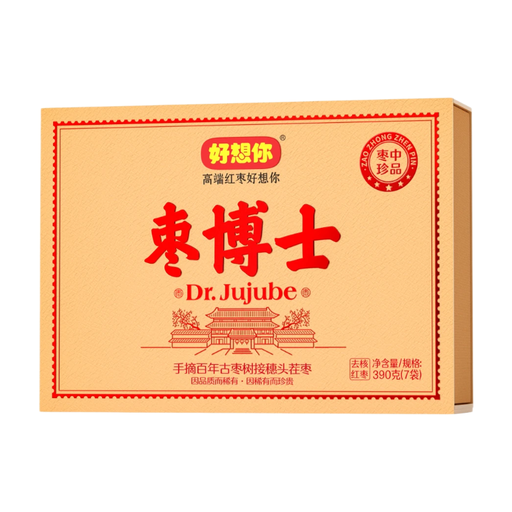
Haoxiangni Dr.Jujube (Premium Gold-Grade Pitted) 390g
Worth comparing if you want to take the fat content per 100 g into account; the product information also lists sugars and energy.
Fat: 0 g per 100 g.
Sugars: 50,0 g per 100 g; energy: 327 kcal per 100 g.
View at Joybuy
 No image available
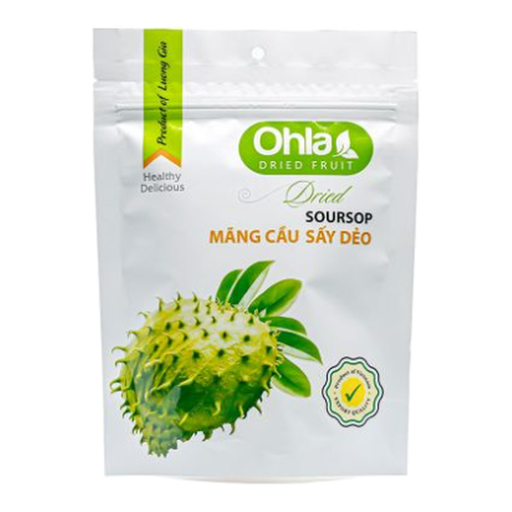
OHLA Dried Soursop 180g
Another type of fruit to compare if you want to assess the sugars as well as the fat content.
Fat: 2,21 g per 100 g.
Sugars: 72,6 g per 100 g; energy: 348 kcal per 100 g.
The ingredients list white sugar and glucose; the pack contains 180 g.
View at Joybuy
 No image available
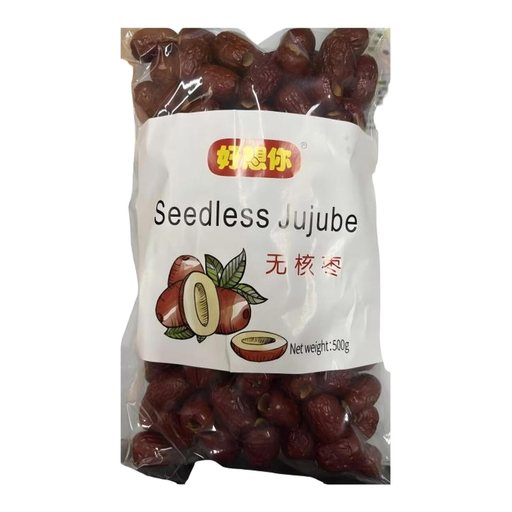
Haoxiangni Pitted Jujubes 500g
Compare this with other types of dried fruit if you want to check the fat and sugars per 100 g.
Fat: 0,5 g per 100 g.
Sugars: 60 g per 100 g; pack size: 500 g.
View at Joybuy
 No image available
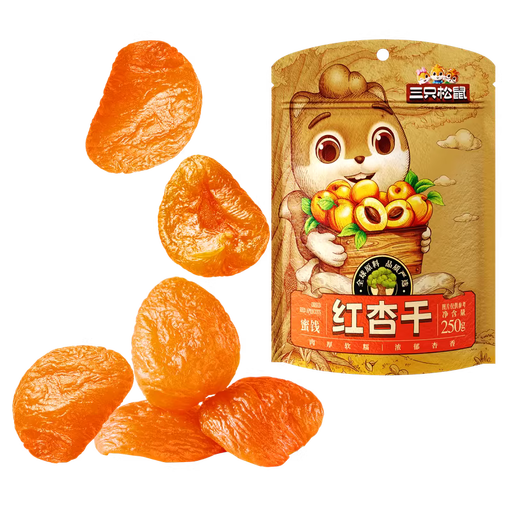
Three Squirrels Red Apricot Dried 250g
A dried apricot product to compare if you’re weighing up the fat content alongside the ingredients and sugars.
Fat: 0 g per 100 g; total sugars: 62,0 g per 100 g.
The ingredients list added sugar and maltose syrup; the product information mentions sulphites.
View at Joybuy
 No image available
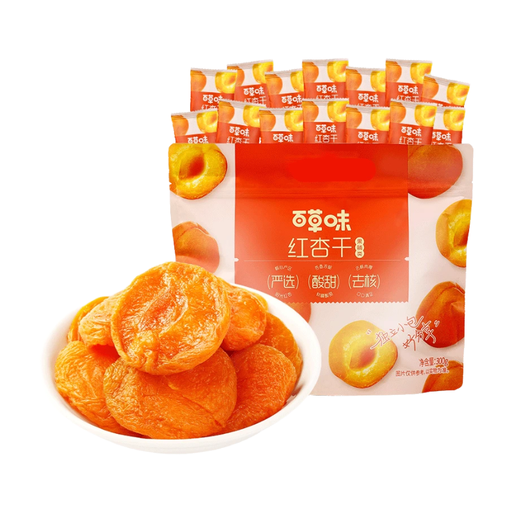
Be&Cheery Dried Red Apricots 300g
Compare the label of this dried apricot product with other options for your festive table.
Fat: 1,0 g per 100 g; sugars: 64,5 g per 100 g.
The product information mentions sulphites.
View at Joybuy
Frequently asked questions
When can dried fruit be called ‘low-fat’?
For solid foods, the European Commission sets a maximum of 3 g of fat per 100 g. This limit applies to the ‘low-fat’ claim and is not an assessment of the food’s overall nutritional value.
Does ‘low-fat’ mean the same as ‘reduced fat’?
No, they are different claims. A low fat figure alone does not substantiate the comparative claim ‘reduced fat’; check the exact claim and the comparison it is based on in the product information.
How much dried fruit should you set out per person?
The World Cancer Research Fund recommends a maximum of 20 g of dried fruit a day. This is dietary advice, not a legally required party portion; take into account what someone has already eaten that day.
Can you store opened soaked apricots without refrigerating them?
The product information for AH Soaked Dried Apricots says to refrigerate after opening at a maximum of 7 °C, and notes that they have a limited shelf life. For other products, follow the instructions on their own packaging.
Do you need to provide allergen information at a Christmas party?
If you run a business offering food to consumers, the Netherlands Food and Consumer Product Safety Authority says you must inform them about any allergens present, including in unpackaged products. This business obligation does not automatically apply to every private party. Keeping the packaging by the serving dish is a practical way to make the product information available.


