
Portion-conscious party hosts
You want to estimate the energy in a portion when hosting a party. Compare labels per 100 g and weigh the amount you serve. The product labels from Albert Heijn, Jumbo and PLUS provide the relevant product values.


According to the European Commission, the nutrition claim ‘low calorie’ can only be used for solid foods containing no more than 40 kcal (170 kJ) per 100 g; the four supermarket labels compared here are above that limit, at 182–282 kcal per 100 g. So compare the energy per 100 g and weigh your portion, but don’t treat a smaller portion as proof that the product itself meets the claim. Also check the ingredients, allergens and storage instructions for the exact variety.
You want to estimate the energy in a portion when hosting a party. Compare labels per 100 g and weigh the amount you serve. The product labels from Albert Heijn, Jumbo and PLUS provide the relevant product values.
You check for added sugars and see which allergens are listed on the packaging. These are separate considerations from the energy per 100 g. The Netherlands Food and Consumer Product Safety Authority explains how allergens are declared on labels.
You shop before the party and want to know whether the packaging and storage instructions fit your plans. Follow the instructions on the exact pack; they may differ between varieties.
First compare the energy per 100 g, then decide on your serving size, and finally check the ingredients, allergens and storage instructions.
The percentages below refer to consumers choosing dried fruit for a Christmas party from the six supermarket chains mentioned.
| What to consider | What to check | Who is this most important for? |
|---|---|---|
| Energy per portion | Compare kcal per 100 g and weigh your portion; calculate the energy for the amount you choose. | If I want to know how much energy is in the amount served to guests, I weigh the portion. Around 42% of consumers prioritise the energy in a portion. |
| Ingredients and allergens | Read the ingredients list and check the allergens and any cross-contamination warnings. | If I’m catering for guests’ ingredient preferences or known allergies, I check the label on the exact variety. Around 25% of consumers prioritise this check. |
| Serving and storage | Check the instructions for after opening and look out for any warning about leftover stones. | If I prepare the fruit in advance, I want to know how to store the opened pack and what to check when serving. Around 17% of consumers prioritise ease of serving and storage. |
| Quantity needed | Work out the required weight based on the number of guests and planned portion size, then compare it with the net weight. | If I want to buy enough portions without ending up with unnecessary leftovers, I match the pack size to my plans. Around 16% of consumers prioritise the quantity needed. |
PLUS lists 0 g of added sugars per 100 g, but this variety contains 254 kcal per 100 g. These two pieces of label information answer different questions.
Check the ingredients and energy separately. The ‘low calorie’ claim depends on the energy value per 100 g, not just on added sugar.
The apricot varieties checked have different energy values. The preparation method and exact variety matter when comparing products.
Compare the pack you intend to buy per 100 g, and don’t use a general category value as a product specification.
The Albert Heijn soaked apricots checked here have specific storage instructions after opening. Other varieties may have different instructions.
Read the storage information before opening a pack for your party and follow the instructions for that variety.
The AH variety checked is a 250 g pack of soaked dried apricots.
The varieties checked are pitted dried apricots and pitted dried plums.
Lidl lists dried stone fruits in various 200 g varieties, available in store only.
The Dutch product page lists TRADER JOE'S Sun-Dried Plums, 250 g.
The PLUS variety checked is a 375 g stand-up pouch of dried apricots.
The variety checked is 1 de Beste Apricots in a 375 g pack.
These Joybuy products are additional examples of dried jujubes and apricots to assess by portion size, ingredients and label values. All the listed values are above the European Commission’s limit of 40 kcal per 100 g for the ‘low calorie’ claim.
 Image unavailable
The listed energy per 100 g can be used to calculate the energy in a weighed party portion.
The product description lists 300 kcal per 100 g and 100% red dates. The product title specifies pitted jujubes.
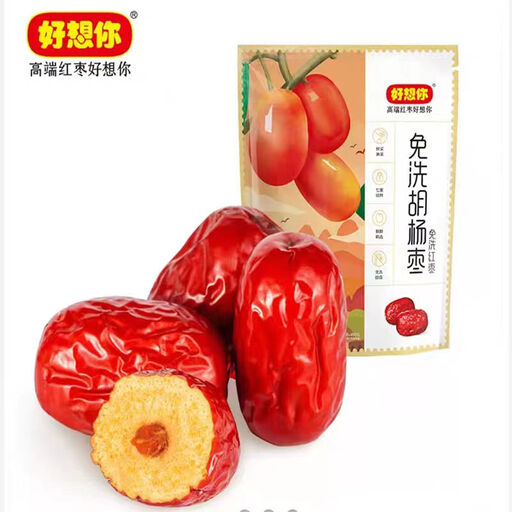 Image unavailable
When serving, bear in mind that the product title states that these jujubes contain stones.
The product description lists jujube as an ingredient and 331 kcal per 100 g. It also suggests using them in soup, congee and tea.
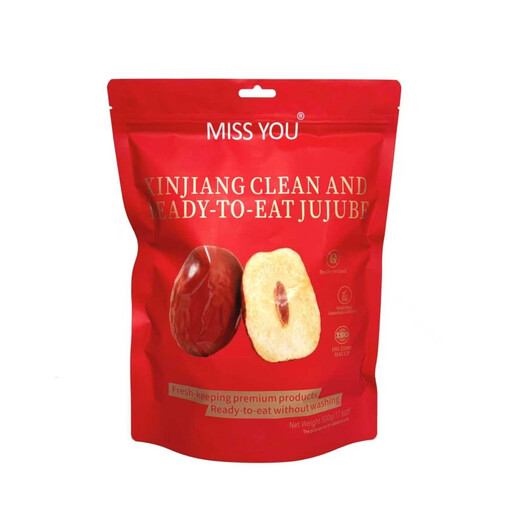 Image unavailable
The description says these jujubes are ready to eat; check the instructions on the packaging.
The product description lists 100% jujube and 304 kcal per 100 g. The title says ‘Wash-Free’.
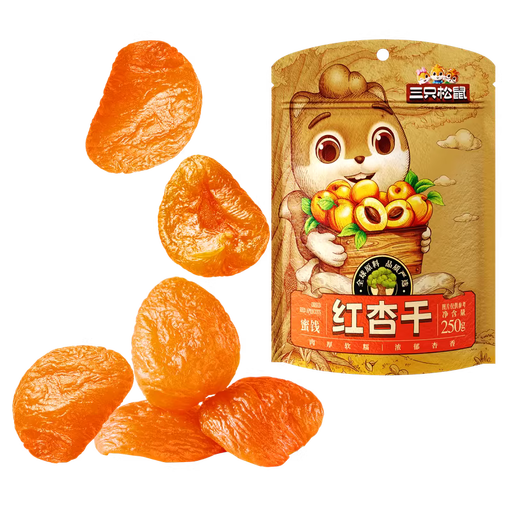 Image unavailable
Check the ingredients if you’re planning to serve apricots to guests.
The product description lists 311 kcal per 100 g and names sugar, maltose syrup and sulphites as ingredients.
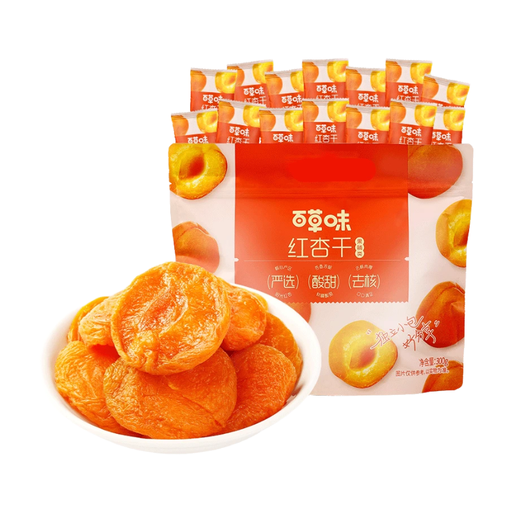 Image unavailable
Read the ingredients list and allergen information on the packaging before choosing these apricots for guests.
The product description lists 327 kcal per 100 g and names sugar, maltose syrup and sulphites as ingredients.
Not on the basis of the portion alone. According to the European Commission, the claim for solid foods is limited to a maximum of 40 kcal (170 kJ) per 100 g. The four supermarket labels compared are above this limit.
No. The 20 g used in the comparison is a standard portion for calculation purposes, not a legal requirement. The Netherlands Nutrition Centre advises having no more than a handful of dried fruit with no added sugar, because of its sugar content.
First compare the values per 100 g, then calculate the value for each product using the same portion weight. That way, you’re not comparing different portion sizes directly.
Follow the instructions on the exact pack. Once opened, the Albert Heijn soaked apricots checked here should be refrigerated at no more than 7 °C. Don’t automatically apply this instruction to other varieties.
Check the ingredients list and allergen information on the packaging. The Netherlands Food and Consumer Product Safety Authority explains that regulated allergens must be clearly identified in the ingredients list. Keep the original packaging when serving and check any warnings on the exact product too.