What should you look for when choosing?
Start with the child’s dietary requirements, then consider safe serving, portion size and practical packaging.
| What to consider |
What should you check? |
Who is this important for? |
| Specific diet |
Check the full ingredients list and any warnings about the relevant allergen on the exact product packaging. A gluten-free or lactose-free label does not automatically answer other dietary questions. |
If a child has specific dietary requirements, I want to be able to check whether this particular product is suitable; around 34% of consumers prioritise dietary suitability. |
| Sulphites |
Check whether sulphites or sulphur dioxide, including E220–E228, are relevant to the diet, and look at the information for the product you’ve chosen. Stichting Voedselallergie lists dried fruit as a product group in which high levels of sulphites may occur. |
If sulphites need to be limited under the dietary requirements, I look for information about the specific fruit and packaging; around 20% of consumers put sulphites first when choosing. |
| Safe serving |
Choose a form that suits the child’s eating skills and take any packaging warnings into account. VeiligheidNL advises that young children should eat calmly while seated, with an adult staying nearby. |
When I offer fruit to young children, I want to choose a form that suits their ability to chew and swallow; around 20% of consumers prioritise eating safety. |
| Portion and sugars |
Check added sugars and total sugars separately, and decide how much will actually be served. Voedingscentrum recommends a small portion of raisins. |
For a small serving of fruit, I want to be able to choose the portion carefully, without assuming that ‘no added sugars’ means low in total sugars; around 13% of consumers prioritise portion size and sugar. |
| Stock and storage |
Compare the net weight with the portions you need, and follow the storage instructions on the packaging and those of the childcare setting. |
When I’m buying for several mealtimes, I want packaging that’s practical to portion and store; around 13% of consumers prioritise convenience when stocking up. |
Joybuy products
This selection consists of freeze-dried jackfruit in individual packs. Don’t take the product information as proof that a variety is suitable for every specific diet; check the ingredients and relevant warnings on the packaging.
 No image available
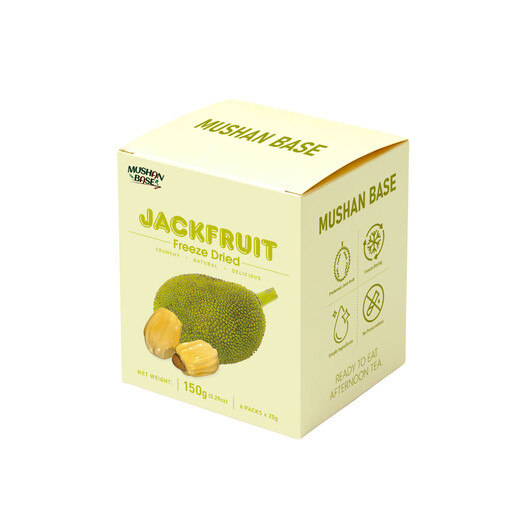
MUSHAN BASE Freeze-Dried Jackfruit 150 g (25 g x 6)
A possible option if you’re looking for freeze-dried jackfruit in individual packs; the product name states that it contains six 25 g packs.
The pack size is not a recommended portion for children. Check the ingredients and relevant warnings against the child’s dietary requirements.
View at Joybuy
 No image available
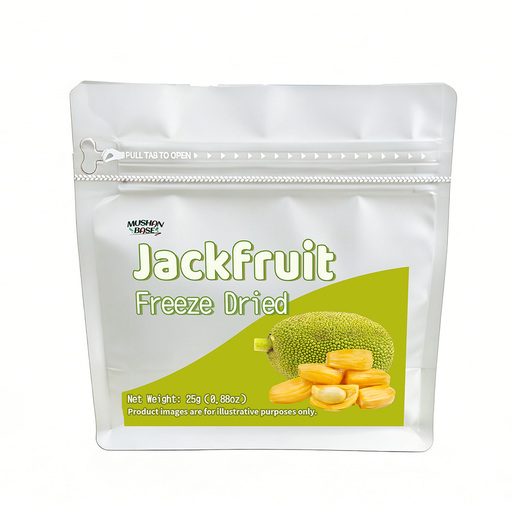
MUSHAN BASE Freeze-Dried Jackfruit 25 g
A possible option if you’re looking for an individually packed portion of freeze-dried jackfruit; the product name states that it comes in a 25 g pack.
The pack size is not a recommended portion for children. Check the ingredients and relevant warnings against the dietary requirements and childcare procedures.
View at Joybuy
Frequently asked questions
Can you use lactose-free as a selection criterion for cow’s milk allergy?
Not as your only criterion. Lactose intolerance relates to milk sugar, whereas cow’s milk allergy is a reaction to milk proteins. If a child has a cow’s milk allergy, check the relevant ingredients and cross-contamination information in line with their dietary requirements.
What should you look for in cross-contamination warnings?
Check warnings for the allergen that is relevant to the child’s dietary requirements, and distinguish between an allergen deliberately included in the ingredients and possible accidental presence. Since 1 January 2026, the Dutch Food and Consumer Product Safety Authority has checked compliance with labelling rules during inspections; Voedingscentrum explains that warnings should be based on a genuine risk of cross-contamination.
When should you check for sulphites in dried fruit?
Check for sulphites if they need to be avoided under the child’s dietary requirements. Stichting Voedselallergie lists dried fruit as a product group in which high levels of sulphites may occur, so check the information for the specific fruit and packaging rather than relying on the name of the fruit alone.
Is one age limit enough to decide whether dried fruit is suitable?
No. You should also consider the form of the fruit and the child’s eating skills. Voedingscentrum sets out guidance on sitting upright, chewing and swallowing when offering larger pieces to babies. VeiligheidNL advises that young children should eat calmly while seated, with an adult staying nearby.
How should you store an opened bag of raisins?
Follow the storage instructions on the packaging and the childcare setting’s food safety procedures. Voedingscentrum says opened raisins can be kept in a kitchen cupboard for 6–9 months; AH and PLUS advise storing their products in a cool, dark and dry place. Throw away any mouldy or unusual-looking raisins.


