
Families who portion snacks themselves
You’re looking for a pack to keep in the cupboard for regular after-school snacks, and want to prepare small portions yourself. Check the net weight and think about how much your household will actually use.


A larger bag of raisins is a good choice if your household eats them regularly and you’re happy to prepare small portions yourself. A smaller pack or multipack may be more convenient if you want to try a variety first or prepare portions in advance. Also check the ingredients, allergen information and storage instructions. The Netherlands Nutrition Centre recommends small portions of raisins for children and recommends fresh fruit as a snack instead.
You’re looking for a pack to keep in the cupboard for regular after-school snacks, and want to prepare small portions yourself. Check the net weight and think about how much your household will actually use.
You want to check the ingredients and portion size without automatically treating dried fruit as a substitute for fresh fruit. If your child has a relevant sensitivity, the allergen information for the pack you choose is important too.
You might prefer multipacks or want to try different types of fruit before buying a larger supply. Check what each pack contains and how much is in each individual portion.
First decide whether you’d rather prepare small portions yourself or buy them ready-packed. Then choose an amount that suits how much your household uses.
| What to consider | What should you look for? | Who should consider this most? |
|---|---|---|
| How much you’ll use | Compare the net weight of the same type of product and choose a supply that suits how much your household uses. | If you’re considering a larger bag, you’ll want to know whether you’ll use it all before buying more. Around 29% of consumers put how much they’ll actually use first. |
| Ingredients and portion size | Check whether sugar has been added, and remember that the snack portion is not the same as the size of the bag. The Netherlands Nutrition Centre’s school lunch list recommends no more than one handful of dried fruit without added sugar a day. | If you’re choosing for a child, you’ll want to check the ingredients and decide on the portion size yourself. Around 29% of consumers prioritise ingredients and a small portion. |
| Portioning it yourself or choosing multipacks | Check the amount in each bag or box; a multipack doesn’t automatically tell you how much is in each portion. | If you want to prepare snacks in advance or take them with you, how they’re packed is what matters most. Around 14% of consumers prioritise convenient packaging. |
| Stocking up and storage | Choose an amount that suits how much you use and follow the storage instructions for that product on the label. | If you only serve dried fruit occasionally or have limited storage space, you won’t want to buy more than you need. Around 14% of consumers focus mainly on how they’ll use and store it. |
| Type of fruit and variety | Check each type of fruit and each mix individually; don’t assume that what applies to raisins also applies to other products. | If your child doesn’t like raisins, trying a different type of fruit may matter more than buying one large pack. Around 14% of consumers prioritise variety. |
The pack size doesn’t determine how much you give a child. The Netherlands Nutrition Centre recommends small portions of raisins for children.
Divide the contents into small portions yourself, and don’t let the size of the bag determine how much you serve.
A larger pack may give you more to store, but that doesn’t mean the amount suits how much your household uses.
Compare the net weight of the same type of product and choose based on how much your household gets through.
A mix may also contain nuts, which matters if you’re looking for fruit only or need to take allergens into account.
Read the ingredients and allergen information for the specific variety before choosing.
A 2-pack or box doesn’t automatically mean that each individual pack contains a suitable portion.
Check the amount in each individual pack and decide on the snack portion separately.
Albert Heijn lists a 2-pack of raisins and also stocks dried fruit and fruit and nut mixes.
The Sultana raisin range listed comes in 250 g, 500 g and 750 g packs.
Lidl lists Belbake raisins and dried fruit at selected stores.
ALDI lists Trader Joe's raisins in a 500 g pack.
PLUS lists Pagysa Sultana raisins in a 750 g bag.
Dirk lists, among other products, 750 g packs of raisins and 375 g packs of Sultana and golden raisins.
This Joybuy selection includes dried plums in small packs and a mixed snack pack containing dried fruit and nuts.
 No image available
The 14 small packs may suit you if you prefer ready-portioned snacks to prepare in advance or take with you.
The pack contains 80 g in total.
The ingredients list maltitol as a sweetener.
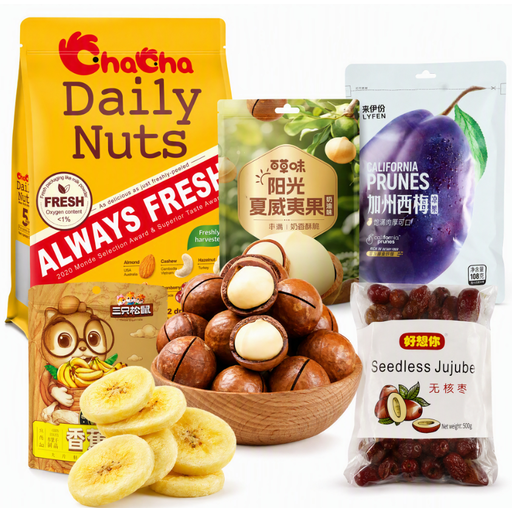 No image available
This multipack combines a variety of fruit and nut snacks; it doesn’t contain dried fruit only.
The stated total net weight is 1,073 kg.
The ingredients include walnuts, cashews, almonds, hazelnuts and macadamia nuts, among other things. Some of the individual products list sugar and/or sweeteners; check the full ingredients and allergen information.
The Netherlands Nutrition Centre recommends small portions of raisins for children. Its school lunch list recommends no more than one handful of dried fruit without added sugar a day; this is nutritional guidance, not a legal portion limit.
Not necessarily: a larger pack gives you more to store, but that doesn’t mean the amount suits how much your household uses. Choose a pack size you’ll use up, and keep the snack portion separate from the amount in the bag.
Read the ingredients and allergen information on the pack for the variety you choose. According to the Netherlands Food and Consumer Product Safety Authority, allergens specified by law must be listed on the label. If you have a relevant sensitivity, the name of the fruit alone doesn’t prove that a product is suitable.
Check the current product information specifically for sulphites. The Food Allergy Foundation notes that sulphites can be found in dried fruit, among other products; the product name alone doesn’t tell you exactly what it contains.
Follow the storage instructions on the pack. If needed, consult the Netherlands Nutrition Centre’s Storage Guide for the type of fruit and opened pack in question. Don’t assume that the same storage period applies to every type.