For a small camping snack, compare the energy per 100 g and weigh your portion. Of the five varieties reviewed, AH Soaked Dried Apricots have the lowest figure on the label, at 182 kcal per 100 g, but need to be refrigerated after opening. Without reliable refrigeration, Jumbo Dried Apricots, Pitted 250 g may be more practical: they contain 237 kcal per 100 g and should be stored in a cool, dry, dark place. None of the five varieties reviewed meets the European threshold for a ‘low energy’ claim of no more than 40 kcal per 100 g. The Netherlands Nutrition Centre recommends eating no more than 20 g of dried fruit a day.
Who is this useful for?
Mindful snackers
Fancy something sweet while camping, but want to keep an eye on how much energy you’re getting? Weigh your portion: the nutrition information per 100 g doesn’t tell you how much you actually eat. The Netherlands Nutrition Centre recommends no more than 20 g of dried fruit a day.
Campers without a fridge
Choose a variety that suits where you’ll be storing it. Some varieties need to be refrigerated after opening; for others, follow the instructions to store them in a cool, dry, dark place.
Ingredient-conscious eaters
Check the ingredients and allergen information for the exact variety, especially if you want to avoid sulphites or other allergens. A product listing or quality mark won’t necessarily tell you what else is in the pack.
What should you look for when choosing?
| What to consider |
What to look for |
Who might find this more important? |
| Energy per portion |
Compare the kcal per 100 g for the exact variety, then weigh your portion. |
If I want to keep my snack portion deliberately small, I look at both the figure on the label and the weight I’m taking with me. Around 36% of consumers prioritise managing their calorie intake. |
| Storage at the campsite |
Check the instructions for after opening and make sure you have a suitable cool, dry and dark place to store it. |
If I’m camping without a fridge, I want to know in advance whether my storage spot meets the instructions on the pack. Around 29% of consumers give suitable storage the highest priority. |
| Ingredients and allergens |
Read the ingredients, the ‘of which sugars’ line, and the allergen and warning information. |
If I want to check for additives or possible allergens, I base my choice on the label for that exact variety. Around 21% of consumers start with the ingredients and allergen information. |
| Pack size |
Choose a net weight that suits the length of your trip and how much you can use within the storage instructions. |
If I want to avoid leftovers from a larger pack going to waste, I consider the quantity and how it should be stored after opening. Around 14% of consumers say the most important thing is choosing a suitable pack size. |
Common pitfalls
-
Looking only for the lowest calorie figure
A lower energy content per 100 g doesn’t mean a variety is suitable for the way you’ll store it at your campsite. Of the five varieties compared, AH Soaked Dried Apricots have the lowest figure on the label, but need to be refrigerated after opening at a maximum of 7°C.
Check the storage instructions before choosing a pack you plan to use over several days.
Arranging somewhere cool to store it takes extra thought when packing and putting it away.
-
Assuming ‘no added sugar’ means low in total sugars
AH Soft Pitted Prunes list 0 g of added sugars, but 37 g of total sugars per 100 g. These are two different nutrition values.
Check both the sugar information and the energy figure, and weigh the portion you want to eat.
-
Assuming the same fruit means the same nutritional value
The prune varieties reviewed differ: AH Soft Pitted Prunes list 254 kcal per 100 g, while PLUS Dried Prunes list 282 kcal per 100 g.
Compare the exact product’s figures per 100 g rather than going by the name ‘dried prunes’ alone.
-
Treating a whole pack as one snack portion
The contents of a bag aren’t the same as a small portion. A larger amount of a variety with a lower energy value can still provide more energy than a smaller amount of another variety.
Weigh your portion and seal the rest according to the instructions on the pack.
Brands to consider
Albert Heijn
The product ranges mentioned include soaked apricots and several varieties of dried prunes.
- The official product pages list nutrition information and storage instructions for specific varieties.
- Values and instructions vary by variety; AH Soaked Dried Apricots need to be refrigerated after opening.
Jumbo
The product listing is for Jumbo Dried Apricots, Pitted 250 g.
- The product page lists 237 kcal per 100 g and provides allergen information.
- This variety contains sulphites and may contain nuts, peanuts and sesame. Check the current packaging if this is relevant to you.
Lidl
Lidl Netherlands lists dried stone fruit in several 200 g varieties.
- The range information gives pack sizes and confirms that the products are sold in store.
- The listing doesn’t provide enough information to establish a calorie advantage for a specific variety.
Aldi
The ALDI product listing features TRADER JOE'S Sun-Dried Apricots, 250 g.
- ALDI describes the apricots as soft.
- This description from the retailer doesn’t tell you the energy content; compare the nutrition information on the exact pack for that.
PLUS
The variety mentioned is PLUS Dried Prunes in a 375 g bag.
- The official product page lists the ingredients, nutrition information and storage instructions for this variety.
- Make sure the larger pack size suits how much you’ll use and the storage instructions.
Dirk
The category page includes products such as 200 g bags of apricots and pitted prunes.
- The product category gives examples of product types and pack sizes.
- The general description ‘healthy snack’ doesn’t prove that a specific variety is low in calories.
Dried fruit at Joybuy
These Joybuy products are suitable options if you’re looking for dried fruit as a camping snack. Compare the stated kcal per 100 g and check the storage instructions. The energy values shown are above the European threshold of 40 kcal per 100 g for a ‘low energy’ claim, as explained by the European Commission.
 No image available
Haoxiangni Pitted Jujubes 500g
This could be a good choice if you’re looking for a snack that’s ready to eat.
Ingredients listed: 100% red dates.
Energy listed: 300 kcal per 100 g.
Store below 15°C if possible and seal the pack tightly after opening.
View at Joybuy
 No image available
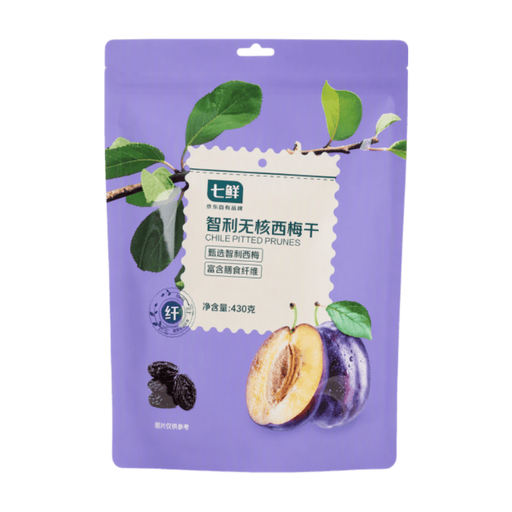
7FRESH Pitted Prunes 430g
This could be a good choice if you’re looking for pitted prunes that are ready to eat.
Energy listed: 283 kcal per 100 g.
Store in a cool, dry place and consume immediately after opening.
View at Joybuy
 No image available
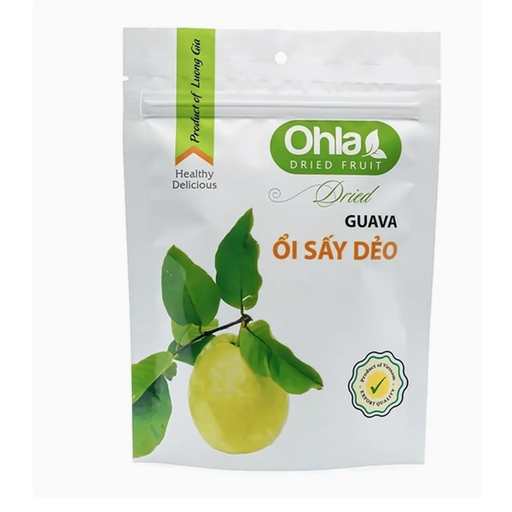
OHLA Dried Guava 180g
This could be a good choice if you’re looking for dried guava that’s ready to eat.
Energy listed: 308 kcal per 100 g.
Contains sugar and a preservative.
Store in a cool, dry place away from heat and moisture, and seal the pack tightly after opening.
View at Joybuy
 No image available
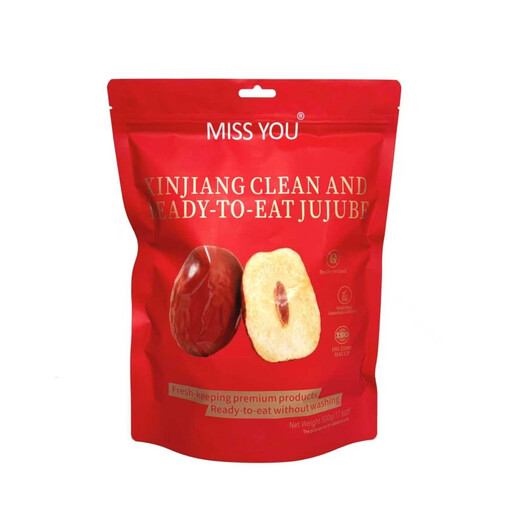
Haoxiangni Grade A Wash-Free Jujubes 500g
This could be a good choice if you’re looking for jujubes that are ready to eat.
Energy listed: 304 kcal per 100 g.
The ingredients list includes jujube.
Store in a cool, dry place and consume immediately after opening.
View at Joybuy
 No image available
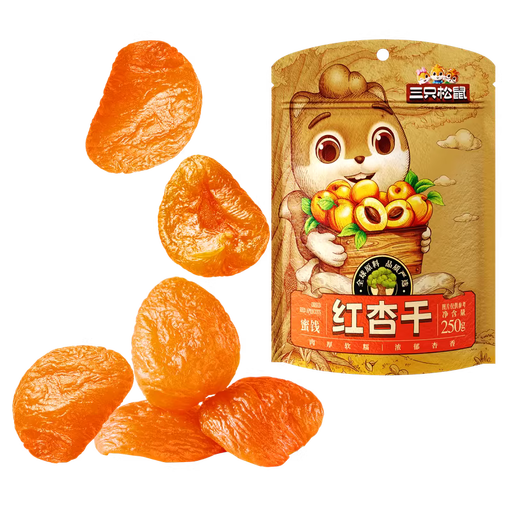
Three Squirrels Red Apricot Dried 250g
This could be a good choice if you’re looking for dried apricots that are ready to eat.
Energy listed: 311 kcal per 100 g.
Contains sulphites, added sugar and maltose syrup.
Store in a cool, dry place and consume immediately after opening.
View at Joybuy
Frequently asked questions
Can a small portion of dried fruit be called ‘low calorie’?
No. A small portion doesn’t change the threshold for that claim. According to the European Commission, a claim meaning ‘low energy’ for solid foods requires no more than 40 kcal (170 kJ) per 100 g. Stating the actual kcal per portion is something different.
How much dried fruit should you have as a daily snack?
The Netherlands Nutrition Centre recommends no more than 20 g a day. This is general nutrition advice, not a legal limit. Weigh your portion rather than treating the contents of a bag as one snack portion.
Can I store dried fruit in a warm tent?
Don’t assume you can: follow the storage instructions for the exact variety and consider the storage space you actually have. The Netherlands Nutrition Centre’s Storage Guide recommends storing dried mixed fruit in a cool, dry, dark place in a tightly sealed container. This guidance doesn’t give a general storage period for all products or for a warm tent.
What allergen information should I check?
Check the allergen information on the pack for the exact variety. According to the NVWA, allergen information for pre-packed products must appear on the label; sulphites are one of the listed allergens. Also read any warnings about the possible presence of other allergens.
Do you need to prepare dried fruit first?
The AH varieties reviewed are sold as snacks or ingredients for meals; no cooking is required. Do check the pack for warnings about any stones that may have been left in.


