What should you look for when buying?
Compare the pack size and packaging with what you actually plan to use on your camping trip. This makes it easier to weigh up size, ingredients and convenience.
| What to consider |
What to look for |
Who should pay more attention to this? |
| Pack size and price per kilo |
Compare the same type and variety of fruit by net weight, price per kilo and how much you plan to use. |
If I’m buying supplies for several people, I want to use up the whole pack. Around 31% of consumers prioritise a price per kilo that suits how much they plan to use. |
| Storage after opening |
Follow the storage advice on the packaging and check whether the closure is actually resealable. |
If we’ll be using a pack over several occasions, I want to know how to store it once opened. Around 25% of consumers prioritise managing an opened pack. |
| Ingredients and allergens |
Read the ingredients list and allergen information for the exact variety you plan to take with you. |
If I need to consider ingredients or a specific allergy, I want to check the exact ingredients before choosing. Around 25% of consumers make suitable ingredients their top priority. |
| Taking portions with you |
Check the total weight and whether there are individual portions; a stand-up pouch alone doesn’t tell you whether it can be resealed. |
For snacks on the go, I want to be able to share them easily without having to dip into a communal pack each time. Around 19% of consumers give portion convenience the most attention. |
Joybuy products to compare
This selection includes dates, dried loquat, a processed hawthorn snack and a mixed nut and fruit bundle. Not every product is plain, unsweetened dried fruit, so check the product type and ingredients to make sure they suit your needs.
 No image available
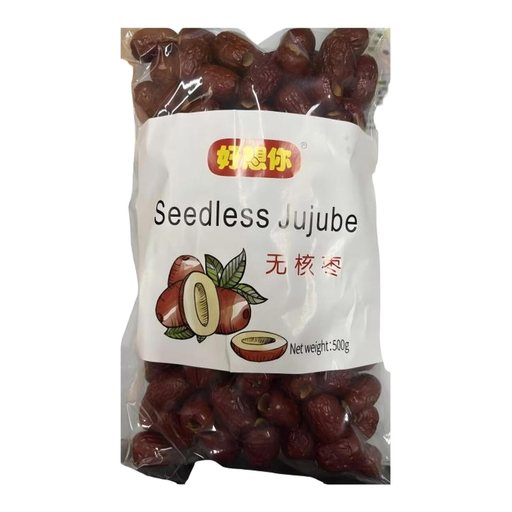
Haoxiangni Pitted Jujubes 500 g
An option to compare if you’re looking for dates to share; the product name lists 500 g.
View at Joybuy
 No image available
Zohra Medjool dates 908 g
For anyone looking to compare a larger quantity of dates to share; the product name specifies Medjool dates and 908 g.
View at Joybuy
 No image available
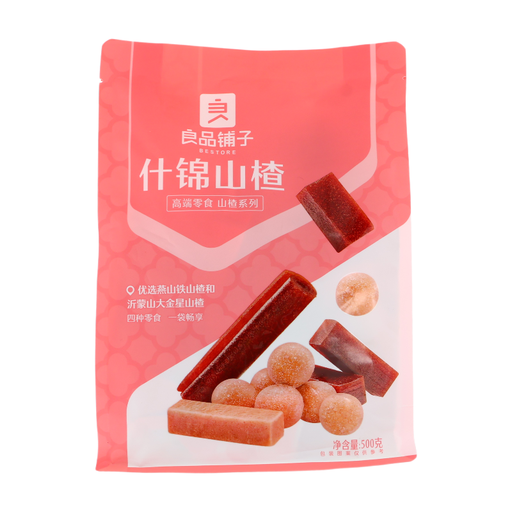
Bestore assorted hawthorn snack 500 g, 25 sachets
The 25 small sachets listed may suit you if you want to take snacks with you individually or share them out; together, they contain 500 g.
This is a sweetened, processed hawthorn snack, not a plain dried fruit.
View at Joybuy
 No image available
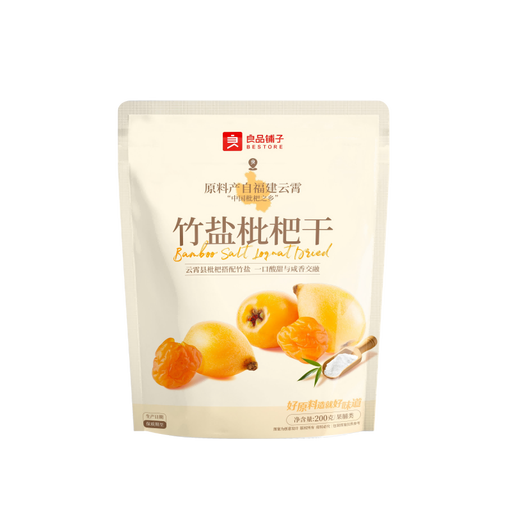
Bestore dried loquat with bamboo salt 200 g
A smaller pack to compare if you want to take less dried loquat with you; it contains 200 g.
This product contains sulphites, and its ingredients also include sugar.
View at Joybuy
 No image available
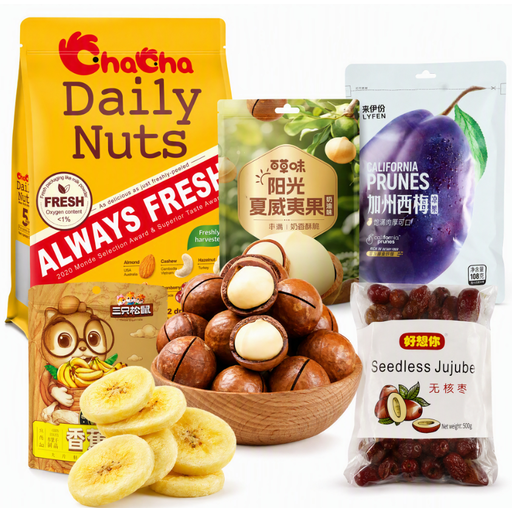
Fruit, nut and dried fruit bundle, 5-pack, 1.073 kg
This bundle may suit you if you want to compare a range of snacks rather than just dried fruit; the product name lists five packs with a combined weight of 1.073 kg.
The bundle contains tree nuts and prunes with aspartame. According to the product information, opened products should be refrigerated and eaten within one day.
View at Joybuy
Frequently asked questions
How do you work out how much dried fruit you need for your camping group?
Multiply the number of people by the number of days planned and the amount per person. For example, four people over five days, having 20 g per person per day, would need 400 g. The Netherlands Nutrition Centre recommends a maximum of 20 g of dried fruit per day; this calculation isn’t personal dietary advice.
Does the best-before date still apply once the pack has been opened?
Not necessarily: according to the Netherlands Nutrition Centre, the printed date applies to unopened packaging. Storage advice after opening can vary by product, so follow the instructions on the pack you have.
Which allergens should you be able to find on a Dutch label?
The Netherlands Food and Consumer Product Safety Authority lists 14 allergens that must be declared, including sulphites, nuts and peanuts. Allergen information should appear on the label of pre-packed products. Check the exact packaging: this general requirement doesn’t prove that a product is suitable for your allergy.
What’s the difference between a best-before date and a use-by date?
A best-before date relates to quality. According to the Netherlands Nutrition Centre, after that date you can check whether a product is still good by looking at it, smelling it and tasting it. A use-by date relates to safety: don’t use a product after that date. Also follow the storage advice and take into account when the packaging was opened.
What can you do if you have questions about the online product information?
First check the label on the exact pack, and contact the relevant shop’s customer service if you have any questions. Product information about ingredients, nutritional values and allergens can change.


