
Mindful snackers who prefer smaller portions
You want to keep eating dried fruit while keeping an eye on the amount you have and the kcal in your snack. Compare the same weight in grams and check the nutritional information for the exact variety.


First compare the kcal in an equal-sized serving, then the price per kilo; none of the supermarket varieties mentioned meets the threshold for the ‘low-calorie’ claim. Jumbo lists 237 kcal per 100 g for its specific dried apricots; Albert Heijn and PLUS list 254 to 282 kcal per 100 g for the prunes and apricots mentioned. The European Commission sets a maximum of 40 kcal per 100 g for solid foods to carry the ‘low-calorie’ claim, so having a smaller serving does not make a product above this threshold low in calories.
You want to keep eating dried fruit while keeping an eye on the amount you have and the kcal in your snack. Compare the same weight in grams and check the nutritional information for the exact variety.
You want to know which pack suits the amount you use. Compare the price per kilo as well as the price at the till, without assuming that one supermarket is always cheaper.
You might be checking for added sugar or looking for allergens if you have a relevant sensitivity. No added sugar does not mean a product contains no naturally occurring sugars; check the other ingredients too.
First decide how many grams you want to eat, then compare products on the same basis. Next, check the price per kilo, ingredients and any warnings on the pack.
| What to consider | What to check when buying | Who is this for? |
|---|---|---|
| Kcal per snack serving | Compare kcal per 100 g and weigh the amount you eat. | If I want to match my snack portion to my energy intake, I compare equal amounts first; around 29% of consumers prioritise the energy in a serving. |
| Cost for the amount | Compare the price per kilo for the same product variety and check the pack weight. | I want to know what a pack costs for the same amount and whether I’ll use all of it; around 36% of consumers prioritise cost for the amount. |
| Sugars and allergens | Read the ingredients, total sugars and allergen information for the exact variety. | If ingredients or an allergen that is personally relevant to me determines my choice, I check the label before buying; around 21% of consumers start with this information. |
| Use and storage | Check whether the product is pitted, look for any warnings about stones and read the storage instructions. | I’m looking for fruit to snack on or use as a topping, and want to know how to store it; around 14% of consumers prioritise practical use. |
A weighed serving may contain fewer kcal than a larger amount of the same product. That does not change the kcal per 100 g or make a product that exceeds the claim threshold low in calories.
Weigh the amount you eat and always compare the same weight in grams. Don’t describe a product as ‘low-calorie’ if it doesn’t meet the applicable threshold.
PLUS dried apricots list 0 g of added sugars, but also 53.4 g of total sugars per 100 g. These figures describe different things.
Check total sugars, energy and ingredients separately; no added sugar doesn’t mean a product is low in kcal.
Packs of different sizes can’t be compared like for like by their till price. A smaller pack may make a higher price per kilo less obvious.
Compare the price per kilo for the same variety, then decide whether the amount suits how you’ll use it.
Nutritional values for an average type of fruit are not automatically the nutritional values for a specific supermarket variety.
Use general charts as a guide only, and compare products using the nutritional information for the exact variety.
The specific AH Soft Pitted Prunes are a soaked variety for snacking or adding to yoghurt.
The specific pitted dried apricots are a variety to compare with other apricots.
Alesto is a Lidl range that includes dried fruit, such as apricots, for snacking or as a topping.
The TRADER JOE’S Sun-Dried Prunes mentioned are soft, pitted prunes in a 250 g pack.
The product varieties mentioned are dried apricots and dried prunes.
The 1 de Beste Pitted Prunes mentioned come in a 375 g pack and are described as suitable for snacking or using in baking recipes.
These Joybuy products are suitable for snacking on dried fruit or using it as an ingredient. The energy values listed are above 40 kcal per 100 g, so under the European Commission’s threshold for the ‘low-calorie’ claim, these products cannot be described as low in calories.
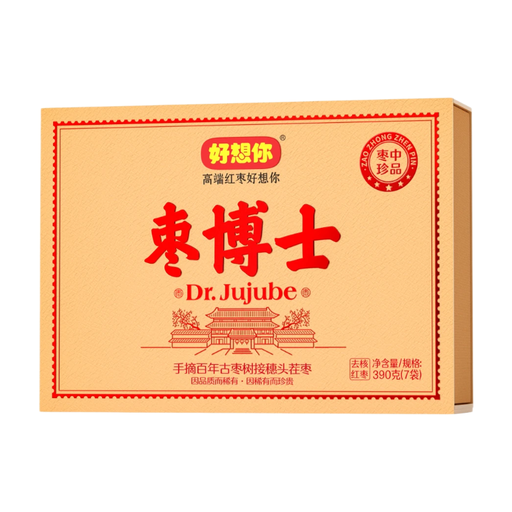 No image available
The product description says these pitted jujubes are for snacking or using in soups, tea and desserts, among other things.
Listed energy: 327 kcal per 100 g.
 No image available
The description says these pitted red dates are ready to eat or suitable for cooking and baking.
The ingredients list 100% red dates. Listed energy: 300 kcal per 100 g.
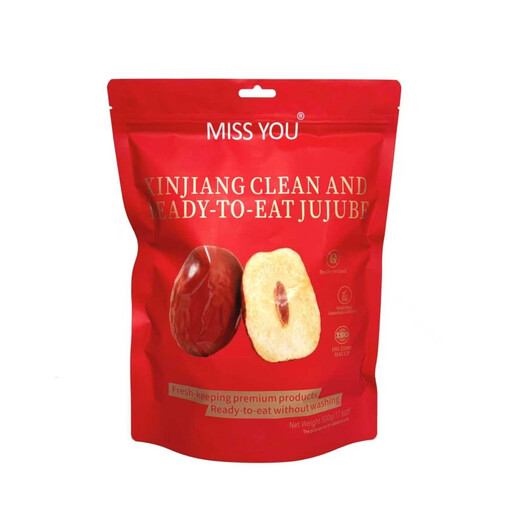 No image available
The product description says these ready-to-eat jujubes can be eaten as they are or used in soup and tea, among other things.
The ingredients list 100% jujube. Listed energy: 304 kcal per 100 g.
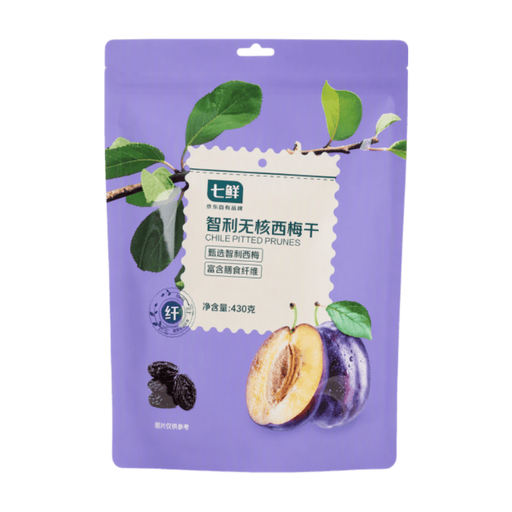 No image available
The product description says these pitted prunes are for snacking or as a topping, for example on yoghurt or porridge.
Listed energy: 283 kcal per 100 g.
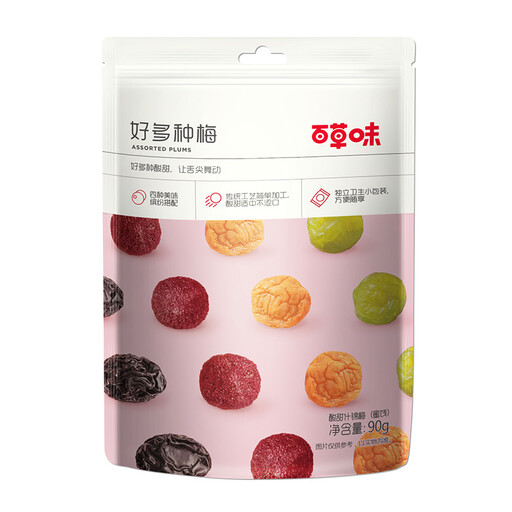 No image available
The product description says this is a ready-to-eat plum snack in a 90 g pack.
Listed energy: 68 kcal per 100 g. The ingredients list sugar; the nutrition table lists 3.0 g of salt per 100 g.
Not on the basis of that serving alone. For the ‘low-calorie’ claim on solid foods, the European Commission sets a maximum of 40 kcal per 100 g. According to the retailers concerned, the Jumbo, AH and PLUS varieties mentioned contain 237 to 282 kcal per 100 g; state the kcal in a weighed amount instead of calling the product low-calorie.
Yes. The product information for AH Soft Pitted Prunes and Jumbo Pitted Dried Apricots warns that a stone or stone fragment may remain despite checks. Bear this warning in mind when eating or preparing the fruit.
The information from Albert Heijn, Jumbo and PLUS says to store the varieties mentioned in a cool, dark, dry place. Also follow the best-before date and any additional instructions on the pack of your product.
Before buying, check the ingredients and allergen information for the exact variety. The NVWA classifies sulphites as allergens that consumers must be informed about; the Jumbo and PLUS apricots mentioned list sulphites.
No, not automatically. ACM ConsuWijzer generally describes a 14-day cooling-off period for online purchases and notes an exception for products that spoil quickly; this exception does not necessarily apply to all dried fruit with a long shelf life. Check the terms that apply to your specific purchase. For quality complaints, Albert Heijn separately states that you need to bring your till receipt to get your money back.