
Portion-conscious snackers
If you fancy something sweet over New Year’s Eve and mainly want to know how much energy you’ll get from the portion you actually eat.


Compare dried fruit’s nutritional values per 100 grams, as well as the energy in the portion you actually eat. A small portion doesn’t make the product itself low in calories. The European Commission sets a maximum of 40 kcal per 100 grams for a ‘low-calorie’ claim on solid foods, while the Netherlands Nutrition Centre recommends eating no more than 20 grams of dried fruit a day.
If you fancy something sweet over New Year’s Eve and mainly want to know how much energy you’ll get from the portion you actually eat.
If you want to avoid added sugar or need to consider sulphites, peanuts or nuts. Check the information for the exact product variant rather than relying on the type of fruit alone.
If you want to serve dried fruit as a topping or small addition, and need to choose the right pack size, storage instructions and quantity for your guests.
First compare the nutritional values per 100 grams and decide how much you want to serve. Then check the ingredients, allergen information and storage instructions for that specific pack.
| What to consider | What should you look for? | Who is this important to? |
|---|---|---|
| Energy per portion | Compare kcal per 100 grams and calculate the amount for your portion weight; weighing it makes the quantity clear. | If I want to match my portion to the energy I consume while snacking, I look at both values. Consumers who prioritise energy per portion make up around 42% of consumers in this breakdown. |
| Sugars and ingredients | Read the ingredients list alongside the figures for total sugars and added sugars; these are different pieces of information. | If I want to check what’s been added, I compare the ingredients and sugar information on the pack. Consumers who prioritise sugar and ingredients make up around 25% of consumers in this breakdown. |
| Allergen information | Check the ingredients, allergen information and any warnings about traces on the exact pack. | If I need to consider a known sensitivity for myself or my guests, I check the information for each product variant. Consumers who prioritise allergen suitability make up around 17% of consumers in this breakdown. |
| Quantity and storage | Match the net weight to the number of portions and follow the storage instructions after opening. | If I’m buying fruit for a snack spread, I want to know how many portions the pack contains and how to store any leftovers. Consumers who prioritise practical party shopping make up around 16% of consumers in this breakdown. |
The ‘low-calorie’ claim for solid foods is assessed per 100 grams, not on the basis of a small portion you’ve chosen yourself. The European Commission sets a maximum of 40 kcal per 100 grams for this claim.
Use the nutritional values per 100 grams to compare products, then calculate separately how much energy your weighed portion provides. Don’t call a product low in calories just because you eat a small amount.
AH Raisins state 0 grams of added sugars, but also 59 grams of total sugars per 100 grams and 344 kcal per 100 grams. One figure doesn’t replace the other.
Check the ingredients list, total sugars and energy separately, and compare them on the same weight basis.
Instructions vary by product. AH Soaked Dried Apricots say to refrigerate after opening at a maximum of 7°C; PLUS Dried Prunes say to store in a cool, dry, dark place.
Follow the storage instructions on the pack you buy, including after opening.
The examples described are AH raisins, soaked apricots and organic dried prunes.
The current product description is for Jumbo Dried Pitted Prunes 250 g.
Lidl describes dried tropical fruits in various 200-gram varieties.
ALDI describes Trader Joe’s soft, sun-dried apricots in a 250-gram pack.
PLUS Dried Prunes 375 g is a separately described own-brand product variant.
Dirk describes 1 de Beste Sultana Raisins 375 g as an addition to, for example, yoghurt, muesli or baked dishes.
These Joybuy products include examples of dried prunes, guava and jujubes. Compare the stated energy and ingredients with your portion and preferences.
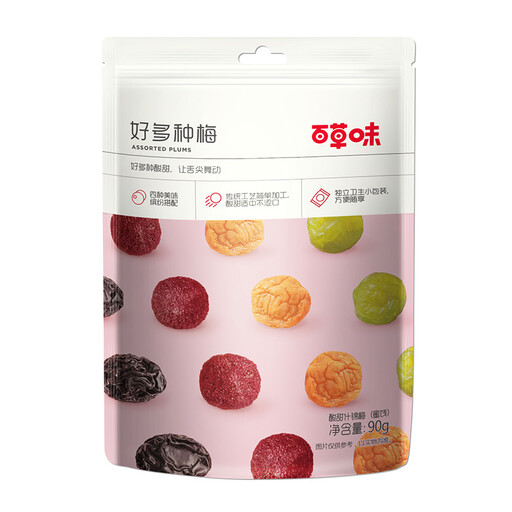 No image available
Worth considering if you’re looking for dried plums as a snack and want to compare nutritional values per 100 grams.
The product description states 68 kcal per 100 g and lists plums, sugar, salt and sweeteners among the ingredients.
 No image available
An option if you’re looking for dried guava that, according to the product description, can be enjoyed as a snack or used as an ingredient.
The description states 308 kcal per 100 g and lists 95% guava, sugar and a preservative.
 No image available
An option if you’re looking for pitted jujubes that, according to the product description, can also be used in dishes.
The description lists red dates as the only ingredient and states 300 kcal per 100 g.
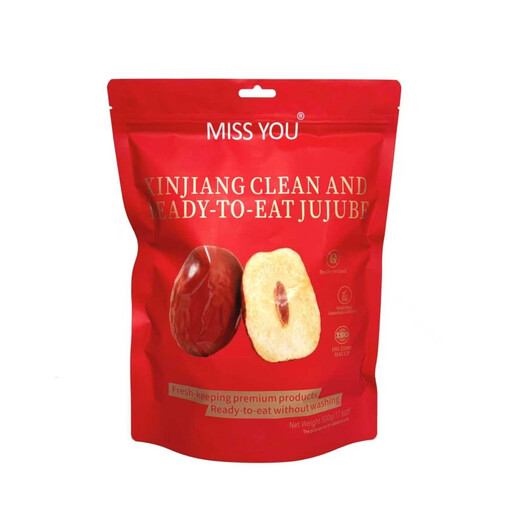 No image available
An option if you’re looking for jujubes that, according to the product description, are ready to eat without washing.
The description lists jujube as an ingredient and states 304 kcal per 100 g.
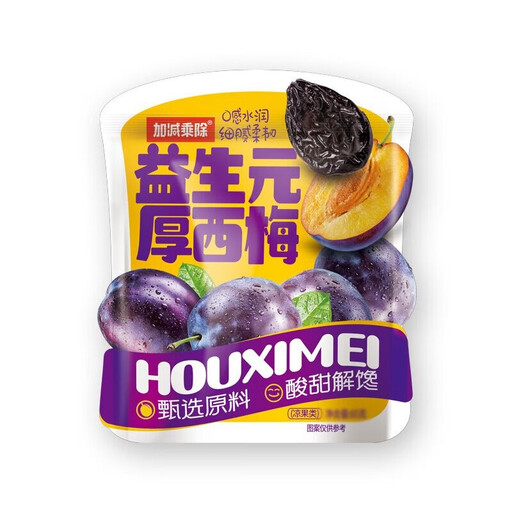 No image available
An option if you’re looking for prunes in individually wrapped portions.
The product description states that the portions are 65 g, gives an energy value of 214 kcal per 100 g and lists fructose syrup among the ingredients.
Not on the basis of the portion alone. According to the European Commission, a ‘low-calorie’ claim for solid foods requires a maximum of 40 kcal (170 kJ) per 100 grams. The four supermarket product variants compared here by their labelled energy values are all above that limit. Different conditions apply to a ‘reduced energy value’ claim, including an energy reduction of at least 30% and a statement explaining the reason.
No, follow the instructions on the specific pack. AH Soaked Dried Apricots say to refrigerate after opening at a maximum of 7°C; PLUS Dried Prunes say to store in a cool, dry, dark place. These instructions apply to the product variants named, not automatically to all dried fruit.
No. A portion size stated by a manufacturer isn’t automatically a daily recommendation. For example, the AH product page for organic dried prunes gives 50 grams as a portion; the Netherlands Nutrition Centre recommends no more than 20 grams of dried fruit a day.
Check the ingredients and allergen information on the exact pack before you buy or serve it. The NVWA states that allergen information for prepacked products must be shown on the label and available before purchase. The AH apricots examined list sulphites; the AH prunes may contain traces of peanuts and nuts.
Use the information on the pack you receive and contact the seller if anything is unclear. Product details can change; Albert Heijn and PLUS note that product information, such as ingredients and nutritional values, may change.