Compare dried fruit by calories per 100 g, then calculate the amount you actually weigh out. The product pages checked for Albert Heijn, Jumbo and PLUS list 182 kcal per 100 g for soaked apricots, 237 kcal for Jumbo apricots, and 282 kcal for plums from Jumbo and PLUS. For solid foods, the European Commission sets a maximum of 40 kcal per 100 g for the claim ‘low energy’. The Voedingscentrum recommends a maximum of 20 g of dried fruit a day as a general guideline, not personalised advice.
Who is this comparison for?
If you want to compare the calories in snacks
You want to include dried fruit in your weekly plans without automatically following the portion size on the pack. Compare the same weight and weigh your portion. The product pages from Albert Heijn and Jumbo show why it’s important to compare like for like.
If you’re planning supplies for several people
You’re sharing dried fruit between several people or eating occasions. Choose a pack size that suits how much you’ll actually use, and follow the storage instructions for that specific product. A larger pack isn’t automatically a better fit.
If you check ingredients and allergens
You want to know which ingredients, added sugars and allergens are listed on the pack. The Albert Heijn and Jumbo apricots checked contain sulphites; if you have a personal sensitivity, always check the information on the exact pack.
What should you look for when choosing?
First compare calories per 100 g, then calculate the value for your weighed portion and check the ingredients and storage instructions.
| What to look for |
What should you check? |
Who is this most important for? |
| Calories per portion |
Compare calories per 100 g, then calculate the calories in your own portion: calories per 100 g × portion in grams ÷ 100. |
If I want to weigh my snack portion, I first compare equal weights. Around 44% of consumers prioritise the calories in the portion they actually eat. |
| Ingredients and allergens |
Read the ingredients, total and added sugars, and allergens on the exact pack. |
If I need to take ingredients or a personal allergen requirement into account, I check each product’s label. Around 33% of consumers prioritise checking ingredients. |
| Pack size and storage |
Choose a net weight that suits how much you plan to use, and follow the storage instructions once opened. |
If I’m sharing the pack between several people or eating occasions, how I store it after opening matters too. Around 23% of consumers prioritise weekly supplies and storage. |
Common pitfalls
-
Confusing a small portion with a low-calorie product
A smaller portion contains fewer grams of the product, but it doesn’t change the calories per 100 g. For solid foods, the European Commission sets a maximum of 40 kcal per 100 g for the claim ‘low energy’.
Weigh your portion and compare the calories for the same weight; don’t base your comparison on portion size alone.
-
Comparing different portion sizes directly
Albert Heijn gives a 50 g portion for its soaked apricots, while the Jumbo apricot page also lists nutritional values per 20 g. These values are for different amounts.
Calculate the values for the same weight before comparing the products.
-
Assuming no added sugar means little total sugar
Added sugars and total sugars are different figures. For its soaked apricots, Albert Heijn lists 0 g of added sugars and 37 g of total sugars per 100 g. For its plums, PLUS lists 0 g of added sugars and 38.1 g of total sugars per 100 g.
Check both the nutritional information and the ingredients list. Don’t use ‘no added sugars’ as a substitute for checking the total sugar value.
-
Using the same storage instructions for all dried fruit
Albert Heijn’s soaked apricots should be kept chilled after opening. The PLUS plums checked say to store in a cool, dry and dark place.
Follow the instructions on the pack you buy, and choose a pack size that matches how much you’ll actually use.
Brands to consider
Albert Heijn
The comparison includes AH Soaked Dried Apricots 250 g, a soaked variety for weighing out a portion or adding to yoghurt.
- The product page lists 182 kcal and 0 g of added sugars per 100 g.
- This product contains sulphites. Keep chilled after opening. This information applies to this variety, not the entire range.
Jumbo
The product pages checked are for dried apricots and pitted plums, both in 250 g packs.
- The Jumbo labels allow you to compare like for like: 237 kcal per 100 g for apricots and 282 kcal per 100 g for plums.
- Ingredients and allergens vary by product. Jumbo says that, despite being labelled ‘pitted’, the apricots may occasionally contain fragments of stones.
Lidl
Lidl lists Alesto dried mango as a product, offering a different fruit option if you’re looking for mango.
- The product page confirms that this is Alesto dried mango.
- A flavour description doesn’t tell you the calorie content. Check the nutritional information on the exact pack to compare calories.
Aldi
The Aldi product page describes Trader Joe’s pitted sun-dried plums in a 250 g pack.
- The retailer describes these particular plums as soft and gives the pack size.
- ‘Sun-dried’ and ‘pitted’ don’t tell you whether a product is lower in calories. Compare the nutritional information for the same weight.
PLUS
The product listing checked is for PLUS Dried Plums, a 375 g bag.
- The label lists 282 kcal and 7.1 g of fibre per 100 g, plus 0 g of added sugars.
- The product contains sunflower oil and E200. No added sugars doesn’t automatically mean low in calories.
Dirk
Dirk’s product listing is for 1 de Beste Pitted Plums in a 375 g pack, described as suitable for snacking and baking.
- The pack size and suggested uses are product information provided by Dirk.
- The retailer’s description ‘nutritious’ doesn’t prove that the product is low in calories. Check the label on the exact pack.
Joybuy products
These Joybuy products range from plums with nutritional information per 100 g to salted or candied plum snacks. Check the product type and nutritional information before comparing them with plain dried fruit.
 No image available
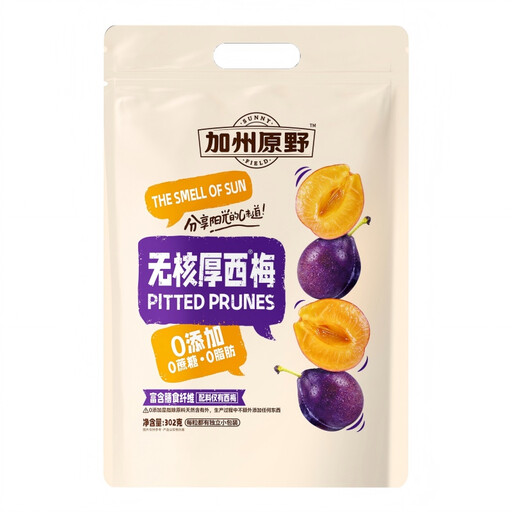
Jiazhouyuanye Thick Pitted Prunes 302g
A plum option if you want to compare energy values for the same weight.
302 g; 100% plums; 224 kcal per 100 g. The plums are individually wrapped.
Joybuy
 No image available
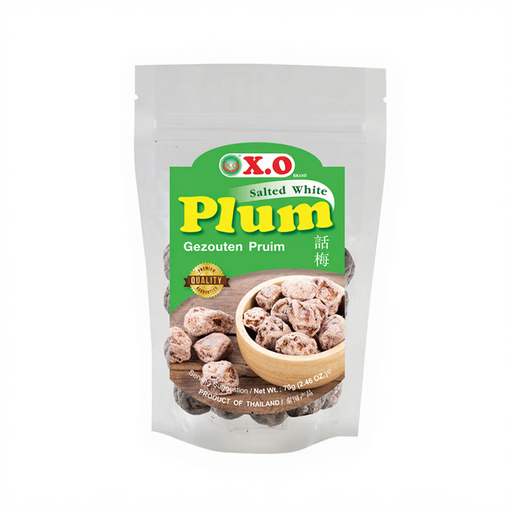
X.O Salted White Plum 70 g
A small, ready-to-eat pack if you’re looking for a salted plum snack.
70 g. The ingredients list plum, salt, sugar and sulphite; this isn’t a plain, unsalted dried plum.
Joybuy
 No image available
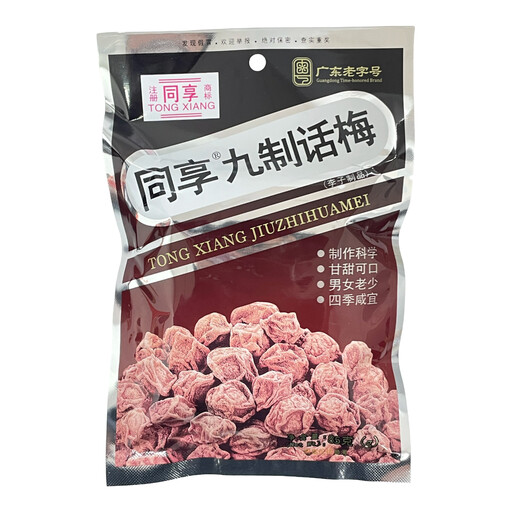
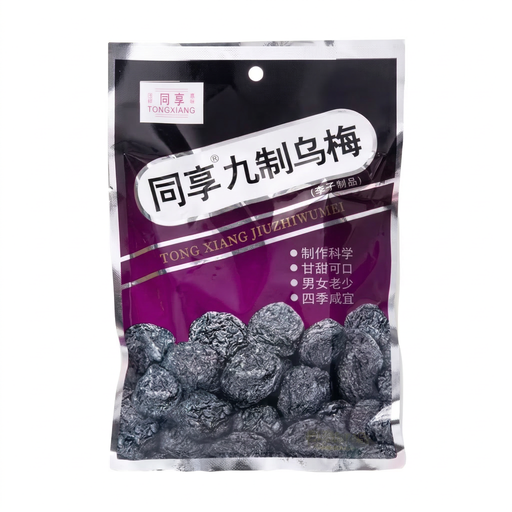
Tong Xiang Jiu Zhi Salted Plums 85g
A plum snack in a small pack; check the salt content if that matters to your choice.
85 g; 257 kcal and 12.2 g of salt per 100 g. These are salted, preserved plums.
Joybuy
 No image available
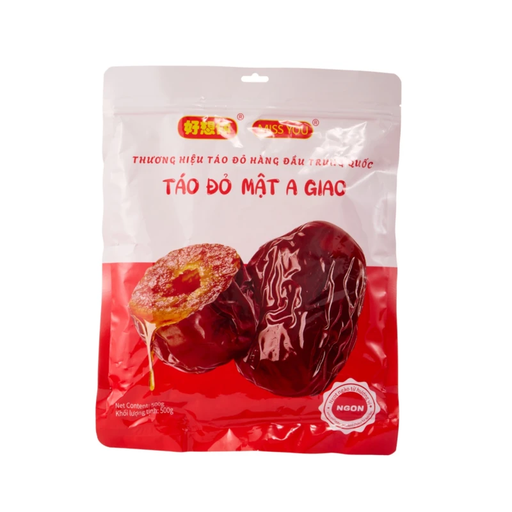
HXN Candied Red Dates
A candied fruit snack if this is the product type you’re looking for; it isn’t unsweetened dried fruit.
The ingredients list 44% red dates, maltose syrup and sugar. The label lists 327 kcal and 50.0 g of sugars per 100 g.
Joybuy
 No image available
Tong Xiang Multi-Stewed Preserved Dark Plum 90g
A small pack for anyone looking for a ready-to-eat preserved plum snack.
90 g; 327 kcal, 7.0 g of sugars and 3.75 g of salt per 100 g. This is a preserved snack, not a plain dried plum.
Joybuy
Frequently asked questions
When can dried fruit be called ‘low calorie’?
For solid foods, the European Commission sets a maximum of 40 kcal per 100 g for the claim ‘low energy’. A smaller portion doesn’t change the calories per 100 g, so give the nutritional value of a portion separately.
How much dried fruit can I plan for a week?
The Voedingscentrum recommends a maximum of 20 g of dried fruit a day. Seven 20 g portions add up to 140 g per person per week, mathematically, but this isn’t a required target. Match your purchase to the occasions when you actually plan to eat it.
Do all packs of dried fruit need to be refrigerated after opening?
Follow the instructions for the specific product. Albert Heijn’s soaked apricots should be refrigerated after opening at a maximum of 7°C and have a limited shelf life. The PLUS plums checked say to store in a cool, dry and dark place; don’t automatically apply one product’s instructions to another.
Does ‘no added sugars’ mean a product is low in sugar?
No. For its soaked apricots, Albert Heijn lists 0 g of added sugars and 37 g of total sugars per 100 g. For the PLUS plums, the figures are 0 g of added sugars and 38.1 g of total sugars per 100 g. Check both values separately.
What should I look for if allergens determine my choice?
Read the allergen information on the exact pack. The Albert Heijn and Jumbo apricots checked contain sulphites; Jumbo also mentions the possible presence of nuts, peanuts and sesame. The NVWA explains that information about allergens listed by law must be provided for both prepacked and unpackaged foods.


