
Lunch planners who want to manage portions
You’re looking for a small serving of fruit to add to a lunch during the school holidays, and want to compare calories by weight rather than by an arbitrary handful or number of pieces.


Compare dried fruit by weight and tailor the portion to what you want to pack for lunch; a small portion doesn’t automatically make the product itself low in calories. The Netherlands Nutrition Centre gives average figures of 40 kcal per 20 g of dried plums and 65 kcal per 20 g of raisins, but these are figures for types of fruit, not measurements of supermarket products.
You’re looking for a small serving of fruit to add to a lunch during the school holidays, and want to compare calories by weight rather than by an arbitrary handful or number of pieces.
You want to check the ingredients and choose dried fruit with no added sugar for your child, rather than relying on a snack claim alone.
You check the allergen information and storage advice on the exact pack. If you have a relevant allergy or are buying for a young child, these factors may matter more than your preference for a particular type of fruit.
First compare the energy content for the same amount, then check the ingredients and portion size. The Netherlands Nutrition Centre’s average figures for plums and raisins can be compared directly at 20 g, but they don’t tell you how many calories are in a specific supermarket product.
| What to consider | What should you check? | Who this matters most to |
|---|---|---|
| Calories in your portion | Compare kcal per 100 g and work out the figure for the amount you want to pack. | If I’m weighing out a small portion for lunch, I want to compare different types by weight. Around 36% of consumers prioritise calories per portion. |
| Added sugar | Read the ingredients and check whether sugar or a coating has been added. The Netherlands Nutrition Centre advises that children aged 4 to 12 have no more than one handful of dried fruit without added sugar a day. | If I’m looking for unsweetened dried fruit for a child, I want to consider the ingredients as well as the calories per portion. Around 29% of consumers prioritise this. |
| Ingredients and serving | Check the allergen information and warnings on the exact pack. For young children, also bear in mind the choking risk from raisins and currants. | If I have a relevant allergy or am buying for a young child, I want to know what’s in the pack and how to serve the fruit. Around 21% of consumers look at this first. |
| Packaging and storage | Compare the net weight with how you plan to use it, and follow the storage and resealing instructions on the pack. | If I’m buying fruit for several holiday lunches, I want an appropriate amount and clear storage advice. Around 14% of consumers prioritise stock levels and storage. |
For solid foods, the European Commission defines ‘low energy’ as no more than 40 kcal (170 kJ) per 100 g. So a portion with few calories doesn’t automatically meet the requirements for this claim.
The energy in a 20 g portion is different from the figure per 100 g on which the claim requirements for solid foods are based.
First compare the nutritional information per 100 g, then work out the energy in the portion you actually want to pack.
The Netherlands Nutrition Centre’s figures are averages for types of fruit. They don’t automatically represent the nutritional value of a particular brand or product.
Use the general figures to compare types of fruit, then check the label on the exact pack before you buy.
The Netherlands Nutrition Centre distinguishes sweetened fruit and varieties coated in yoghurt or chocolate from the unsweetened fruit options it mentions for children.
Read the ingredients list and assess the specific product rather than relying on the picture or product name alone.
The Netherlands Nutrition Centre warns that young children can choke on raisins or currants.
Don’t give them too many at once, stay with your child and make sure they sit calmly while eating.
Albert Heijn lists AH Soaked Dried Apricots as a separate product.
Jumbo describes its pitted dried plums as a 250 g pack.
Lidl describes Alesto as its own brand, which includes dried fruit.
ALDI describes Trader Joe’s Sun-Dried Apricots as a 250 g pack.
PLUS lists dried apricots in a stand-up pouch with a net weight of 375 g.
Dirk lists 1 de Beste Apricots in a 375 g pack.
The products below are dried plums. Compare the stated calories per 100 g and the ingredients with the portion you want to weigh out for lunch. The stated figures are above the European claim threshold for ‘low energy’.
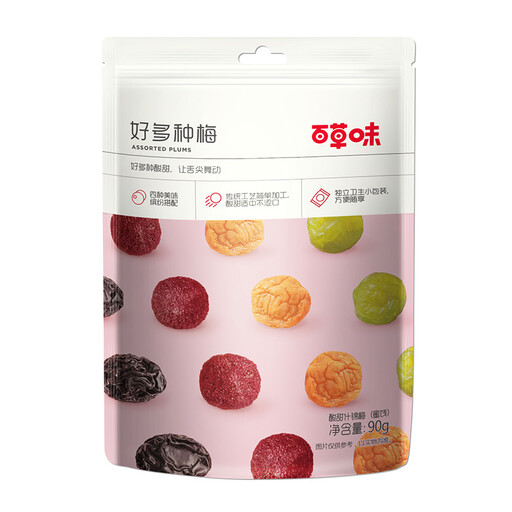 No image available
A plum option for anyone who wants to compare nutritional values on an equal-weight basis and is looking for a 90 g pack.
The product description states 68 kcal and 3.0 g of salt per 100 g. The ingredients include white sugar and sweeteners.
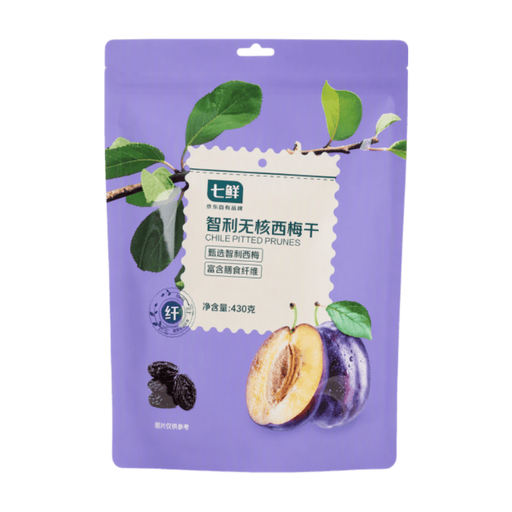 No image available
A good fit for anyone who wants to compare pitted dried plums with other options on the same weight basis.
The product description states 283 kcal per 100 g and lists dried plums as the only ingredient.
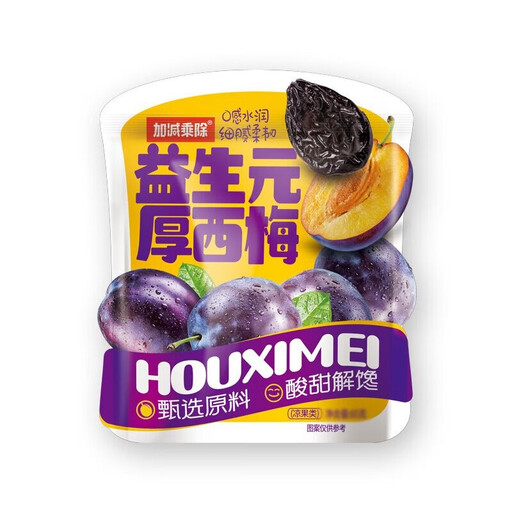 No image available
A small pack for anyone who wants to compare the stated nutritional value of a plum product per 100 g.
The product description states 214 kcal per 100 g, a pack weight of 65 g and fructose syrup as an ingredient.
No. For solid foods, the European Commission defines ‘low energy’ as no more than 40 kcal (170 kJ) per 100 g. So the calories in a small portion aren’t measured against the same standard as the claim requirements per 100 g.
Compare the nutritional information per 100 g and, if needed, calculate it for portions of the same weight. The Netherlands Nutrition Centre gives average figures of 40 kcal per 20 g of dried plums and 65 kcal per 20 g of raisins. For a supermarket product, check the label on the exact variety.
For children aged 4 to 12, the Netherlands Nutrition Centre advises no more than one handful of dried fruit without added sugar a day. This is dietary guidance, not a legal portion limit.
The Netherlands Nutrition Centre warns that young children can choke on raisins or currants. Don’t give them too many at once, stay with your child and make sure they sit calmly while eating.
Read the ingredients, allergen information and storage advice for the exact product. According to the Netherlands Food and Consumer Product Safety Authority, allergen information must appear on the label of prepacked products. For the dried plums mentioned above, Jumbo recommends storing them in a cool, dry, dark place.