Who is this buying guide for?

Snackers who watch their portions

You want a sweet fruit snack and are mainly keeping an eye on the calories in the portion you eat. Weighing it and checking the label for the exact product can help. The Netherlands Nutrition Centre offers advice on portions of dried fruit, while product values can be found on labels from retailers including Albert Heijn, Jumbo and PLUS.

Shoppers who check the label

You want to know whether sugar has been added and which ingredients or allergens are listed. If you need to manage a personal sensitivity, check the ingredients and allergen information on the pack you’ve chosen. The NVWA provides guidance on allergen information; Albert Heijn, Jumbo and PLUS list product details for their own varieties.

Shoppers buying a small top-up

You’re buying a small amount and want a pack that suits how much you’ll use and how you can store it. Check the net weight as well as the storage instructions for after opening. The Netherlands Nutrition Centre explains best-before dates; instructions can vary from product to product.

What should you look for when buying?

First compare the nutritional values for the same weight, then decide which ingredients and pack best suit the way you’ll use it.

What to consider What to look for Who is this important for?
Calories per portion Compare kcal per 100 grams and weigh the portion you plan to eat. If I want to weigh my snack portion carefully, I check the energy content for exactly that amount. Around 46% of consumers prioritise the calories in a portion.
Ingredients Check the ingredients list, added sugars and allergen information. I want to know what has been added to the fruit and whether the ingredients suit my personal dietary requirements. Around 27% of consumers give ingredients their highest priority.
Quantity and storage Check the net weight and storage advice for the opened pack. When buying a small amount, I want a pack that suits how much I’ll use and how I can store it. Around 27% of consumers look at this first.

Common mistakes

  • Confusing a small portion with a low-calorie product

    The threshold for the claim ‘low energy’ applies per 100 grams of solid food, not per portion you choose yourself. The European Commission sets the maximum at 40 kcal per 100 grams.

    Work out the energy in your weighed portion using the nutritional values per 100 grams. Don’t call a product ‘low calorie’ just because you eat a small amount.

  • Assuming ‘no added sugars’ means ‘sugar-free’

    For the stewed apricots checked, Albert Heijn lists 0 grams of added sugars and 37 grams of total sugars per 100 grams. For the prunes checked, PLUS lists 0 grams of added sugars and 38.1 grams of total sugars per 100 grams.

    Check both the ingredients and the ‘of which sugars’ nutritional information; they tell you different things.

  • Assuming all dried prunes have the same nutritional values

    The Netherlands Nutrition Centre provides general nutritional information for dried prunes. PLUS’s product page lists 282 kcal per 100 grams for its specific variety; a general value is no substitute for checking that product’s label.

    Compare the nutritional values of the exact products, using the same weight.

  • Ignoring the storage instructions after opening

    According to the Netherlands Nutrition Centre, the best-before date applies to an unopened pack. For the stewed apricots checked, Albert Heijn says to refrigerate after opening at a maximum of 7 °C and notes that they have a limited shelf life.

    Choose an amount that suits how much you’ll use, and read the pack instructions before buying.

Brands to consider

Albert Heijn

Albert Heijn’s product page describes AH Stewed Dried Apricots as a snack or topping.

  • For this variety, Albert Heijn lists 182 kcal, 0 grams of added sugars and 6.3 grams of fibre per 100 grams.
  • The apricots contain sulphites. Once opened, they should be refrigerated at a maximum of 7 °C.

Jumbo

Jumbo lists Pitted Dried Apricots in a 250-gram pack.

  • The product page lists 99.8% apricots and 237 kcal per 100 grams. Storage instructions say to keep in a cool, dry, dark place.
  • This variety contains E220/sulphite and may contain nuts, peanuts and sesame; occasional fragments of stones may also be present.

Lidl

Lidl presents Alesto as a range of nuts and dried fruit, including apricots.

  • The range page confirms Alesto’s relevance to this product category.
  • Check the information for the specific variety to assess its calories, ingredients and allergens.

Aldi

ALDI lists Trader Joe’s Sun-Dried Prunes in a 250-gram pack.

  • The product page describes the prunes as soft and pitted.
  • Check the nutritional values and ingredients on the pack for the variety you choose.

PLUS

The PLUS product page lists dried prunes in a 375-gram pack.

  • For this variety, PLUS lists 282 kcal, 7.1 grams of fibre and 0 grams of added sugars per 100 grams. The ingredients are dried prunes, sunflower oil and E200.
  • These details apply to the variety listed; check the label if you choose a different pack.

Dirk

Dirk lists 1 de Beste Apricots in a 375-gram pack.

  • The product page identifies 1 de Beste as Dirk’s own brand and lists the pack weight.
  • Check the nutritional values and ingredients on the label of the variety you buy.

Dried fruit at Joybuy

This selection of Joybuy products includes dried prunes, apricots and strawberries for snacking or using as a topping. For the ‘low energy’ claim on solid foods, the European Commission sets a maximum of 40 kcal per 100 grams; Joybuy’s product information lists a higher value for all the varieties below.
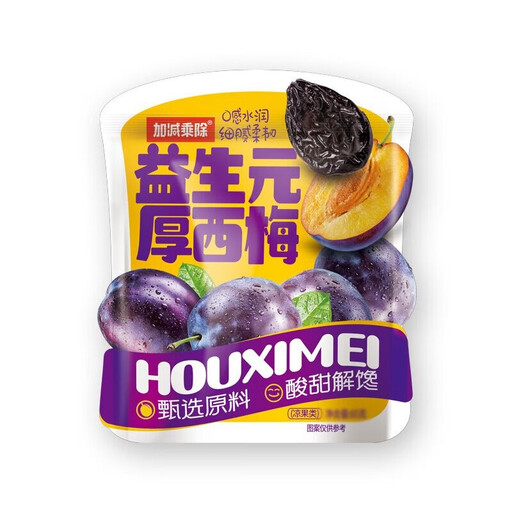
Jia Jian Cheng Chu Prebiotic Thickened Prunes 65g

Jia Jian Cheng Chu Prebiotic Thickened Prunes 65g

An option if you’re looking for prunes in individual snack portions; the product information lists 65-gram portions.

Joybuy lists 214 kcal per 100 grams. The ingredients include prunes, fructose syrup and oligofructose.

View at Joybuy
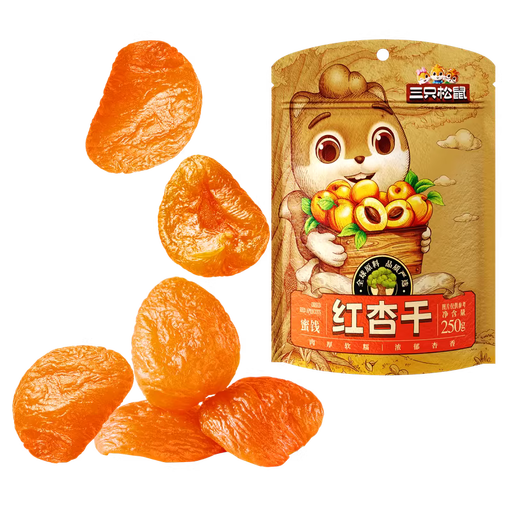
Three Squirrels Red Apricot Dried, 250g

Three Squirrels Red Apricot Dried, 250g

An option if you’re looking for dried apricots to snack on straight from the pack; the product information lists a pack size of 250 grams.

Joybuy lists 311 kcal per 100 grams. The product information lists added sugar, maltose syrup and sulphites.

View at Joybuy
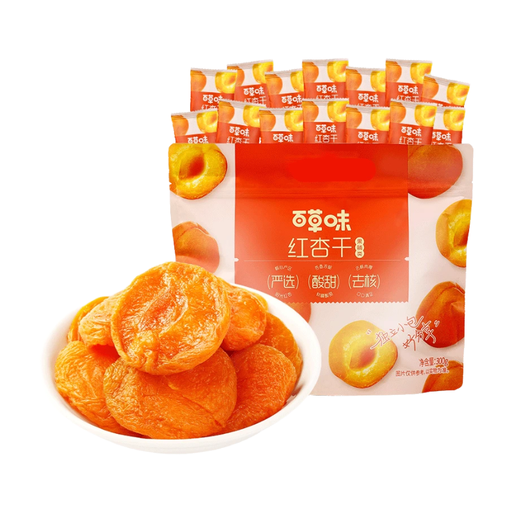
Be&Cheery Dried Red Apricots 300g

Be&Cheery Dried Red Apricots 300g

An option if you want to weigh out dried apricots; the product information lists a pack size of 300 grams.

Joybuy lists 327 kcal per 100 grams. The ingredients information lists sugar, maltose syrup and sulphites.

View at Joybuy
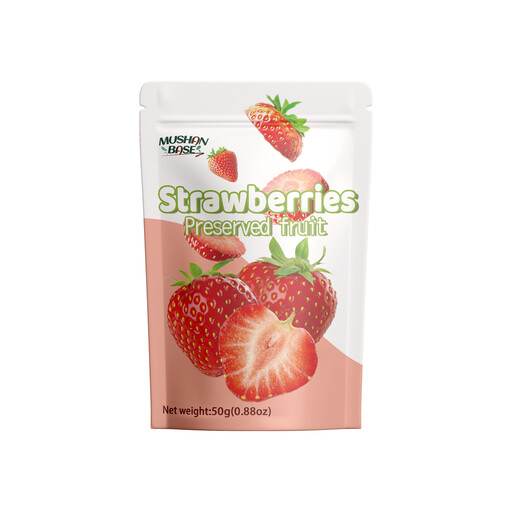
MUSHAN BASE Dried Strawberry Slices 50g

MUSHAN BASE Dried Strawberry Slices 50g

An option if you’re looking for dried strawberries in a small pack; the product information lists a pack size of 50 grams.

Joybuy lists 313 kcal per 100 grams. The ingredients are strawberries and sugar.

View at Joybuy
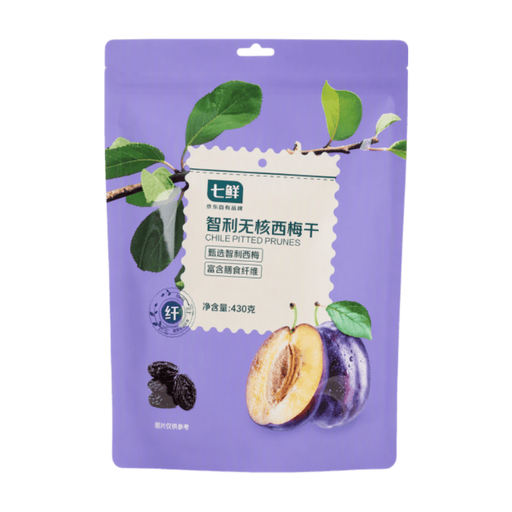
7FRESH Pitted Prunes 430g

7FRESH Pitted Prunes 430g

An option if you’re looking for prunes to eat or use as a topping; the product information lists a pack size of 430 grams.

Joybuy lists 283 kcal per 100 grams, with dried prunes as the only ingredient. The product information advises consuming the pack straight away after opening.

View at Joybuy

Frequently asked questions

Can dried fruit with few calories per small portion be called ‘low energy’?

Not on the basis of the portion alone. For solid foods, the European Commission sets a maximum of 40 kcal per 100 grams for the ‘low energy’ claim. So a small portion may contain fewer calories without the product meeting that threshold.

How do I compare the calories in a snack portion?

Weigh the portion and use the nutritional value per 100 grams: kcal per 100 grams × portion weight ÷ 100. The Netherlands Nutrition Centre recommends a maximum of 20 grams of dried fruit a day; this isn’t a legal limit for products.

Do you need to soak or prepare dried apricots first?

That isn’t necessary for the stewed apricots from Albert Heijn that were checked: they’re sold as a snack. Jumbo describes its variety as dried, pitted apricots. Both product pages warn that an occasional stone or stone fragment may be present.

Can you keep an opened pack until its best-before date?

The best-before date applies to an unopened pack. After opening, follow the label; for Albert Heijn’s stewed apricots, this means refrigerating them at a maximum of 7 °C and using them within a limited time.

Which allergen information should I check before buying?

The NVWA says allergen information must appear on the label of prepacked foods. The Albert Heijn and Jumbo apricots that were checked list sulphites; Jumbo also mentions the possible presence of nuts, peanuts and sesame. Check the pack if you need to manage a personal sensitivity.
