What should you look for when buying?
| What to consider |
What to look for |
Who is this most relevant to? |
| Calories per portion |
Compare kcal per 100 g, then calculate the amount based on the weight of your own portion. For example, Jumbo’s product information gives values per 100 g and per portion. |
If I want to weigh my snack portion, I first compare the same quantity; around 50% of consumers prioritise the calorie content of a portion. |
| Ingredients and sugars |
Read the ingredients list alongside the nutrition table. Total sugars are not the same as added sugars; for the PLUS prunes checked, the information lists 0 g of added sugars and 38.1 g of sugars per 100 g. |
If I want to check additives or an allergen, I look at the exact variety; around 30% of consumers prioritise the ingredients first. |
| Portioning and storage |
The portion shown in a table is not a recommended serving size. Follow the storage instructions on the packaging; the Jumbo products and PLUS prunes checked say to store in a cool, dry, dark place. |
If I want to portion and store a supply easily, I check the packaging and instructions; around 20% of consumers prioritise convenience. |
The percentages give a general indication of the relative importance of the purchasing priorities mentioned. They are not based on a survey of Dutch consumers.
Dried fruit at Joybuy
These products are dried prunes, dates and sultanas for snacking or adding to breakfast and baking. Compare the nutrition values given per 100 g, and check the ingredients, pack size and product variety.
 No image available
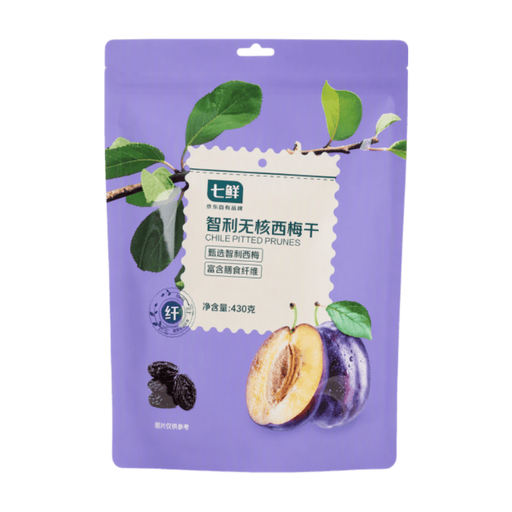
7FRESH pitted prunes 430 g
The product information describes these prunes as ready to eat, for example as a snack or with breakfast and in baking.
283 kcal per 100 g. The ingredients list contains only dried prunes. The packaging says to consume the product straight after opening.
View at Joybuy
 No image available
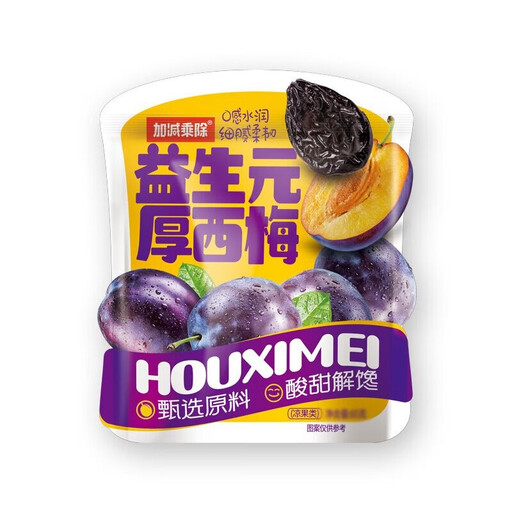
Jia Jian Cheng Chu Prebiotic Thickened Prunes 65 g
According to the product information, the individual 65 g packs are designed as ready-to-eat snacks for when you’re out and about.
214 kcal per 100 g. The ingredients list includes prunes, fructose syrup and oligofructose; check the ingredients if you want to avoid additives.
View at Joybuy
 No image available
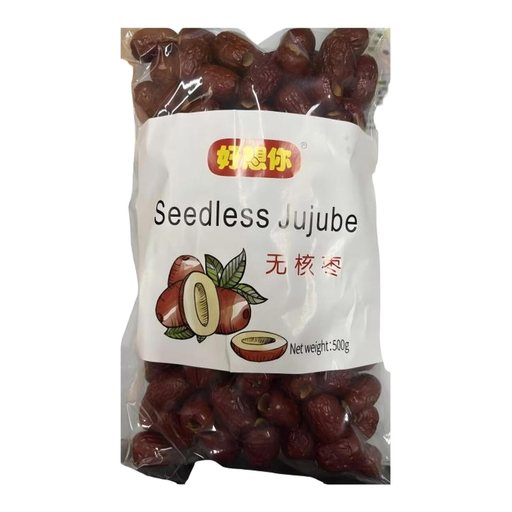
Haoxiangni pitted red dates 500 g
The pitted red dates are described as a snack and as an ingredient for cooking and baking.
300 kcal per 100 g. The ingredients list contains 100% red dates.
View at Joybuy
 No image available
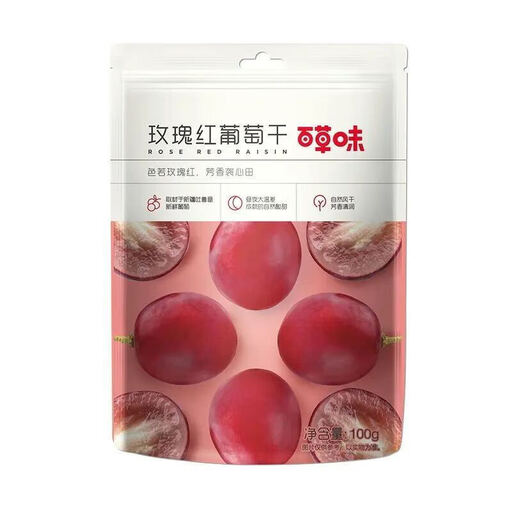
Be&Cheery red sultanas 100 g
According to the product information, the sultanas are ready to eat as a snack or with cereal, yoghurt and baked goods.
330 kcal per 100 g. The pack contains 100 g.
View at Joybuy
 No image available
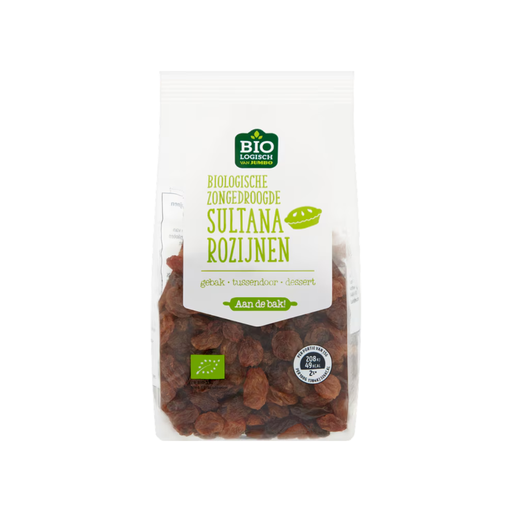
B+ sultanas 250 g
The sultanas are intended to be eaten as they are or added to breakfast and desserts.
326 kcal per 100 g. The ingredients list contains sultanas and sunflower oil. According to the product information, a stalk or stone may remain despite checks.
View at Joybuy
Frequently asked questions
Which dried fruit contains fewer calories in this comparison?
Of the Jumbo varieties checked, the apricots contain less energy per 100 g than the prunes and sultanas compared here: 236–237 kcal, compared with 282 and 326 kcal. These figures apply to these specific products and nutrition values, not every variety of these types of fruit.
When can dried fruit be described as ‘low calorie’?
For solid foods, the ‘low energy’ claim is limited to a maximum of 40 kcal (170 kJ) per 100 g. The European Commission sets out the conditions for this claim, and the Netherlands Food and Consumer Product Safety Authority (NVWA) notes that nutrition claims must comply with European rules. A smaller portion or a comparison with another product doesn’t change the limit.
Does 0 g of added sugars mean that prunes are sugar-free?
No. The PLUS prunes checked list 0 g of added sugars and 38.1 g of total sugars per 100 g. Check both the ingredients list and the nutrition table.
Can I choose the Jumbo apricots checked if I need to avoid sulphites?
No, not the two Jumbo varieties checked: sulphites are listed for both. Check the ingredients and allergen information for any alternative; a different colour or type of fruit is no guarantee on its own.
How much dried fruit does the Netherlands Nutrition Centre recommend each day?
The Netherlands Nutrition Centre recommends eating no more than 20 g of dried fruit a day. This is dietary advice, not a legal consumption limit or proof that a product is low in calories.


