What should you look for when choosing?
First, weigh the amount you want to serve, then use the nutritional information for the exact variety to assess your portion.
| What to consider |
What should you look for? |
Who is this most relevant for? |
| Calories per portion |
Check the kcal per 100 grams on the label and weigh your portion. |
If I want to measure out my snack in advance, I look at the energy content of my portion. Around 42% of consumers put calories per portion first. |
| Ingredients and allergens |
Check for added sugar or syrup and read the allergen information. |
If I’m looking for fruit with no added sugar, I don’t assume that it’s also low in calories; I check any relevant allergens separately. Around 25% of consumers give ingredients and allergens top priority. |
| Variety and how it’s served |
For individual fruits, check the weight; for a mix, use the nutritional information for the whole mix. |
If I want to serve different flavours or a mix, I assess the ingredients as one product. Around 17% of consumers put variety and how it’s served first. |
| Stock and storage |
Compare the net weight and follow the storage instructions for your chosen variety. |
If I only host occasionally, I want a pack that suits my needs and lets me store any leftovers. Around 16% of consumers give stock and storage top priority. |
To work out the energy content of your portion, multiply the kcal per 100 grams by the weight of your portion in grams, then divide by 100. The European Commission sets a maximum of 40 kcal (170 kJ) per 100 grams for solid foods to qualify for the ‘low energy’ claim. So a small portion doesn’t automatically make a product low in energy.
For a general comparison, the Netherlands Nutrition Centre lists 26 kcal for one dried apricot weighing 9 grams, 40 kcal for 20 grams of dried plums and 65 kcal for 20 grams of raisins. Don’t use these general figures as the nutritional information for a specific branded variety.
Joybuy product picks
These product picks include dried plums and jujubes. The nutritional information and ingredients vary by product, so weigh your portion and assess the exact variety.
 No image available
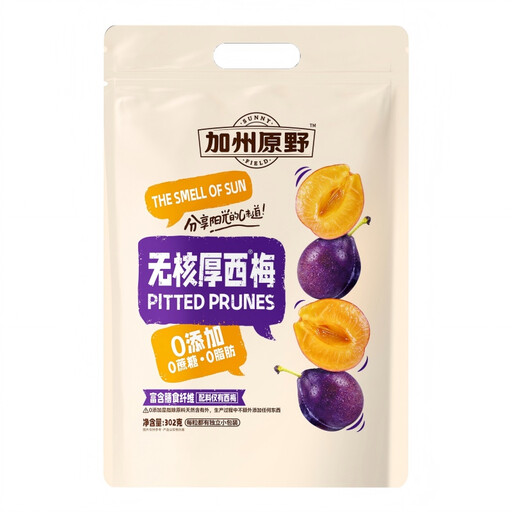
Jiazhouyuanye Thick Pitted Prunes 302g
If you want to weigh out a portion of prunes, you can use the stated nutritional information to calculate the energy content based on your portion size.
Product information: 224 kcal per 100 g; ingredients: 100% prunes. This value doesn’t meet the threshold for the ‘low energy’ claim.
Joybuy
 No image available
Haoxiangni Pitted Jujubes 500g
If you want to serve jujubes, the product information and pack weight can help you decide how much to serve.
Product information: 300 kcal per 100 g; pack size: 500 g; ingredients: 100% red dates. This value doesn’t meet the threshold for the ‘low energy’ claim.
Joybuy
 No image available
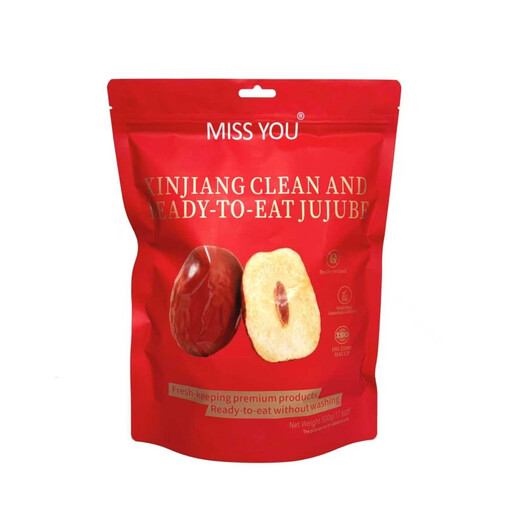
Haoxiangni Grade A Wash-Free Jujubes 500g
If you want to serve these jujubes with drinks, you can use the nutritional information per 100 g to calculate the energy content of a weighed portion.
Product information: 304 kcal per 100 g; pack size: 500 g; jujube is listed as the sole ingredient. This value doesn’t meet the threshold for the ‘low energy’ claim.
Joybuy
 No image available
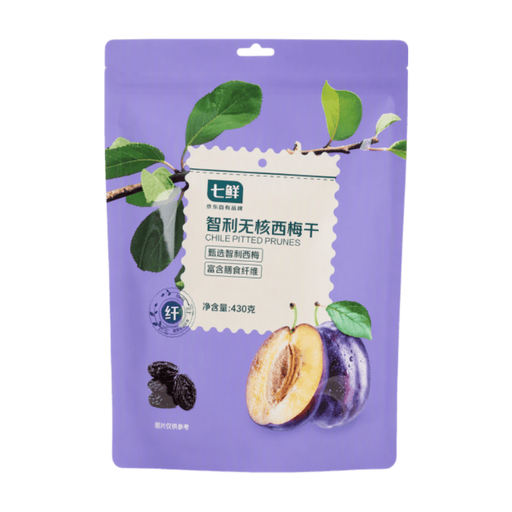
7FRESH Pitted Prunes 430g
If you choose dried plums as a snack to serve with drinks, the stated energy value can help you assess the amount in your weighed portion.
Product information: 283 kcal per 100 g; pack size: 430 g; ingredients: dried plums. This value doesn’t meet the threshold for the ‘low energy’ claim.
Joybuy
 No image available
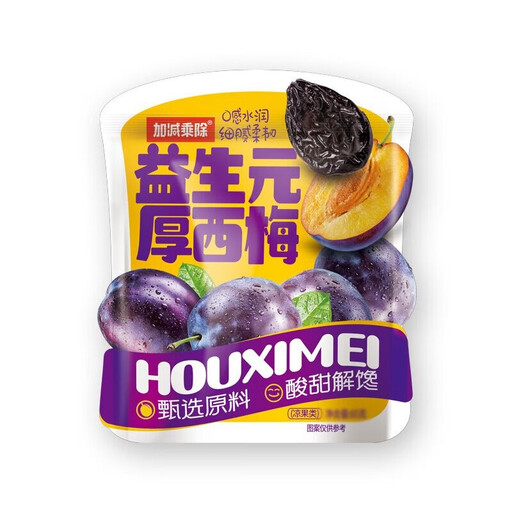
Jia Jian Cheng Chu Prebiotic Thickened Prunes 65g
If a small pack suits your get-together, the 65 g pack size gives you a specific format to compare.
Product information: 214 kcal per 100 g; pack size: 65 g; the ingredients include fructose syrup. This value doesn’t meet the threshold for the ‘low energy’ claim.
Joybuy
Frequently asked questions
How do you work out the calories in your own bowl?
Multiply the kcal per 100 grams on the label by the weight of your portion in grams, then divide by 100. Use the information for the exact variety; nutritional values are averages and may differ from general food tables.
Can dried fruit be called ‘low calorie’ if you only eat a small handful?
No. For a ‘low energy’ claim, or a claim with the same meaning, the European Commission sets a maximum of 40 kcal (170 kJ) per 100 grams for solid foods. The size of your portion doesn’t change this product requirement.
Is dried fruit with no added sugar suitable as an unlimited snack to serve with drinks?
No. The Netherlands Nutrition Centre recommends having no more than a handful of dried fruit, even if it has no added sugar. If you want to work out the calories in your portion, also check the product’s energy content.
What should you look for if you’re sensitive to sulphites, nuts or peanuts?
Check the allergen information on the exact pack before serving the product. The Netherlands Food and Consumer Product Safety Authority lists sulphites, nuts and peanuts as designated allergens; for pre-packed products, the allergen information must appear on the label.
How should you store an opened pack of dried fruit?
Follow the instructions on the packaging for your variety. The storage instructions for Jumbo Dried Pitted Plums 500 g are: store in a cool, dry and dark place. Don’t assume these instructions apply to other products without checking.


