Relevant brands to consider
The product varieties mentioned provide different types of information about dietary features, ingredients and packaging. Always assess the exact product; information about one product does not automatically apply to the whole brand.
Albert Heijn
AH Raisins 250 g is labelled as suitable for gluten-free and lactose-free diets.
- The ingredients in this variety are raisins and sunflower oil.
- These dietary claims say nothing about other allergens or other AH products. Albert Heijn advises checking the packaging before eating.
Jumbo
Jumbo Dried Pitted Apricots 250 g provides nutritional information per 100 grams and per 20-gram portion.
- The product information gives you a basis for comparing portions and nutritional values.
- This variety lists sulphur dioxide/sulphites and may contain nuts, peanuts and sesame. The information does not make it suitable if you need to avoid sulphites.
Lidl
Lidl’s Alesto range includes products such as dried mango strips.
- This gives you a product range and a type of fruit to look out for when browsing the selection.
- The description ‘natural dried fruit’ is not a product-specific allergen statement.
Aldi
ALDI Netherlands product information lists Trader Joe’s Raisins in a 500-gram pack.
- The net weight can help you decide whether the pack size suits your needs.
- Packaging information alone says nothing about suitability for a specific allergy or weight loss.
PLUS
PLUS Dried Apricots 375 g lists added and total sugars separately.
- The product information lists 0 grams of added sugars per 100 grams.
- This variety also contains sulphites, so no added sugar does not mean sulphite-free or sugar-free.
Dirk
Dirk sells 1 de Beste Apricots in a 375-gram pack.
- The product information mentions eating them as a snack, at breakfast or in baking.
- A description such as ‘healthy snack’ is no substitute for checking the ingredients, allergen information and portion size.
Dried fruit on Joybuy
This selection of Joybuy products includes raisins and dried plums. Compare the ingredients, dietary claims and pack format for each variety; a claim made about one product does not automatically apply to the others.
 No image available
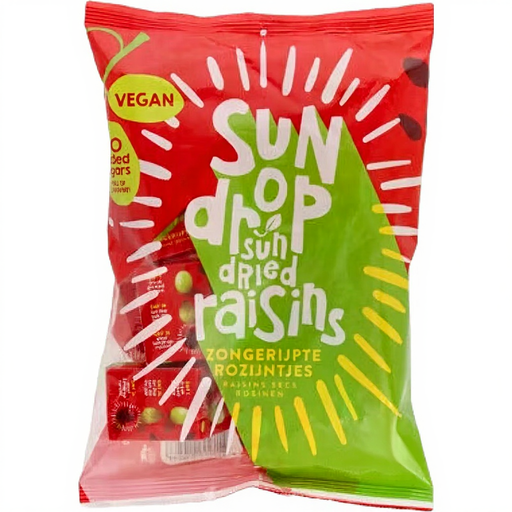
Sundrop Mini Raisin Handouts 252 g
The product description gives nutritional information per 100 grams, which you can use to compare with a weighed portion.
According to the product description, the product consists of 99.5% raisins and sunflower oil. It also states that the product contains none of the 14 major EU allergens; check the current packaging against your specific dietary restriction.
Joybuy
 No image available
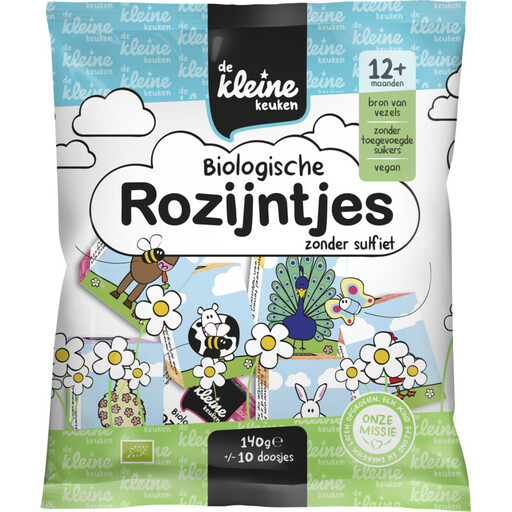
De Kleine Keuken Organic Raisins 12M+ 140 g
The pack of small boxes may be handy if you’re looking for a pre-measured portion, but the product is intended for a specific age group.
The product description states that the pack contains 10 boxes of 14 grams and is suitable only for babies over 12 months old. It also advises supervising children while they eat and says the product is unsuitable for anyone with swallowing difficulties.
Joybuy
 No image available
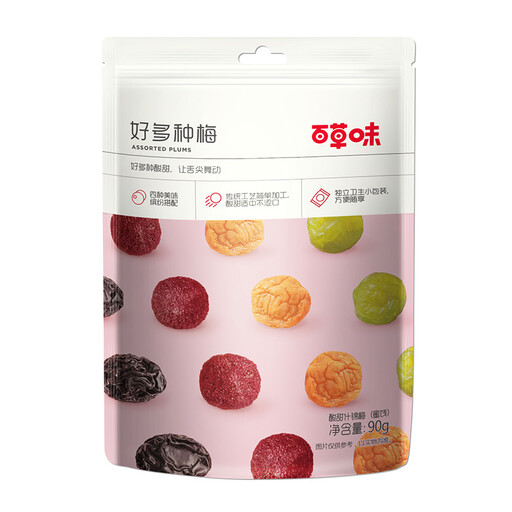
Be&Cheery dried plums 90 g
This variety isn’t suitable if you want to avoid added sugar; check the ingredients on the exact packaging.
The product description lists white sugar and salt as ingredients. Nutritional information is provided per 100 grams.
Joybuy
Frequently asked questions
Is 20 grams of dried fruit a legal limit?
No. The recommendation to eat no more than 20 grams a day comes from the Netherlands Nutrition Centre; it is not a legal purchase limit or personalised weight-loss advice.
Does ‘no added sugar’ mean it contains no sugar?
No. Sugar occurs naturally in fruit. PLUS lists 0 grams of added sugars and 53.4 grams of total sugars per 100 grams for its dried apricots, so check both figures and consider your portion size.
Is sulphite the same as a food allergy?
The Dutch Food Allergy Foundation describes reactions to sulphites as intolerance reactions. Sulphites may be used as a preservative in dried fruit; check the ingredients and allergen information for the exact product.
Where can I find allergen information on packaging in the Netherlands?
The Netherlands Food and Consumer Product Safety Authority states that allergens which must be declared have to appear clearly in the ingredients list. Check the packaging of the product you’re actually buying.
What should I know about warnings of possible cross-contamination?
In the Netherlands, new rules have applied since 1 January 2026 on how and when food businesses must warn about the unintended presence of allergens; the Netherlands Food and Consumer Product Safety Authority has been monitoring compliance since 2026. Such a warning concerns possible presence and is different from an ingredient that has been deliberately added.


