If you’re watching your fat intake when choosing snacks for the autumn holidays, check the nutritional information and ingredients for the exact product variant, and consider its sugar, energy and portion size too. The Voedingscentrum includes dried fruit with no added sugar in its school-lunch suggestions, recommending a maximum of one handful a day. This is nutritional advice for that context, not proof that a specific product can carry a claim such as ‘reduced fat’.
Who is this buying guide for?
Snackers watching their fat intake
If fat content is your main consideration, compare sugar, energy and the amount you eat too. The Voedingscentrum’s general nutritional information for dried apricots shows why low fat doesn’t automatically mean low in energy.
Families planning portions for the holidays
For families who want to portion out snacks in advance, the amount for one snack break is different from the total contents of a bag. The Voedingscentrum includes dried fruit with no added sugar in its school-lunch suggestions, recommending a maximum of one handful a day. This is nutritional advice, not a legal consumption limit.
Buyers looking for snacks to take along and store
If you’re taking snacks with you or using the same pack more than once, check the packaging and storage advice for that exact variant. ALDI describes a fruit-mix range in resealable packaging; the Voedingscentrum also provides general storage advice for dried apricots.
What should you look for when buying?
Start by checking the nutritional information for the exact variant, then decide which portion size and packaging suit the occasion.
| What to consider |
What should you check? |
Who should pay particular attention? |
| Fat content and claims |
Compare fat per 100 g and check that any nutrition claim applies to that exact variant. For solid foods, the Voedingscentrum defines ‘low fat’ as a maximum of 3 g of fat per 100 g; this doesn’t prove that a specific product meets all the conditions for the claim. |
If you’re mainly choosing based on fat, you’ll want to compare the value for your chosen variant rather than relying on the search term alone. Consumers who prioritise fat content make up around 34% of this group. |
| Sugar, energy and portion size |
Read the ingredients and nutrition table side by side, and distinguish added sugar from total sugar. |
If you portion out snacks in advance, you’ll want to know what each serving contains and how much you’re giving out. Consumers who prioritise sugar, energy and portion size make up around 33% of this group. |
| Packaging for taking on the go |
Check the total contents, the number of packs and whether the packaging is resealable. The total contents aren’t a recommended portion size. |
If you’re taking snacks with you or sharing them, packaging that suits the way you’ll use the product is more practical than looking at the total contents alone. Consumers who prioritise convenient packaging make up around 20% of this group. |
| Quantity and storage |
Compare the pack size with how much you plan to use, and follow the storage advice on the packaging after opening. |
If you want to avoid having leftovers after the holidays, consider the quantity and how to store the product. Consumers who prioritise cost and making use of leftovers make up around 13% of this group. |
Common pitfalls
-
Assuming low fat means low in calories
A product that’s low in fat can still contain energy and sugar. For one dried apricot weighing 9 g, the Voedingscentrum lists 0 g of fat, 26 kcal and 5 g of sugars. These are general values, not the label values for a specific supermarket product.
Check fat, energy and sugar together, and assess the nutritional information on the pack you’re buying.
-
Thinking a whole bag is one snack portion
A 500 g pack, such as the sultanas listed by Jumbo, shows the total contents, not the amount for one snack break.
Portion out an amount that suits your snack breaks in advance, and don’t use the pack size as a guide to portion size.
-
Applying the nutritional values of one type of fruit to another
Soft dried apricots, sultanas and fruit mixes are different types of product. The ingredients and nutritional values for one type of fruit don’t automatically apply to a mix or another variant.
Check the exact product type and variant on the packaging before comparing nutritional values or claims.
Brands to consider
Albert Heijn
Worth considering if you’re specifically looking at soft dried apricots. Albert Heijn notes that product information may change.
- The product page identifies AH Soft Dried Apricots.
- Check the label for soft dried apricots themselves; general values for dry apricots aren’t a substitute.
Jumbo
The listed Sun-Dried Sultanas may be worth considering if you want to portion out a larger pack.
- Jumbo lists a 500 g pack.
- The total contents aren’t a recommended portion size and, on their own, say nothing about a claim such as ‘reduced fat’.
Lidl
A product page for dried fruit mix makes Lidl a relevant option if you’re considering a mix.
- The product is listed as a dried fruit mix.
- Check the ingredients and nutritional values for your chosen mix; don’t apply the values for one type of fruit to another.
ALDI
The listed product information includes sultanas and a fruit-mix range. The name Trader Joe’s appears on the Dutch ALDI page for the sultanas.
- The product titles list 500 g packs of sultanas and a fruit-mix range in resealable 200 g packaging.
- The mix range includes several variants, so check which one you’ve chosen before comparing its features.
PLUS
Worth considering if you’re looking for dried apricots in a stand-up pouch of the listed size.
- The product title lists PLUS Dried Apricots, 375 g.
- PLUS notes that ingredients, nutritional values and allergen information may change, so check the product information when you buy.
Dirk
The product page for pitted apricots is relevant if that’s the type of product you’re looking for.
- Dirk lists pitted apricots under dried fruit and nuts.
- Dirk doesn’t list a delivery service on the relevant page. This is about how you can buy the product, not its nutritional quality.
Dried fruit at Joybuy
These Joybuy products are dried fruit products described in their product information as snacks or ready to eat. Compare the nutritional values and ingredients for each variant. This selection isn’t a ranking and doesn’t confirm a ‘reduced fat’ claim.
 No image available
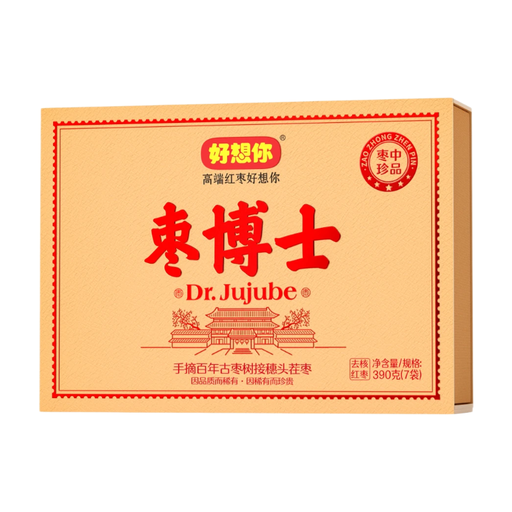
Haoxiangni Dr.Jujube Premium Gold-Grade Pitted, 390 g
Worth considering if you want to compare fat per 100 g and take sugar and energy into account too.
The product description lists 100% red dates and 0 g of fat per 100 g.
The same description lists 300 kcal and 60 g of sugar per 100 g.
View at Joybuy
 No image available
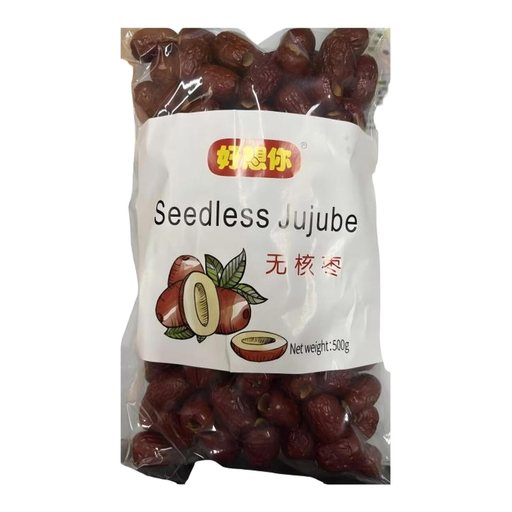
Haoxiangni Pitted Jujubes, 500 g
Could be a good option if you’re looking for pitted red dates that are described as ready to eat.
The ingredients list red dates as the only ingredient.
The product description lists 0.5 g of fat per 100 g, 300 kcal and 60 g of sugar per 100 g.
View at Joybuy
 No image available
De Kleine Keuken Organic Raisins 12M+, 140 g
The product description mentions ten 14 g snack boxes, which may be useful if you want to take small portions with you separately.
The description says the sultanas have no added sugar. According to the product information, they’re suitable from 12 months; supervise children while they eat. Not suitable for children with swallowing difficulties.
View at Joybuy
 No image available
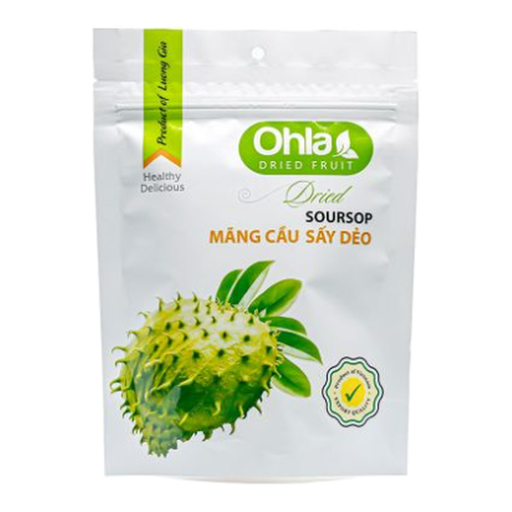
OHLA Dried Soursop, 180 g
Worth considering if you’re comparing dried soursop and want to check the ingredients alongside the nutritional values.
The product description lists 2.21 g of fat per 100 g.
The ingredients list white sugar and glucose; the nutritional information lists 72.6 g of sugar per 100 g.
View at Joybuy
 No image available
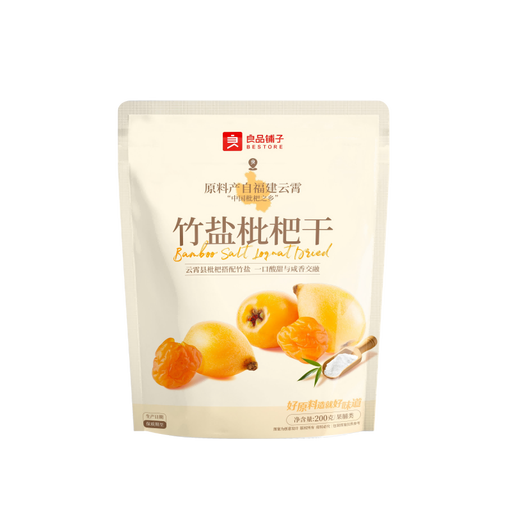
Bestore Dried Loquat with Bamboo Salt, 200 g
Could be a good option if you’re comparing dried loquat and taking the ingredients and sugar content into account.
The product description lists 0 g of fat per 100 g.
The ingredients list white sugar, glucose powder and syrup; the nutritional information lists 66.2 g of sugar per 100 g.
View at Joybuy
Frequently asked questions
Does 0 g of fat per piece mean a dried apricot contains no calories?
No. For one dried apricot weighing 9 g, the Voedingscentrum lists 0 g of fat, as well as 26 kcal and 5 g of sugars. These are general values, not guarantees for a specific pack.
How long can I keep dried apricots after opening?
The Voedingscentrum’s general storage guide recommends keeping them in a kitchen cupboard for 6–9 months. Also follow the use-by date and storage information for your product. This advice isn’t a guarantee for soft dried or other non-standard variants.
Who can I contact if the product information for a supermarket own-brand product is unclear?
For questions about the exact variant, you can contact Albert Heijn customer services or PLUS consumer services. Their product pages note that product information may change, so have the product name and variant to hand.
What should I look for in a ‘low fat’ claim on dried fruit?
Assess the claim using the information for that exact product variant. The NVWA refers to European rules on nutrition claims; for solid foods, the Voedingscentrum defines ‘low fat’ as a maximum of 3 g of fat per 100 g. Meeting that threshold alone doesn’t confirm that a specific product meets all the applicable conditions for the claim.


