What should you look for when buying dried fruit?
Start with the nutrition table for the product you want to buy. Then compare the same type of fruit by price per kilo and energy per equal-sized portion, and take the ingredients and storage instructions into account.
| What to consider |
What should you check? |
Who is this useful for? |
| Fat content |
Check the fat per 100 g and see whether the pack says ‘low fat’ or ‘reduced fat’. The European Commission sets a maximum of 3 g of fat per 100 g for the ‘low fat’ claim on solid foods; AH Raisins list 0.5 g per 100 g (Albert Heijn). |
If I’m watching my fat intake, I want to assess the value for this exact product and not confuse a claim with a comparison. Around 29% of consumers prioritise fat content. |
| Cost |
Compare the price per kilo of the same type of fruit and preparation with the amount you pay at checkout. PLUS notes that prices may vary locally (PLUS). |
If I’m mainly keeping an eye on my snack budget, I look at both the cost per kilo and the price of the pack. Cost is the top buying priority for around 29% of consumers. |
| Energy and portion size |
Compare energy per 100 g and per equal-weight portion; AH Raisins list 344 kcal per 100 g (Albert Heijn). |
I want to know how much energy my chosen portion contains, not just how much fat the product has. Around 24% of consumers put this focus on portion size first. |
| Ingredients and sensitivities |
Check the ingredients, total sugars and allergen information for the exact product. PLUS Sultana Raisins list 0 g of added sugars and 68.2 g of total sugars per 100 g; Jumbo Dried Pitted Apricots list sulphites and possible traces of nuts, peanuts and sesame. |
If I’m taking ingredients or a personal sensitivity into account, I check the pack rather than relying on the type of fruit. Around 18% of consumers prioritise ingredients first. |
Dried fruit at Joybuy
These Joybuy products are dried fruit options to compare by nutrition, ingredients and packaging; the list makes no claim that they have less fat than a reference product.
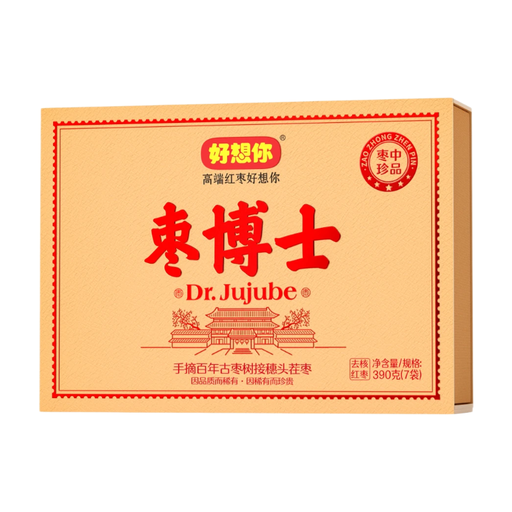 Image unavailable
Haoxiangni Dr.Jujube Premium Gold-Grade Pitted 390 g
An option to consider if you’re looking for pitted red jujubes to eat as they are or use in tea, soup and desserts.
The product information lists 100% jujube and 0 g of fat per 100 g; the nutrition table also lists 327 kcal per 100 g.
View at Joybuy
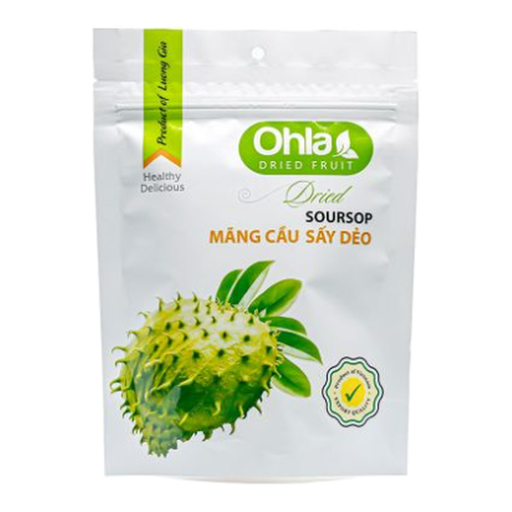 Image unavailable
OHLA Dried Soursop 180 g
This product could suit you if you’re looking for dried soursop to eat as it is or add to yoghurt or cereal.
The nutrition table lists 2.21 g of fat and 348 kcal per 100 g. The ingredients list includes soursop, sugar, glucose and sodium metabisulphite.
View at Joybuy
 Image unavailable
Haoxiangni Pitted Jujubes 500 g
An option if you’re looking for pitted red jujubes to eat as they are or use in cooking, baking, soup or tea.
The product information lists red jujubes as the only ingredient. The nutrition table lists 0.5 g of fat and 300 kcal per 100 g.
View at Joybuy
 Image unavailable
De Kleine Keuken Organic Raisins 12M+ 140 g
This pack could suit you if you’re looking for raisins in individual portions: it contains 10 boxes of 14 g each.
The product is labelled 12M+. The product information advises supervising children while they eat and says it’s not suitable for children with swallowing difficulties.
View at Joybuy
Frequently asked questions
Does ‘low fat’ mean the same as ‘reduced fat’?
No. The ‘low fat’ claim alone doesn’t mean that the fat content has been reduced compared with a similar reference product. For solid foods, the European Commission sets a maximum of 3 g of fat per 100 g for the ‘low fat’ claim.
Does low fat also mean less energy?
No, that doesn’t automatically follow from the fat content. For example, AH Raisins list 0.5 g of fat and 344 kcal per 100 g (Albert Heijn), so check the energy information alongside the fat content and consider how much you eat.
How do I compare packs of different sizes?
Compare the same type of fruit and preparation by price per kilo, and also check the total amount you’ll pay. PLUS notes that prices may vary locally, so check the price for your purchase (PLUS).
Does dried fruit need to be refrigerated once opened?
Follow the storage instructions for the exact product. Once opened, AH Soft Dried Apricots must be refrigerated at a maximum of 7°C and have a limited shelf life; AH Raisins should be stored in a cool, dark and dry place (Albert Heijn).
What should I look out for with allergens and possible stone fragments?
Check the ingredients and allergen information on the pack. The Netherlands Food and Consumer Product Safety Authority explains how allergens are listed on labels; Jumbo Dried Pitted Apricots list sulphites and possible traces of nuts, peanuts and sesame, and warn that stone fragments may be present.


