
Portion-conscious breakfast eaters
People who want to add something sweet to breakfast and keep an eye on the calories in the amount they actually eat.


The apricot products reviewed are not low in calories under the EU claim threshold: this applies to a maximum of 40 kcal per 100 g, not to a small portion. So compare the energy per 100 g and calculate how much that is for the amount you actually eat. Choose rehydrated apricots only if you can keep them chilled after opening, and also check the ingredients, allergens and storage advice.
People who want to add something sweet to breakfast and keep an eye on the calories in the amount they actually eat.
People who prepare breakfast in advance and take it with them. The fruit’s storage advice, along with that of the other breakfast ingredients, affects what’s practical.
People who want to identify added sugar and, if relevant to them, take account of sulphites or other listed allergens.
| What to consider | What should you check? | Who should give this more weight? |
|---|---|---|
| Calories per portion | Compare kcal per 100 g and calculate this for the same weighed portion. A small portion does not make a product low in calories. | If I want to tailor my breakfast portion to my calorie needs, I compare the same amount of fruit; around 36% of consumers put calories first. |
| Taking it with you and storage | Follow the storage advice for the exact variant. AH advises refrigerating the rehydrated apricots reviewed here after opening; the dry Jumbo and PLUS apricots reviewed have different storage advice. | When I prepare breakfast in advance, I want to know whether the fruit can be stored as directed while I’m out and after opening; around 29% of consumers prioritise convenience for taking food with them. |
| Sugar and allergens | Check the ingredients, nutrition table and allergen information separately. Added sugar is not the same as total sugars. | For people who want to avoid certain ingredients or allergens, the information on the packaging is decisive; around 21% prioritise ingredient suitability. |
| Pack size | Choose a pack size that suits how you use the product, and weigh your own breakfast portion. A larger pack is not automatically a suitable portion or better value. | If I mainly want to buy an amount that suits how I use the product, I look at the net weight and my own portion; around 14% of consumers prioritise value for money. |
The claim threshold applies per 100 g, not per small tub or weighed breakfast portion. The European Commission sets a maximum of 40 kcal (170 kJ) per 100 g for the ‘low energy’ claim on solid foods; the NVWA explains that nutrition claims must comply with European rules.
Compare the nutritional value per 100 g, then calculate how much your weighed portion contributes. Use the claim ‘low in calories’ only for products that meet the requirements.
A product can state that it contains no added sugars and still contain naturally occurring sugars. For the apricots reviewed here, PLUS lists 0 g of added sugars and 53.4 g of total sugars per 100 g.
Read the ingredients list and the ‘of which sugars’ line separately.
Once opened, the rehydrated apricots reviewed from Albert Heijn must be kept chilled at a maximum of 7 °C.
Check the label and consider in advance whether you can keep them chilled as required at home and while you’re out.
The Jumbo cranberries reviewed contain sugar as an ingredient, so the type of fruit alone does not tell you what has been added to a particular variant.
Check the ingredients list on the exact pack, even if you have bought a different variant before.
Albert Heijn’s rehydrated dried apricots are an option to weigh out and add to breakfast.
The product range reviewed includes dried pitted apricots and sweetened cranberries.
Alesto is Lidl’s relevant dried fruit range; the brand page features products including dried mango strips.
The Dutch ALDI product page describes Trader Joe’s Sun-Dried Apricots as soft dried apricots.
PLUS Dried Apricots are a dry store-cupboard option in a 375 g stand-up pouch.
Dirk sells 1 de Beste Apricots in a 375 g pack and describes them as an addition to breakfast or baking recipes.
These Joybuy products are dried fruits for adding to breakfast or enjoying as a snack on the go. Check the ingredients, nutritional values and storage advice for each variant.
 No image available
The product description says it can be enjoyed as a snack on the go.
The ingredients list sugar and a preservative. The description advises storing it in a cool, dry place.
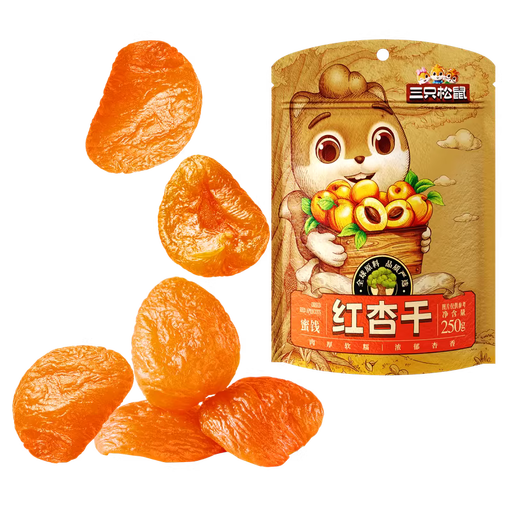 No image available
According to the product description, these apricots are ready to eat and need no preparation.
The nutrition table lists 311 kcal per 100 g. The ingredients include sugar and maltose syrup; sulphites are also listed. Storage advice: keep in a cool, dry place.
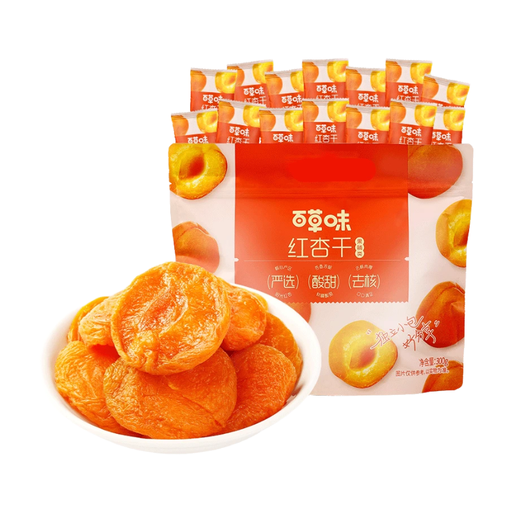 No image available
The product description says the apricots are ready to eat.
The nutrition table lists 327 kcal per 100 g. The ingredients include sugar and maltose syrup; sulphites are also listed. Storage advice: keep in a cool, dry place.
 No image available
The product description suggests using them as a yoghurt topping and mentions resealable packaging.
The nutrition table lists 313 kcal per 100 g. The ingredients list includes sugar.
Only if the solid product contains no more than 40 kcal (170 kJ) per 100 g. The European Commission sets this threshold for the ‘low energy’ claim; a small portion does not replace the per-100 g requirement.
Compare the same amount in grams, then calculate the nutritional value of your own portion: kcal per 100 g × the number of grams in your portion ÷ 100. That way, you’re not comparing different portion sizes directly.
No. Follow the storage advice on the specific pack. Albert Heijn advises keeping the rehydrated apricots reviewed here refrigerated after opening; the dry Jumbo and PLUS apricots reviewed have different storage advice.
No. The claim refers to added sugars, while fruit can also contain naturally occurring sugars. Check both the ingredients list and the ‘of which sugars’ line in the nutrition table.
Check the ingredients and allergen information on the exact pack. The NVWA lists sulphite as an allergen that must be declared; the Jumbo apricots reviewed also state that they may contain nuts, peanuts and sesame.