Who is this choice relevant to?

Parents introducing pieces of food

You want to know whether the form and preparation are suitable for your baby to learn to eat independently. The Netherlands Nutrition Centre advises that a child should be able to sit upright and swallow and chew well before being given larger pieces.

Shoppers comparing calories

You want to compare nutritional values on a like-for-like basis and know when the ‘low-energy’ claim applies. For solid foods, the European Commission sets a limit of 40 kcal (170 kJ) per 100 g.

Parents comparing supermarket labels

You compare the exact product variant, ingredients and storage instructions rather than assuming that details about one product apply to an entire own-brand range. Albert Heijn, Jumbo and PLUS refer shoppers to product information that may change on the packaging.

What should you look for when buying?

Dried plums or apricots

When to compare: if energy per equal weight is your main consideration.

What to weigh up: general figures from the Netherlands Nutrition Centre work out at 200 kcal per 100 g for dried plums and around 289 kcal per 100 g for dried apricots. These aren’t figures for specific supermarket products, and both are above the European claim threshold for ‘low energy’.

Fresh fruit as an alternative

When to compare: if you don’t necessarily want to offer dried fruit.

What to weigh up: according to general figures from the Netherlands Nutrition Centre, fresh plums contain 40 kcal per 100 g, compared with 200 kcal per 100 g for dried plums. This is a comparison by weight, not an assessment of a baby’s portion; fresh fruit also needs to be prepared appropriately.

Raisins as a snack or in a meal

When to compare: if you’re thinking of giving raisins to a baby.

What to weigh up: the English Department for Education guidance distinguishes between whole raisins as a snack and finely chopped raisins in a meal for children under 12 months. This is additional safety information, not a legal age limit in the Netherlands.

What to consider What to look for Who might this matter more to?
Texture and preparation Consider whether your child can sit upright and swallow and chew well; distinguish between a whole raisin and raisins in a meal. If I want to give my baby larger pieces, I first check that they can sit, swallow and chew. Around 36% of consumers put appropriate preparation first.
Comparing energy Compare kcal per 100 g on the same basis, and keep general nutritional values separate from the label for a specific variant. If I want to compare the energy content of fruit, I look at the same quantity and the precise meaning of ‘low energy’. Around 29% of consumers give this comparison priority.
Product variant and ingredients Check the full product name and ingredients list on the packaging, and look at the allergen information too. If I want to assess additives, I need to check the exact variant and the ingredients on the label. Around 21% of consumers put the product’s composition first.
Storage after opening Follow the storage instructions on the specific pack; don’t assume that all dried fruit has the same general storage life. If I want to know whether a pack is practical to store after opening, I check the instructions in advance. Around 14% of consumers prioritise convenient storage.

Common pitfalls

  • Assuming ‘soft’ means ‘suitable for baby-led weaning’

    A product description such as ‘soft’ doesn’t tell you whether the texture and preparation are right for your baby’s eating skills. The Netherlands Nutrition Centre says that a child should be able to sit upright and swallow and chew well before being given larger pieces.

    Assess your baby’s eating skills and how the food is served separately. A description on the packaging is no substitute for choosing an appropriate way to prepare it.

  • Comparing calories per piece with calories per 100 g

    A portion or piece may contain few calories without the product meeting the ‘low-energy’ claim per 100 g. The Netherlands Nutrition Centre’s general figures use different portion sizes for apricots and plums.

    Compare kcal per 100 g, then check the nutritional information on the exact pack. A small portion doesn’t make a product low in energy.

  • Keeping all dried fruit in the cupboard after opening

    For AH Soaked Dried Apricots, Albert Heijn says the pack must be refrigerated after opening at a maximum of 7°C and has a limited storage life. Not following the instructions could lead to food being wasted.

    Read the instructions for the variant you choose and follow the pack’s guidance after opening.

Supermarket brands and relevant product ranges

Albert Heijn

Albert Heijn lists AH Soaked Dried Apricots as a relevant product variant.

  • The product information says to refrigerate after opening at a maximum of 7°C.
  • The storage instructions don’t say that the product is low in energy or suitable for a baby to eat independently.

Jumbo

Jumbo lists dried and soaked apricots, pitted plums and raisins, among other products.

  • For Jumbo Organic Dried Apricots 250 g, Jumbo states ‘No Preservatives’.
  • This statement applies to this variant and doesn’t prove that the product is low in energy or suitable for babies.

Lidl

Lidl names Alesto as its own brand for products including dried fruit and apricots.

  • The brand name can help you identify Alesto products in the range.
  • Lidl’s general description ‘healthy snacks’ isn’t a product-specific assessment for baby-led weaning.

ALDI

On its Dutch website, ALDI describes Trader Joe’s Sun-Dried Apricots 250 g as soft dried apricots.

  • The product description gives the name and pack size of this variant.
  • ‘Soft’ doesn’t prove that the texture is suitable for a baby or that the energy content is low.

PLUS

PLUS lists Dried Apricots in a 375 g stand-up pouch.

  • The product page identifies the variant and the pack size.
  • PLUS advises shoppers to read the packaging, as ingredients and nutritional values may change.

Dirk

Dirk lists 1 de Beste Apricots among its cupboard baking products.

  • The product listing makes the relevant variant easy to identify.
  • The product listing isn’t proof that the product is low in energy or suitable for baby-led weaning.

Compare Joybuy products

These products give you a starting point for comparing dried fruit and nutritional values; calorie comparisons are separate from the form and preparation of food for a baby. For solid foods, the European Commission’s threshold for a ‘low-energy’ claim is a maximum of 40 kcal per 100 g.
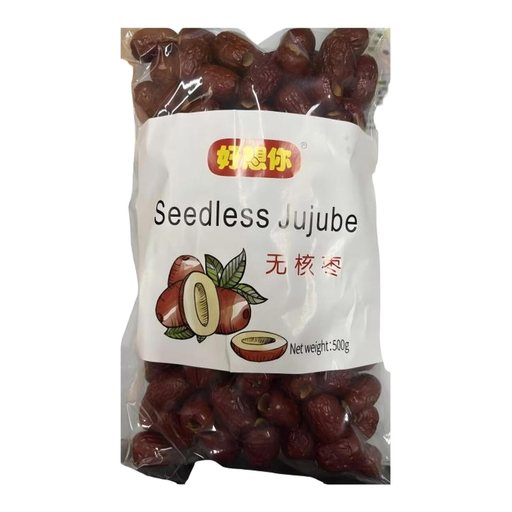
Haoxiangni Pitted Jujubes 500g

Haoxiangni Pitted Jujubes 500g

At 300 kcal per 100 g, this variant is above the European Commission’s threshold for a ‘low-energy’ claim.

The product name says the jujubes are pitted; that alone doesn’t tell you whether they’re in a suitable form for a baby.

Joybuy
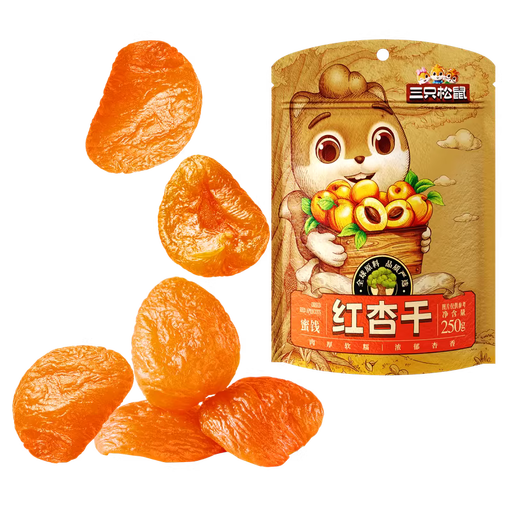
Three Squirrels Red Apricot Dried 250g

Three Squirrels Red Apricot Dried 250g

At 311 kcal per 100 g, this variant is above the European Commission’s threshold for a ‘low-energy’ claim.

The product information lists apricot, sugar, malt syrup and sulphites; check the pack for the latest ingredients and allergen information.

Joybuy
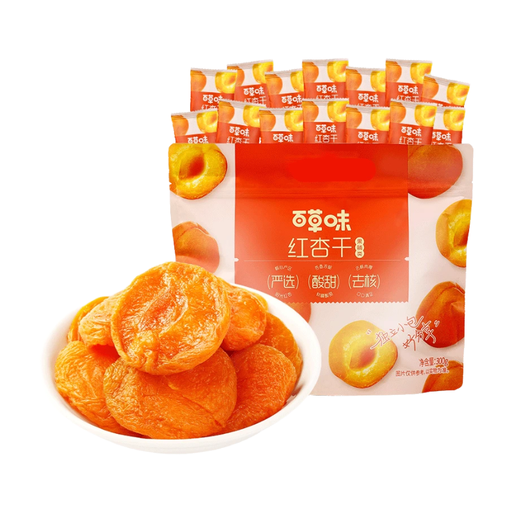
Be&Cheery Dried Red Apricots 300g

Be&Cheery Dried Red Apricots 300g

At 327 kcal per 100 g, this variant is above the European Commission’s threshold for a ‘low-energy’ claim.

The product information lists apricot, sugar, malt syrup, acidity regulator, preservative, flavouring and sulphites. Check the pack for the latest information.

Joybuy
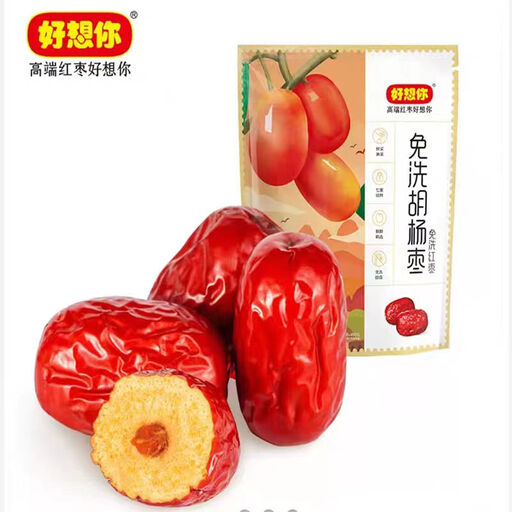
Haoxiangni No-Wash Red Jujube Grade 2 450g

Haoxiangni No-Wash Red Jujube (Grade 2) 450g

At 331 kcal per 100 g, this variant is above the European Commission’s threshold for a ‘low-energy’ claim.

The product name says the jujubes contain stones. The product information says the contents should be consumed immediately after opening.

Joybuy
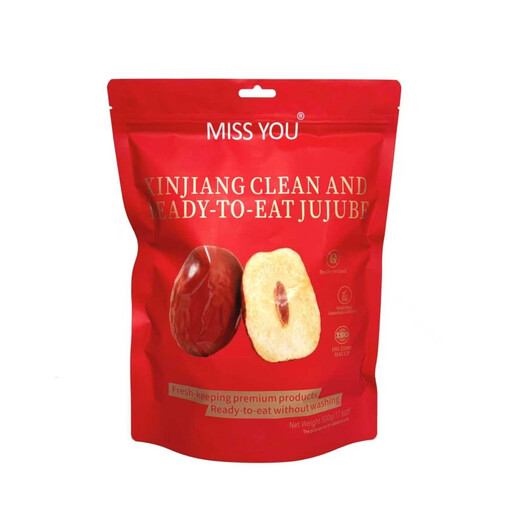
Haoxiangni Grade A Wash-Free Jujubes 500g

Haoxiangni Grade A Wash-Free Jujubes 500g

At 304 kcal per 100 g, this variant is above the European Commission’s threshold for a ‘low-energy’ claim.

The product information says the contents should be consumed immediately after opening.

Joybuy

Frequently asked questions

Do 26 kcal per apricot mean that dried apricots are low in energy?

No. The Netherlands Nutrition Centre gives 26 kcal for a typical 9 g piece; this works out at around 289 kcal per 100 g. That’s above the European Commission’s limit of 40 kcal per 100 g for a ‘low-energy’ claim, and it isn’t a measured value for any specific supermarket variant.

Can you give your baby whole raisins when they start baby-led weaning?

The English Department for Education advises against giving raisins as a standalone snack to children under 12 months, and distinguishes this from finely chopped raisins in a meal. This is additional safety information, not a legal age limit in the Netherlands.

Is age alone enough to decide when to offer larger pieces?

No. The Netherlands Nutrition Centre says your child should also be able to sit upright and swallow and chew well before you offer larger pieces.

How should you store AH Soaked Dried Apricots after opening?

Albert Heijn says this variant should be refrigerated after opening at a maximum of 7°C and has a limited storage life. Check the packaging for a more precise storage period.

Is ‘low energy’ a regulated nutrition claim?

Yes. According to the European Commission, a solid food must contain no more than 40 kcal (170 kJ) per 100 g to make this claim. A low value per small portion doesn’t replace this requirement.
