Who is this guide for?

Guests with a specific dietary exclusion

You’re looking for fruit that suits your gluten, lactose or other allergen restriction. To assess this, check the exact product rather than relying on the dried fruit category as a whole. Stichting Voedselallergie advises checking the full ingredients list for each product every time.

People avoiding sulphites

You want to identify added sulphites and any separate statement that a product contains sulphites. Unsulphured does not automatically mean that a product is completely free of sulphites when tested.

Hosts catering for different dietary needs

You want to serve products clearly and separately, taking ingredients, serving utensils and portions into account. Stichting Voedselallergie advises using clean crockery and cutlery.

What should you look for when buying?

What to consider What should you check? Who should bear this in mind?
Specific free-from statement Check for a statement relating to your dietary exclusion, and also read the full ingredients list and warnings. If gluten or lactose is what I need to avoid, I want to see the precise statement on the product rather than relying on the type of fruit; around 33% of consumers prioritise this specific exclusion.
Sulphites Check for ingredients such as E220–E228, as well as any separate statement that the product contains sulphites. If I avoid sulphites, I check both parts of the product information; around 27% of consumers prioritise avoiding sulphites.
Cross-contamination Check for warnings about your allergen and use clean, separate serving utensils. When hosting a gathering for people with different dietary needs, I want to manage the risk of allergen transfer; around 27% of consumers prioritise reducing cross-contamination.
Ingredients and portion size Compare ingredients and nutritional values per 100 g; don’t automatically treat the pack serving as a recommendation. If I want to keep track of ingredients and quantity, I look at the ingredients and portion size; around 13% of consumers prioritise this consideration.

Common mistakes

  • Assuming organic, vegan or single-ingredient products are allergen-free

    A product containing just one fruit ingredient may still carry a warning about peanuts or nuts. Vegan on its own also tells you nothing about sulphites.

    Check your specific dietary exclusion against the current ingredients list and warnings.

  • Reading only the ingredients list

    Jumbo Blue Raisins lists raisins and oil in the ingredients, but also states that the product contains sulphites.

    Read the full product specification as well as the packaging; don’t assume a short ingredients list means the product is sulphite-free.

  • Mixing suitable fruit with nuts or a dairy-filled product

    Removing an unwanted ingredient doesn’t automatically make fruit that has come into contact with it suitable. If something has been added accidentally, you may need to prepare a separate replacement portion.

    Serve the fruit you’ve checked separately, using clean, separate serving utensils.

  • Confusing no added sugar with sugar-free

    Dried fruit can contain naturally occurring sugars. The Voedingscentrum recommends a maximum of 20 g of dried fruit per day; this is dietary advice, not a legal limit for buying it.

    Portion it out in advance and compare nutritional values on the same basis, for example per 100 g.

Brands to help you choose

Albert Heijn

Own-brand dates with product-specific dietary information.

  • Albert Heijn lists the standard and organic dates reviewed as gluten- and lactose-free.
  • The organic version carries a warning about peanuts and various nuts; these statements are not a general guarantee that the product is free from all allergens.

Jumbo

A range of raisin varieties, each of which needs to be checked separately.

  • The product specification for Sultana Raisins lists raisins and cottonseed oil.
  • Blue and golden raisins state that they contain sulphites; the golden variety also carries warnings about the possible presence of nuts, peanuts, sesame and soya.

Lidl

The Dutch product page lists dried fruit at selected stores.

  • A product range listing is not, on its own, a free-from claim or an allergen guarantee.

ALDI

The product page identifies a 500 g pack of Trader Joe’s raisins.

  • The product identity does not confirm that the raisins meet any specific allergy-related dietary exclusion.

PLUS

Own-brand dried apricots in a 375 g stand-up pouch.

  • The PLUS ingredients list names apricot and E220 (sulphite).
  • The vegan label does not change the fact that sulphites are listed.

Dirk

The product page identifies a 200 g pack of stoneless apricots.

  • Stoneless describes a practical feature of the product.
  • It is not a free-from claim for allergens.

Dried fruit at Joybuy

This selection includes dried dragon fruit, dates, guava, candied fruit and soursop for drinks and gatherings. Check the current ingredients and allergen information for each product; the product name alone does not confirm that it is suitable for a specific dietary exclusion.
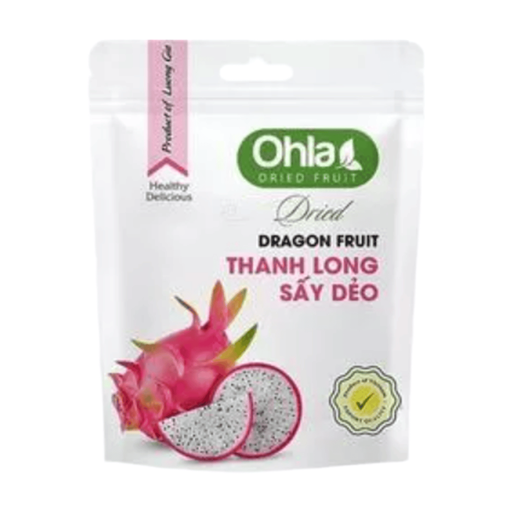
OHLA dried dragon fruit 180 g

OHLA Dried Dragon Fruit 180g

An option if you’re looking for dried dragon fruit to serve at a gathering.

Check the current ingredients list and allergen warnings against your dietary needs.

View at Joybuy
Zohra dates 1 kg

Zohra Dates Dadels 1 kg

Dates to serve as dried fruit at a gathering.

Check the current ingredients list and allergen information before serving; don’t rely on the product name alone.

View at Joybuy

OHLA dried guava 180 g

OHLA Dried Guava 180g

An option if you’re looking for guava as dried fruit to serve at a gathering.

The product information lists sugar and a preservative as well as guava. Check the full ingredients list and allergen information.

View at Joybuy
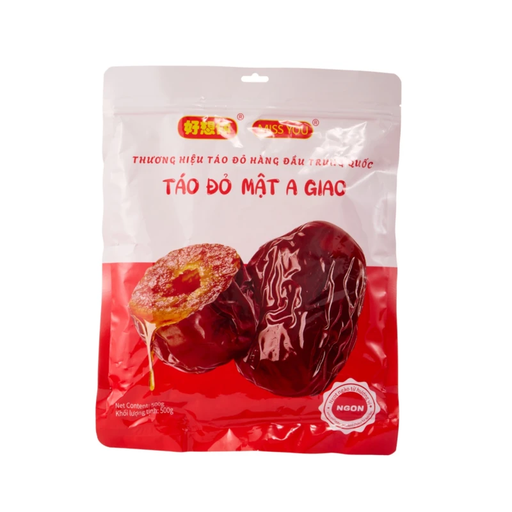
HXN candied dried fruit and candied dates 500 g

HXN Candied Fruit and Candied Dates 500g

Candied fruit and candied dates for anyone who doesn’t need to avoid sulphites.

The ingredients information lists sulphites, sodium metabisulphite, malt syrup and white sugar. Don’t choose this product if you avoid sulphites.

View at Joybuy
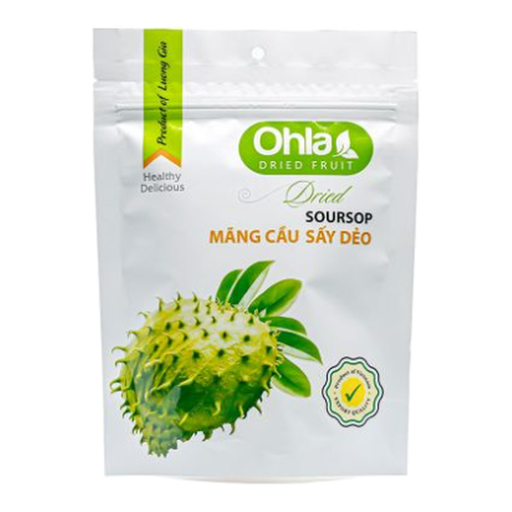
OHLA dried soursop 180 g

OHLA Dried Soursop 180g

An option if you’d like to serve dried soursop at a gathering and don’t need to avoid sulphites.

The ingredients information lists sodium metabisulphite, sugar and glucose. Don’t choose this product if you avoid sulphites.

View at Joybuy

Frequently asked questions

Does lactose-free mean suitable for someone with a cow’s milk allergy?

No. Lactose intolerance affects the digestion of lactose, while a food allergy is a reaction to proteins. If you have a cow’s milk allergy, check for milk ingredients and relevant warnings rather than relying only on a ‘lactose-free’ statement.

How can you stop suitable fruit becoming unsuitable on a sharing platter?

Use clean hands, clean crockery and separate serving utensils, and keep unsuitable additions apart. If a prohibited ingredient does come into contact with the fruit, don’t serve it to the affected guest; simply removing the ingredient is not enough. Stichting Voedselallergie advises using clean crockery and cutlery.

Does dried fruit always need to be kept out of the fridge once opened?

No, follow the storage instructions for the specific product. Albert Heijn says that AH Dates should be refrigerated after opening at a maximum of 7 °C. Jumbo says to store Sultana Raisins in a cool, dry, dark place.

What allergen information must appear on a Dutch label?

The NVWA states that mandatory labelling covers 14 allergens, which must be clearly distinguished in the ingredients list. For products without an ingredients list, there are rules requiring a statement that the product contains an allergen.

What do cross-contamination warnings mean in the Netherlands from 2026?

The Dutch policy on precautionary allergen labelling has applied since 1 January 2026. The NVWA lists warnings such as ‘May contain X’ and ‘Not suitable for people with an X allergy’; their use must be based on a risk assessment. A warning—or the absence of one—is not a general guarantee of zero risk.
