First, find out exactly which ingredient you or your guests need to avoid. Then check the full ingredients list and any relevant warnings on the packaging. Labels such as unsulphured, organic or unsweetened don’t automatically answer other dietary questions. When serving, keep snacks and clean utensils separate, too.
Who is this relevant to?
Hosts planning a get-together with guests who have allergies
You want to know in advance which ingredients your guests need to avoid and which products are suitable. Careful preparation and serving food separately are important, too. The Netherlands Food and Consumer Product Safety Authority and the Food Allergy Foundation offer practical information on this.
Shoppers avoiding sulphites
You’re looking for product information about sulphites and unsulphured options. This is a different consideration from avoiding nuts, milk or gluten. The Food Allergy Foundation describes sulphites as preservatives used in food.
Shoppers who want to avoid added sugar
You want dried fruit as a snack for your get-together, but you’re checking the ingredients and portion sizes rather than relying on words such as ‘natural’ or ‘fruit’. The British Nutrition Foundation provides information about dried fruit and added sugar.
What should you look out for in free-from dried fruit?
Unsulphured fruit
When to choose it: if avoiding sulphites is your main concern, start with options explicitly labelled as unsulphured.
Trade-off: that label alone says nothing about other ingredients or cross-contamination.
Fruit without nuts versus fruit and nut mix
When to choose it: if a guest needs to avoid certain nuts, only choose a product whose ingredients and warnings meet their needs.
Trade-off: a pack containing only fruit doesn’t automatically rule out cross-contamination.
Unsweetened fruit versus fruit with added sugar
When to choose it: if you want to avoid added sugar, check the ingredients and look for an unsweetened option.
Trade-off: this is a nutritional choice, not a check for allergens or cross-contamination.
The Netherlands Food and Consumer Product Safety Authority says allergen information must appear on the label of pre-packed products. Read the full ingredients list and any relevant warnings on the pack you’re actually serving.
| What to consider |
What should you check? |
Who should take this into account? |
| Specific allergen |
Compare the full ingredients list and any relevant warnings with the ingredient your guest needs to avoid. |
When I buy snacks for guests, I want to know whether every ingredient is suitable for the allergen they avoid; around 31% of consumers put this specific allergen check first. |
| Sulphites |
Check the ingredients for sulphites and E220–E228; use ‘unsulphured’ as a starting point when choosing. |
If I need to avoid sulphites, I look for an option that gives clear information about them; around 25% of consumers prioritise avoiding sulphites. |
| Preparation and serving |
Keep suitable snacks separate and use clean hands, dishes and cutlery. |
When I’m hosting a get-together, I want to prevent a suitable snack from coming into contact with ingredients to be avoided; around 25% of consumers prioritise careful serving. |
| Added sugar and portion size |
Check the ingredients for added sugar and decide separately how much to serve. |
If I want to avoid added sugar, I also consider how much I put out; around 19% of consumers prioritise this combination of considerations. |
Common pitfalls when choosing and serving dried fruit
-
Assuming ‘free from’ means free from every possible allergen
Each guest may need to avoid something different. For example, checking for gluten doesn’t tell you whether a product contains nuts.
Make a note of the ingredient your guest needs to avoid, then check the full ingredients list and any relevant warnings on each pack.
-
Assuming unsulphured or ‘preservative-free’ means allergen-free
These labels refer to a specific treatment or additive. They don’t automatically answer questions about other ingredients or cross-contamination.
Use the label only as a starting point, then check the whole pack against the specific dietary need.
-
Putting a suitable snack on a shared platter
Contact with other snacks, hands or serving utensils can undermine your careful choice.
Set the suitable snack aside and use clean hands, dishes and cutlery. Preparing and cleaning separately takes extra time.
-
Serving unlimited amounts of unsweetened fruit
No added sugar is not the same as a measured portion. World Cancer Research Fund recommends a maximum of 20 grams of dried fruit a day; this is nutritional advice, not a legal product requirement.
Serve a considered portion, and don’t treat ‘unsweetened’ as proof that the snack suits every dietary need.
Brands and product ranges to consider
Albert Heijn
The range includes AH unsulphured apricots, as well as examples of unsweetened dried pineapple and fruit and nut mixes, according to Albert Heijn.
- The product names show different ways to choose.
- ‘Unsulphured’ doesn’t confirm that the product meets other dietary requirements. Check the packaging.
Jumbo
Jumbo lists a 250 g organic dried apricot option labelled ‘No Preservatives’.
- The information relates to a specific product.
- ‘No Preservatives’ is not a general allergen-free guarantee.
Lidl
Lidl sells Alesto, a range of nuts and dried fruit that includes apricots.
- The range includes examples of both nuts and dried fruit.
- The brand’s range doesn’t confirm that a specific product is suitable for avoiding nuts, gluten or sulphites.
Aldi
Aldi lists Trader Joe’s sun-dried apricots in a 250 g pack and describes them as soft.
- The product description identifies the option and its packaging.
- ‘Sun-dried’ doesn’t confirm that the product is free from relevant allergens.
Plus
PLUS lists dried apricots in a 375 g stand-up pouch.
- The pack type and size are specified for this product.
- PLUS warns that ingredient and allergen information may change; check the packaging.
Dirk
Dirk lists 1 de Beste apricots in a 375 g pack, describing them as soft and suitable as a snack or for recipes.
- The retailer’s description mentions using the product as a snack or in recipes.
- That description is not an independent assessment or a product-specific free-from guarantee.
Joybuy product picks
These products include dried and freeze-dried fruit for snacking. Check the ingredients and warnings on each pack; the product format or type of fruit alone doesn’t confirm that it’s suitable for someone with allergies.
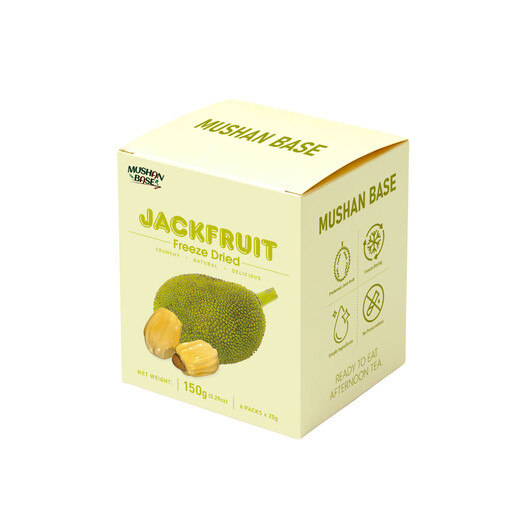 Image unavailable
MUSHAN BASE freeze-dried jackfruit 150 g (25 g x 6)
This could be a handy fruit option if you’re looking for a product with no added sugar: jackfruit (100%) is the only ingredient listed. The product listing describes six 25 g portions. This doesn’t confirm that it’s suitable for people with allergies, so check the packaging and warnings.
View product
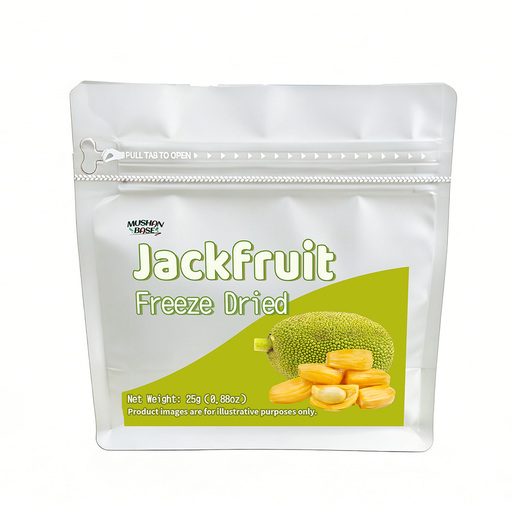 Image unavailable
MUSHAN BASE freeze-dried jackfruit 25 g
Jackfruit (100%) is the only ingredient listed, which may be relevant if you want to avoid added sugar. The description calls it a ready-to-eat snack. If you have an allergy, always check the latest packaging and warnings.
View product
 Image unavailable
OHLA dried guava 180 g
This could be suitable if you’re happy to have dried fruit with added sugar: the product information lists guava (95%), sugar and a preservative. This option isn’t suitable if you want to avoid added sugar. Check the packaging for allergen information.
View product
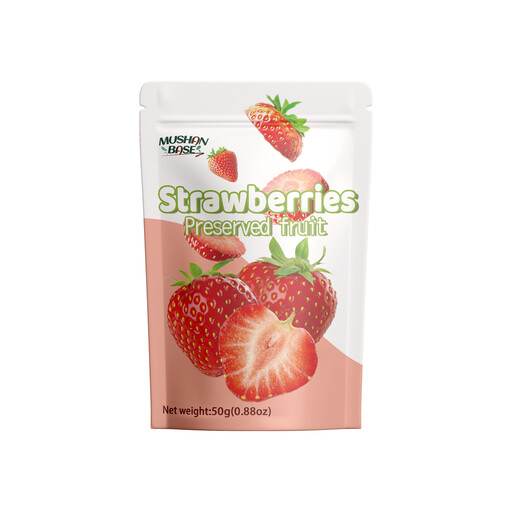 Image unavailable
MUSHAN BASE dried strawberry slices 50 g
The description lists dried strawberries and sugar, and describes the slices as a ready-to-eat snack. Bear in mind that this option contains sugar. Also check the latest packaging for allergen information and warnings.
View product
Frequently asked questions
Can I judge a snack by its allergen symbols alone?
No, read the full ingredients list as well. The Food Allergy Foundation advises doing this every time you shop, as other ingredients may also be relevant to a particular person.
What do ‘May contain X’ and ‘Not suitable for people with an X allergy’ mean?
The Netherlands Food and Consumer Product Safety Authority lists these as the permitted ways to warn about cross-contamination. Such a warning must be based on a risk assessment. If the relevant reference levels aren’t exceeded, a manufacturer must not include a precautionary warning. The wording isn’t a personal guarantee that a product is suitable for every guest.
Can I remove the nuts from a fruit and nut mix and serve the rest?
Not if an ingredient your guest needs to avoid has come into contact with the rest. The Food Allergy Foundation warns that picking it out or sieving the mix isn’t enough. Choose a separate suitable product and use clean utensils.
Are the Dutch rules on cross-contamination warnings already in force?
Yes. Since 1 January 2026, the Netherlands Food and Consumer Product Safety Authority has been checking during inspections whether labels on pre-packed products include the correct cross-contamination warnings.
What should I do if the ingredient or allergen information may have changed?
Check the packaging of the product you’ve actually bought. Albert Heijn and PLUS also recommend this if you have questions about their product information. Don’t treat an unclear product as confirmation that it’s suitable for a specific dietary need.


