First, compare dried fruit by the same weight, then choose according to your goal: a weighed portion as a snack, or fruit as part of a meal with a source of protein. None of the five variants checked meets the EU requirement for the ‘low-calorie’ claim: they list between 182 and 344 kcal per 100 g, according to product information from Albert Heijn, Jumbo and PLUS. A smaller portion may suit your calorie goals, but it does not make a product low in calories under the requirements for that claim, and says nothing by itself about post-exercise nutrition.
Who is dried fruit after exercise for?
Gym-goer keeping an eye on portions
You want something sweet after exercising while keeping an eye on your energy intake. Compare the same weight in grams: ‘no added sugar’ does not automatically mean low in calories. Product information from Albert Heijn, Jumbo and PLUS shows why the exact variant matters.
Strength athlete focused on recovery
You want your snack to fit in with your overall diet and protein intake. Dried fruit is not automatically a high-protein recovery option; Voedingscentrum outlines a range of foods that can contribute to your protein intake.
Snacking on the go
You want to take a portion with you and consider how to store it, as well as any ingredients that are relevant to you. Product information from Albert Heijn and Jumbo shows that storage instructions can vary between variants. Check the allergen information on the exact pack too.
What should you look for in dried fruit after exercise?
The AH variant of soaked apricots lists a 50 g portion, while Jumbo gives portion information for 20 g. So first compare the same weight in grams, as the product information from Albert Heijn and Jumbo shows.
| What to consider |
What should you check? |
Who is this important for? |
| Energy per portion |
Check the kcal per 100 g and calculate this for the amount you weigh out. |
If I want to keep track of my energy intake after exercise, I compare portions of the same weight. Around 31% of consumers prioritise calories per comparable portion. |
| How it fits with your diet |
Check the protein per portion and whether your meal already contains a suitable source of protein. Voedingscentrum lists options including dairy, tofu and beans. |
If I want my snack to fit in with my overall diet after strength or endurance training, I look beyond fruit alone. Around 25% of consumers prioritise how well their food fits in after exercise. |
| Sugars and tolerance |
Read the ingredients and total sugars, and check the allergen information for the exact variant. Voedingscentrum points out that dried fruit with no added sugar still contains sugars; NVWA explains allergen labelling. |
If an ingredient or allergen matters to me, I check the pack before choosing. Around 19% of consumers prioritise ingredients and personal tolerance. |
| Taking it with you and storage |
Check the storage instructions, including after opening, and consider weighing out your portion in advance. |
For a snack between the gym and my next destination, I want to know how to store the product. Around 13% of consumers particularly value portability and practicality. |
| Packaging and portioning |
Check the pack weight and whether it’s easy to weigh out your own portions. |
If I’m looking for a pack to use for several snack breaks, I want to be able to divide the contents into suitable portions. Around 12% of consumers pay the most attention to value from packaging for repeated use. |
Common mistakes when choosing
-
Assuming ‘low fat’, ‘organic’ or ‘no added sugar’ means ‘low calorie’
These claims don’t answer the same question. The AH Raisins checked are low in fat, but list 344 kcal per 100 g, so another attribute is no substitute for the energy value.
Compare kcal per 100 g, then calculate the value for your own portion. For a food to be described as ‘low calorie’, the European Commission sets a limit of no more than 40 kcal per 100 g for solid foods.
-
Comparing portions from different packs directly
The AH variant of soaked apricots lists a 50 g portion, while Jumbo gives portion information for 20 g. The amount affects the energy in a portion, regardless of the value per 100 g.
First compare products using the same weight in grams, then choose a portion that suits your snack.
-
Assuming all dried fruit has the same ingredients or allergen warnings
The apricot variants checked from Albert Heijn, Jumbo and PLUS list sulphites. Warnings about the possible presence of nuts or peanuts can vary by product.
Read the ingredients and allergen information on the current pack. NVWA says that allergens required to be declared must be clearly distinguished from the other ingredients.
Brands and product ranges to compare
These examples refer to the product ranges and variants mentioned, not each supermarket’s full range.
Albert Heijn
The product information covers items including soaked apricots, organic dried plums and raisins.
- Product pages give nutritional values for specific variants; the soaked apricots list 182 kcal per 100 g.
- The soaked apricots contain sulphites and should be refrigerated after opening at a maximum of 7 °C. These characteristics do not automatically apply to other AH products.
Jumbo
The pitted dried apricots are a variant with detailed portion information.
- The product information lists nutritional values per 100 g and per 20 g portion.
- The apricots contain sulphites, and the pack warns of the possible presence of nuts, peanuts and sesame. Check the current pack.
Lidl
Lidl names Alesto as its dried fruit brand, which includes mango strips.
- Lidl describes the mango strips as having no added sugar and says the sugars are naturally present.
- This brand description does not provide calorie information in itself and is not an independent assessment of nutritional value.
Aldi
Aldi lists Trader Joe’s Sun-Dried Apricots in a 250 g pack.
- Aldi’s product description says the apricots are soft.
- The description of the texture says nothing about the energy per portion or whether it’s suitable as a high-protein snack.
PLUS
PLUS lists dried apricots in a 375 g stand-up pouch.
- The product information lists 0 g of added sugars and 53.4 g of total sugars per 100 g.
- The apricots contain sulphites. Here, no added sugar does not mean the product is low in total sugars.
Dirk
Dirk lists 1 de Beste Apricots in a 375 g pack.
- Dirk describes the apricots as soft and suggests having them as a snack or at breakfast.
- This description does not provide nutritional values to compare the energy per portion.
Dried fruit for snacking at Joybuy
These Joybuy products are dried fruit for snacking, including guava, red dates and mango. Check the ingredients and nutritional values for each variant that are relevant to your choice.
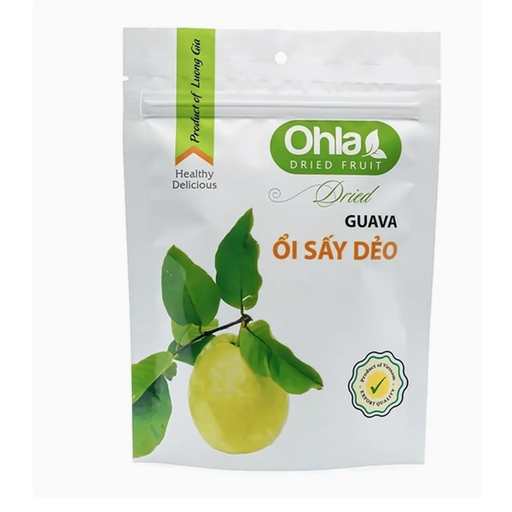 Image unavailable
OHLA Dried Guava 180 g
This variant is a good fit if you’re looking for dried guava as a snack.
The product description lists 95% guava, sugar and a preservative.
View at Joybuy
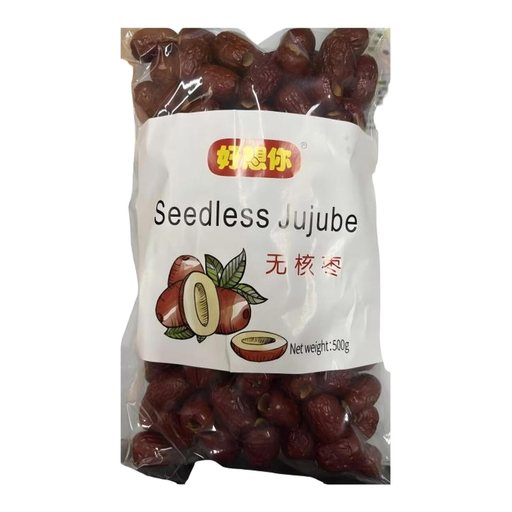 Image unavailable
Haoxiangni Pitted Jujubes 500 g
This variant is a good fit if you’re looking for red dates to enjoy as a snack or use as an ingredient.
The product description lists 100% red dates, ready-to-eat convenience and 300 kcal per 100 g.
View at Joybuy
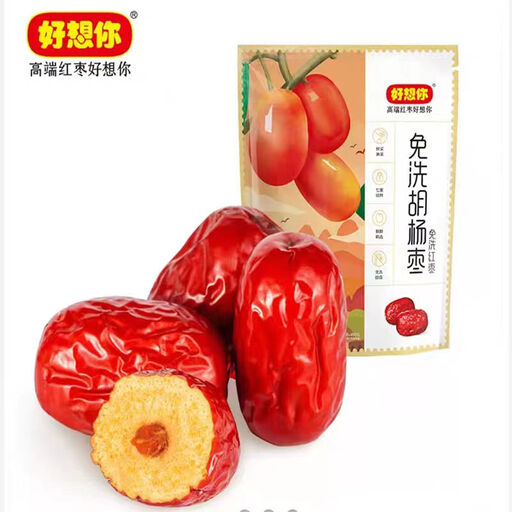 Image unavailable
Haoxiangni No-Wash Red Jujube with Pit (Grade 2) 450 g
This variant is a good fit if you’re looking for red dates with stones to enjoy as a snack or use in dishes.
The product description lists jujube as an ingredient and 331 kcal per 100 g. This variant contains stones.
View at Joybuy
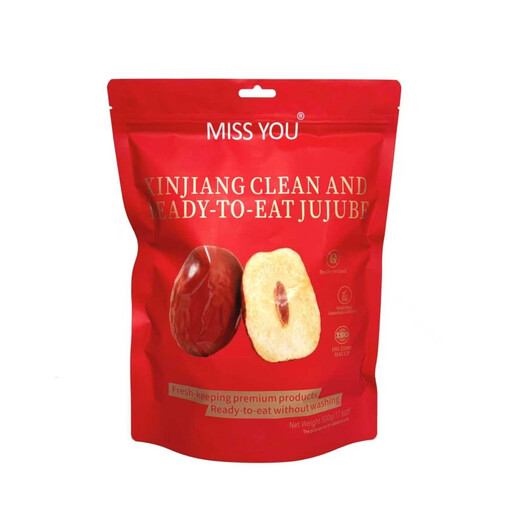 Image unavailable
Haoxiangni Grade A Wash-Free Jujubes 500 g
This variant is a good fit if you’re looking for red dates that, according to the product description, can be eaten straight from the pack.
The product description lists jujube as an ingredient and 304 kcal per 100 g.
View at Joybuy
 Image unavailable
PHILIPPINE BRAND Dried Mango 100 g
This variant is a good fit if you’re looking for individually portioned pieces of dried mango to take with you.
The product description lists mango, sugar and sulphites as ingredients, individually wrapped pieces and around 378 kcal per 100 g.
View at Joybuy
Frequently asked questions
Does a small portion of dried fruit make it low in calories?
No, a small portion does not change the requirements for the claim. For solid foods, the European Commission sets a maximum of 40 kcal (170 kJ) per 100 g for a ‘low-calorie’ claim; assess the portion separately based on its nutritional value.
Is dried fruit with no added sugar also low in sugar?
No, that does not automatically follow from the ingredients list. Check the total sugars in the nutritional information too. For dried fruit with no added sugar, Voedingscentrum advises having no more than a handful; this is dietary advice, not a legal product limit.
Should I eat dried fruit with quark after exercise?
No, you don’t have to. Consider your overall diet and protein intake. Voedingscentrum lists low-fat or semi-skimmed quark and yoghurt as options for getting protein, alongside foods such as milk, tofu and beans.
Where can I check for allergens in dried fruit?
Read the ingredients list and allergen information on the current pack. According to NVWA, allergens that must be declared need to be clearly distinguished from the other ingredients. Also check for any warnings about possible cross-contamination if they’re relevant to you.
How should I store soaked apricots after opening?
Once opened, Albert Heijn’s soaked apricots should be refrigerated at a maximum of 7 °C and have a limited shelf life. Don’t automatically apply these instructions to other variants; follow the directions on the pack you bought.


