
If you like to sprinkle chilli flakes
If you grind a little dried chilli at a time, a method that lets you dispense it in small quantities may suit you. Microplane and Cole & Mason describe manual options for chilli or spices.


For small quantities of dried chilli that you want to dispense as flakes, choose a manual mill specifically designed for chilli. Manufacturers describe different results, from flakes to more finely ground chilli. If you grind spices more often, an electric spice grinder is an alternative. You could also use a pestle and mortar if you prefer to crush and grind by hand. Whichever you choose, check which ingredients it can be used with and how to clean its parts.
If you grind a little dried chilli at a time, a method that lets you dispense it in small quantities may suit you. Microplane and Cole & Mason describe manual options for chilli or spices.
If you often want to grind spices more finely and prefer less manual effort, compare electric grinders by the ingredients they’re designed for and how they work. Peugeot describes the Oléron as suitable for finely grinding dried chilli, while Cuisinart and Krups offer electric spice grinders.
If you want to use the same grinder for different ingredients, check the cleaning instructions and whether it comes with removable bowls. AdHoc provides cleaning instructions for the PEPE, while Cuisinart describes the SG21BE bowls as dishwasher-safe.
Choose according to the texture and quantity you want, then check which ingredients the exact model can handle and how to clean it.
| What to consider | What should you check? | Who is this important for? |
|---|---|---|
| Dispensing chilli flakes | Check whether the model is suitable for dried chilli and what kind of grind the manufacturer describes. | If I want to add small amounts while cooking or at the table, I want to control how much I use. Around 36% of consumers prioritise dispensing chilli as flakes in small quantities. |
| Fine grinding | Check the grinding method, controls, and the permitted quantities and ingredients. | If I often make finely ground spices or blends, I want to know whether the grinder is suited to the task. Around 29% of consumers prioritise fine grinding. |
| Cleaning and switching between spices | Check the cleaning instructions for each part and which bowls are included with that version. | If I switch between spices, I want to know how to clean the parts. Around 21% of consumers prioritise cleaning and switching between ingredients. |
| Crushing by hand | Look at the inside of the mortar and consider the care needed when handling chilli dust with an open bowl. | If I want to crush or grind chillies by hand occasionally, I want to control the texture myself. Around 14% of consumers prioritise crushing by hand. |
Manufacturers distinguish between models for dried chilli and those for pepper or hard spices. Microplane describes its Chili Mill as suitable for chilli, and its separate Spice Mill as suitable for hard spices, among other ingredients.
Check the full model name and whether the manufacturer explicitly lists dried chilli as a suitable ingredient.
Cleaning instructions vary by model and part. AdHoc says not to immerse the PEPE, while Cuisinart describes the SG21BE bowls as dishwasher-safe.
Read the manual before buying and using the mill, and check which parts of the specific version are dishwasher-safe.
Krups Netherlands lists the F2034210 with a capacity of 85 g, while the Joybuy product page for the F20342 states 125 g. This doesn’t confirm that they’re the same version.
Compare the full model code and product specifications before treating two listings as the same model.
Microplane describes its Chili Mill as a manual grater for dried chilli. Its separate Spice Mill is designed for hard spices.
Peugeot describes the 14 cm manual Oléron chilli mill as a model developed specifically for dried chilli.
The manual describes the PEPE manual chilli cutter as suitable for dried chilli and spices.
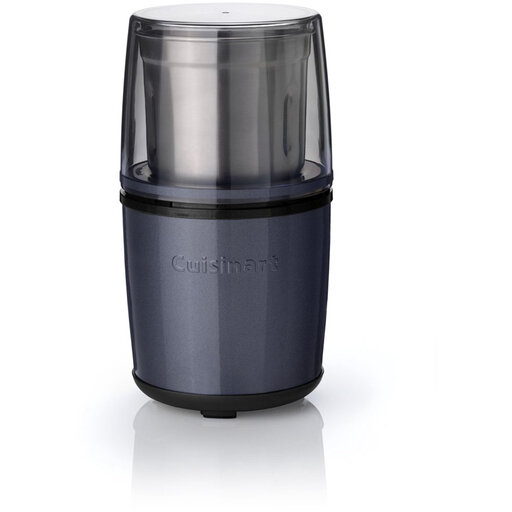
Cuisinart describes the electric SG21BE as a spice and nut grinder that can also be used for spice blends.
Krups Netherlands also offers the electric blade coffee grinder F2034210 for herbs and spices.
Cole & Mason offers, among other products, the manual Stadhampton Chilli & Spice Mill and granite pestle and mortar sets.
These picks focus on electric spice grinding and crushing by hand with a pestle and mortar.
 No image available
Well suited to you if you want to grind spices electrically and clean the parts after use in line with the product specifications.
The product information lists stainless-steel blades, push-button controls and a removable bowl. It says the bowls and blades are dishwasher-safe; check which parts and how many bowls are included with the version on offer.
 No image available
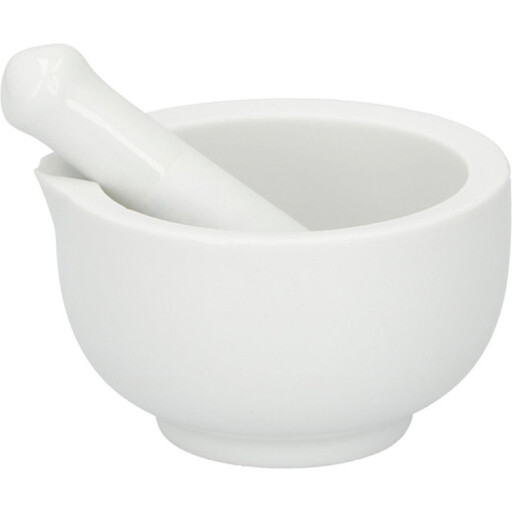
Well suited to you if you want to crush small quantities of spices by hand rather than use an electric grinding mechanism.
The product information lists ceramic construction, an 8 cm size and dishwasher-safe parts. The description presents this pestle and mortar as suitable for smaller tasks.
 No image available
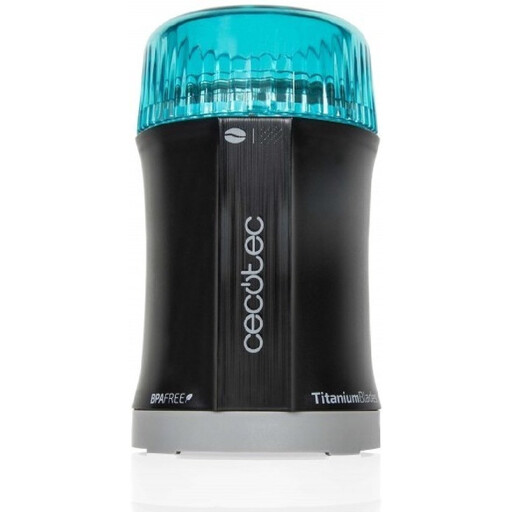
Well suited to you if you want to grind spices electrically in short pulses; check the manual for the ingredients it’s designed to handle.
The product information lists short pulses and a lid safety lock. Don’t immerse the motor base, cable or plug in water. After no more than one minute of continuous use, let the motor cool for at least ten minutes.
Don’t assume a mill is suitable just because it’s called a pepper mill: Peugeot describes separate chilli and pepper versions of the Oléron. Check the instructions for the exact model and the chillies you want to grind.
Follow the instructions for your model. AdHoc says to wipe the outside of the PEPE with a slightly damp cloth, brush the cutting mechanism if needed and not immerse the mill. Cole & Mason says not to rinse or immerse the Stadhampton mechanism.
Store whole or ground dried spices in a sealed jar in a dark place. According to the Voedingscentrum, light, heat and moisture affect their quality. Don’t leave the jar open above a steaming pan.
Keep chilli dust away from your eyes and airways, and don’t touch your eyes after handling hot chillies. Poison Control says capsaicin can irritate the skin, eyes and airways; the organisation recommends wearing gloves when handling hot chillies.
In the Netherlands, a seller can’t simply pass the buck to the consumer if a product is faulty despite being used normally: ACM ConsuWijzer says the seller must resolve the issue appropriately. Online purchases often also come with a 14-day cooling-off period from delivery, subject to legal exceptions.
No. A CE mark is only required for product groups covered by specific EU rules. The European Commission lists electrical and electronic equipment as a relevant product group, so don’t assume that a manual pestle and mortar needs a CE mark. Applicable safety requirements also apply to materials that come into contact with food.