
Vandaag of morgen in huis

Kwaliteit gegarandeerd

Welkomstaanbiedingen ontgrendelen: GRATIS bezorging | Tot 80% korting | Gratis 30 dagen JoyPlus-proefperiode
Download de app
Finding the right drawing and writing supplies might seem straightforward – until you have to choose between colouring pencils, felt-tip pens, brush pens, gel pens and creative sets. A large colour range doesn’t always mean the product is practical. Even items described as “washable” or “child-safe” need you to check the actual specifications.
Whether you’re looking for materials for school, journaling, colouring, crafting or beginner illustrations, focus on the intended use, the age group and the construction. That way, you’ll avoid a set ending up unused in a drawer.
A set of 48 or 50 colours looks appealing, but it isn’t automatically right for every purpose. For young children, thick felt-tip pens or jumbo colouring pencils are often easier to hold. For students and hobbyists, a fine tip, good colour range or blendable pigments matter more.
So first decide what you need the materials for:
According to the product descriptions from various brands, this refers to ink that can be washed from hands, skin or most fabrics. The result can depend on the surface, the amount of ink and how quickly you treat a stain. Some products recommend treating stains with water first or pre-washing clothing.
So it’s best to use drawing materials on paper or card. For children, also check that the packaging states a minimum age, warnings and safety information. A CE mark is useful conformity information, but it doesn’t guarantee that a product will wash out stain-free from every surface.
Watercolour pencils are designed to be used with water. That requires suitable paper and a brush or water brush. Erasable gel pens are practical for notes, but the heat-sensitive ink can disappear unintentionally at high temperatures. Brush pens work well for thick and thin lines, but aren’t always suitable for dark or black paper.
So don’t just read the front of the packaging. Also check the tip, ink type, recommended surface and storage instructions.
The shape of a pencil or pen affects comfort. A hexagonal barrel is less likely to roll off the table. A triangular shape can help children hold the material steadily. A thicker barrel is usually better for small hands, while a fine tip offers more control for writing and details.
For colouring pencils, look at:
For felt-tip pens and markers, the tip shape and ink are decisive. A brush tip is suitable for variable line widths, a chisel tip for broad areas and a round tip for even lines. Also check that the lids close properly and whether they have ventilation holes if the product is intended for children.
For children aged 3 and over, supervision is advisable with any creative product that has lids, small parts or accessories. A creative set with beads and stickers, for example, may have a different age limit than a simple set of children’s felt-tip pens.
Check on the product page:
The Clementoni Stitch Pen Creator Studio, for example, contains small accessories and, according to the product information, is intended for children aged 6 and over, with adult supervision.
A large set often has a higher purchase price, but can be good value if you use lots of colours. For school or occasional colouring, a set of 5, 12 or 14 colours is often enough. Also check whether individual colours are available. With gel pens and markers, it’s also important to replace the lids immediately after use, so the ink doesn’t dry out as quickly.
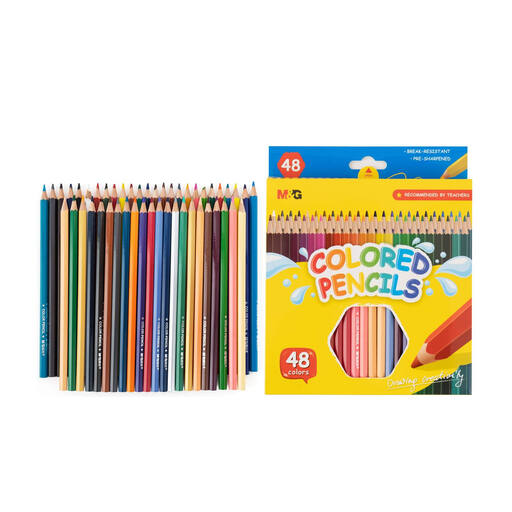
Why this fits the profile: The set offers 48 colours for colouring, sketching and school use without combining different types of drawing material straight away.
The hexagonal wooden barrel is less likely to roll away, and the pre-sharpened cores allow immediate use. Do check whether the child can comfortably handle the standard thickness.
48 individual colours, a natural wooden barrel and a core that, according to the product description, is designed to limit normal breakage.
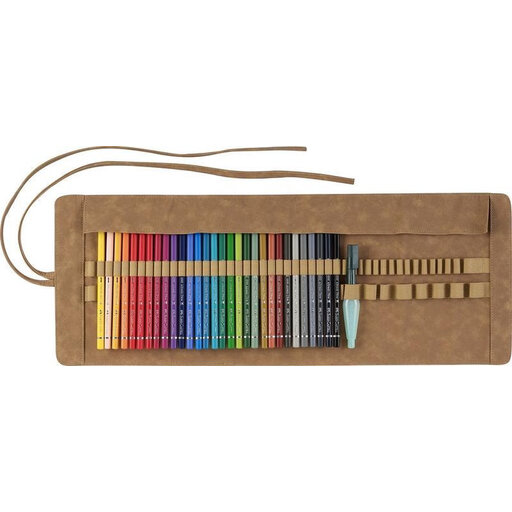
Why this fits the profile: This set is aimed at adults, advanced hobbyists and creators who want to use colouring pencils with water too.
The product description states a water-soluble core of 3.8 mm and includes a water brush. This makes it clear what material is needed for watercolour techniques.
30 colours, hexagonal shape, certified cedar wood according to the product information and a brown PU leather roll-up case.
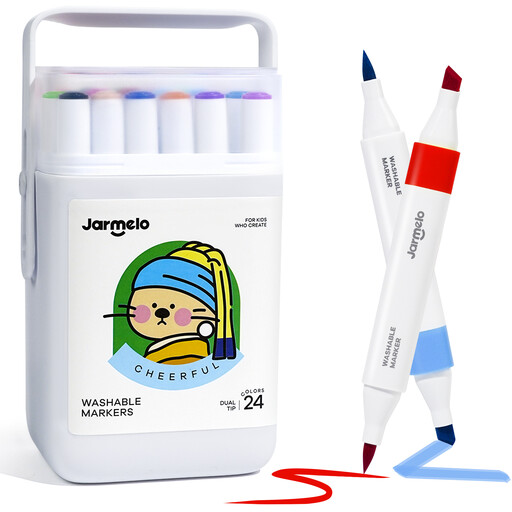
Why this fits the profile: These markers are practical for colouring, lettering and creative activities where you need both fine and broad lines.
The two tip shapes make the intended use clear: a brush tip for details and a chisel tip for broad strokes. The lids have ventilation holes according to the product description.
24 colours, two tips per marker and a storage case with handle. According to the product description, the ink is water-based and 90% washable from skin and most fabrics.
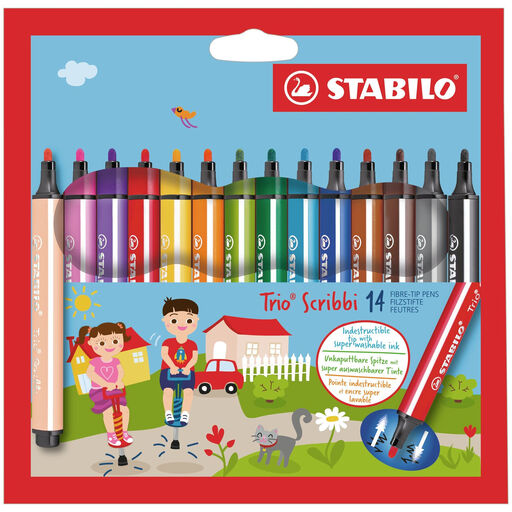
Why this fits the profile: The triangular, thick pen is designed for children aged 3 and over, according to the product description, and offers a clear grip for colouring.
The spring-loaded tip is designed to bounce back when pressed hard. The ink is described as super-washable; treat stains as quickly as possible with water.
14 colours, a writing width of 1.5–2 mm and a triangular grip. The product information states CE conformity.
A practical basic set doesn’t have to be large. For a child, you could combine children’s felt-tip pens, a few colouring pencils and paper. For school pupils, a set of gel pens and a few erasable gel pens are handy for notes and planners. If you enjoy hand lettering, you could choose brush pens or dual-tip markers.
With erasable gel pens, note the difference between a fine tip of 0.4 or 0.5 mm and a broader tip of 0.7 mm. A fine tip suits small writing and planners; a broader tip generally writes more clearly on standard school paper. Because the ink is heat-sensitive, don’t store written paper in a warm place for long periods.
For young children, dot markers are an easy option. The large sponge-like tip makes dots and broad areas possible. Use them on a surface that can withstand pressure and close the lid after each activity.
We’ve put together a full, up-to-date list of products that fully meet these strict selection criteria and current European safety regulations.
Choose products with a clear minimum age, a sturdy grip and as few loose parts as possible. Thick felt-tip pens, triangular children’s pens and large dot markers are often easier to manage than fine pens. Always check the warnings on the packaging and supervise when lids or small accessories are present.
Ordinary colouring pencils are used dry. Watercolour pencils contain a water-soluble core: with a wet brush you can spread or blend the colour. For this you ideally need watercolour paper. Also check whether a water brush is included, as with some complete sets.
Replace the lids immediately and close them firmly. Store markers according to the manufacturer’s instructions and avoid prolonged heat or direct sunlight. With erasable gel pens, retract the tip after use if the model has a click mechanism. This will keep your drawing and writing supplies usable for longer.
