
Vandaag of morgen in huis

Kwaliteit gegarandeerd

Welkomstaanbiedingen ontgrendelen: GRATIS bezorging | Tot 80% korting | Gratis 30 dagen JoyPlus-proefperiode
Download de app
A box of drawing and writing supplies may seem like an easy purchase. But you’ll only know once you start using them whether the marker bleeds through the paper, the pencil feels comfortable in your hand and the paint is suitable for your chosen surface. Parents also consider age recommendations and how easy items are to clean, while school pupils, students and artists tend to focus on line width, colour choice and durability.
Here are some common pitfalls to watch out for:
For coloured pencils, hardness matters. A B pencil usually has a softer core than an HB pencil, so it lays down colour more easily. That can be useful for colouring and layering, but less suitable for very light technical sketches.
HB is a popular choice for graphite pencils used at school and in the office. For darker sketch lines, 2B may be a better option. A mechanical pencil with 0.5 mm lead produces a consistent line and doesn’t need sharpening with a pencil sharpener. Just check that refills are easy to find.
For brush pens, the flexibility of the nib makes all the difference. According to the product information, the Faber-Castell Brush Pen Black Edition has a soft nib that lets you create both thick and thin lines. This makes the set suitable for small drawings, hand lettering and short notes on light-coloured paper.
Not every marker works on every surface:
Remember to consider drying time, too. Quick-drying ink can be handy for journalling, but left-handed writers may need to take extra care to avoid smudges.
A cap that doesn’t close properly can cause a marker to dry out quickly. Put the caps back on firmly as soon as you’ve finished using the markers. Retractable gel pens can be stored with the nib retracted.
For children, age recommendations, material information and any safety marks are all worth checking. The Faber-Castell Brush Pen Set states that it meets EN 71 and recommends a minimum age of 10. Jar Melo says its washable dot markers are water-based and recommends them for toddlers, but it’s still sensible to supervise young children.
Read claims such as ‘non-toxic’ or ‘washable’ as product claims from the description, not as a guarantee for every use. According to Jar Melo’s product information, the dot marker ink is washable from skin and most fabrics in 90% of cases. Even so, clean up any spills quickly and follow the instructions for use.
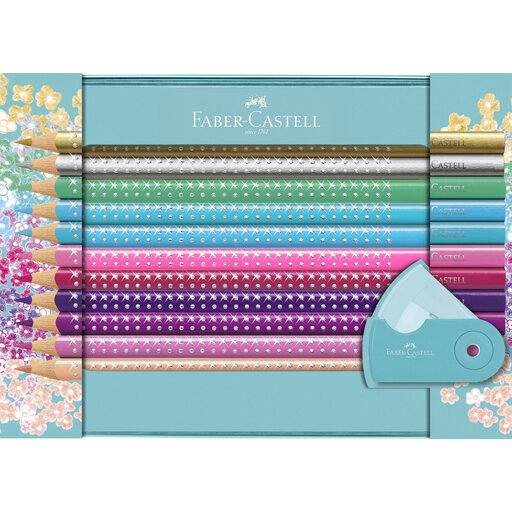
Why it suits this profile: A well-sized set for school, home use and simple colouring projects. The included sharpener means you won’t need to buy an extra accessory straight away.
The number of colours is clearly stated: 20 pencils plus one mini sharpener. So you won’t end up with a large set that’s missing a basic accessory.
20 assorted colours, an ergonomic triangular shape and a metal tin for storage.
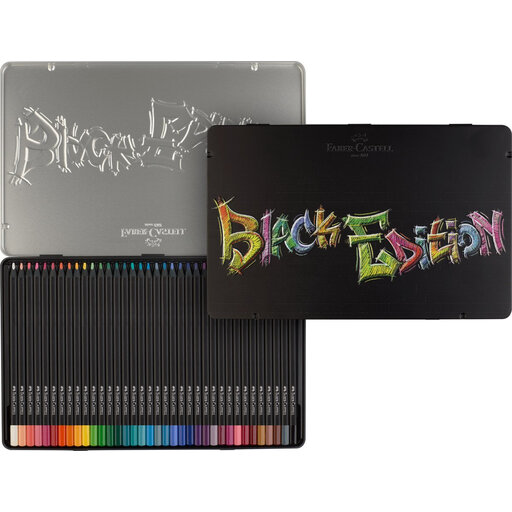
Why it suits this profile: A good choice for adults and children looking for a wider range of colours and a soft colour laydown for drawing and colouring.
The specifications list 36 colours and a 5 mm core. This makes it easier to decide in advance whether the set will suit broad areas of colour and layering.
36 colours, a soft B-grade core, a triangular grip and SV bonding, according to the product description.
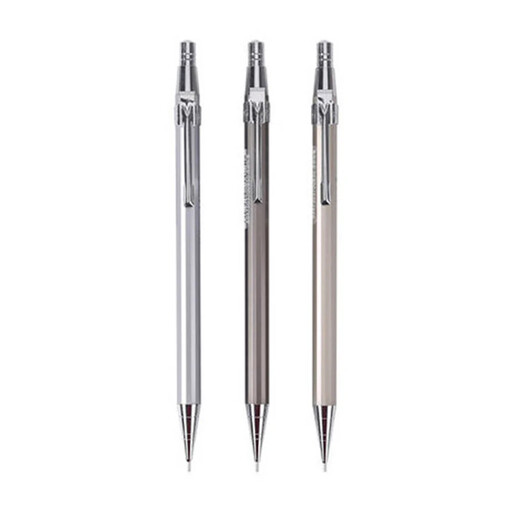
Why it suits this profile: A handy choice for students, illustrators and office workers who prefer a consistent fine line and a push-button mechanism.
The fixed 0.5 mm lead size makes it easy to know what you’re choosing. You don’t have to guess based on a marketing term such as ‘precision pencil’ alone.
0.5 mm black pencil lead, a metal barrel, a push-button mechanism and three pencils per pack.

Why it suits this profile: For hobbyists and makers who want to decorate wood, glass, canvas or ceramics as well as paper.
The product information lists the suitable surfaces and two nib sizes. This lets you choose the right marker for your material and the level of detail you need.
Six colours, water-based ink, 1 mm and 3 mm nibs, and shake-and-pump activation, according to the product description.
For young children, paint sets for children or erasable markers may be easier to use than fine pencils. The Jar Melo Washable Dot Markers come with 12 colours, a large sponge tip and activity sheets. For older children, the Jar Melo Kids Paint Set is another option, with 24 gouache colours, brushes, a palette and a rinsing cup.
If you mainly write or keep a journal, look for gel pens with a 0.5 mm nib. For detailed sketches, sketching pens with both a brush tip and a fineliner tip are useful. When using alcohol markers, consider ventilation, paper thickness and the risk of ink bleeding through. Brands such as Faber-Castell, STABILO and Jar Melo offer a range of product types, so always compare the specifications of each set rather than choosing by brand alone.
We’ve put together a complete, up-to-date list of products that meet these strict selection criteria and comply with current European safety regulations.
For everyday school use, HB graphite pencils, coloured pencils, an eraser and a reliable pencil sharpener are often all you need. A 0.5 mm mechanical pencil is handy for neat notes and drawings, as long as suitable refills are available.
Replace the cap straight after use and store markers according to the product instructions. Acrylic markers need to be activated as directed. Retractable gel pens are best stored with the nib retracted. Direct sunlight and high temperatures can reduce their shelf life.
It depends on how you use them. A large set isn’t automatically better value if some colours go unused or accessories are missing. Compare the number of colours you’ll use, the nib, the surface, the care required and the age recommendation. A compact set is often enough for an occasional school project, while frequent users may benefit more from refill options and suitable packaging.
