
Tracing with an existing monitor
You use a scan as a reference image and draw on a separate layer. Programs such as Krita offer features for reference images and layers; check that the software on your computer supports them.


If you already have a suitable computer monitor and want to clear the shared desk quickly after use, start by looking at a graphics tablet without a screen. If you want to see the scan directly beneath your pen, compare pen displays. Before you choose, check that your drawing software supports scans as a reference image and separate layers, that you’re allowed to install the required driver on the shared computer, and that the connections and power supply are suitable.
You use a scan as a reference image and draw on a separate layer. Programs such as Krita offer features for reference images and layers; check that the software on your computer supports them.
You want to be able to put the tablet away after use. Don’t just check its dimensions: make sure you can also install the driver on the shared computer.
You want to place the pen on the image you can see, and are happy to check the connections and power requirements of a pen display.
Choose this if: you can look at your existing monitor and want to put the tablet away after use.
The trade-off: you draw on the tablet while looking at the monitor, so compare the working area with the way you move your pen.
Choose this if: you want more physical space for longer pen strokes and have room on your desk.
The trade-off: a larger working area takes up more space, but doesn’t add a drawing screen.
Choose this if: drawing directly on the visible scan matters more to you than keeping connections as simple as possible.
The trade-off: check the video connection, power supply, included cables and whether you’re allowed to install the driver.
| What to consider | What should you check? | Who is this important for? |
|---|---|---|
| Scans and drawing layers | Check whether your program can display the scan as a reference image and supports separate drawing layers. | I want to keep the scan visible and draw new lines separately; around 33% of consumers put a tracing workflow first. |
| Desk space and storage | Compare the overall dimensions and active working area with the space available on your desk. | I want to clear the shared desk quickly after drawing; around 27% of consumers prioritise being able to put the tablet away. |
| Drawing on screen | Decide whether you want to look at the monitor or draw directly on the image; if you’re choosing a pen display, check the ports and power supply too. | I want to see the line beneath the pen tip; around 27% of consumers want to draw directly on screen. |
| Controls and installation | Check whether you’re allowed to install the driver and whether programmable keys suit the way you work. | I want to use settings and keyboard shortcuts on the shared computer; around 13% of consumers put controls and connections first. |
Loading a reference image and working with layers are features of the drawing software, not automatically features of the tablet.
Check the software on the shared computer and try using a scan as a reference image with a separate drawing layer.
The XPPen Artist 12 (2nd Gen) manual describes situations where additional power may be needed; a USB-C cable may be sold separately.
Compare your computer’s ports and power supply with the manual for the exact model, and check which cables are included.
A manufacturer’s or seller’s warranty doesn’t replace your statutory rights if a product doesn’t conform to the contract. ACM ConsuWijzer explains the distinction.
Keep your proof of purchase and report faulty products to the seller. When considering an extended warranty, check what it offers beyond your statutory rights.
Wacom offers compact Intuos graphics tablets without screens, designed to be used with an existing monitor.
The Inspiroy 2 M is a screen-free model worth comparing if you want more room for pen strokes and customisable controls.
The Deco 01 V3 is an example of a larger screen-free working area, while the Artist 12 (2nd Gen) is a pen display.
The Pen Tablet Small is a screen-free alternative to compare if you’re considering pen shape and the layout of a compact workspace.
This selection features screen-free graphics tablets for use with a computer monitor, from compact models to larger working areas.
 Image unavailable
Suitable for drawing with a computer monitor if you’re looking for a larger screen-free working area.
Active area: 216 × 135 mm. Wired USB connection, battery-free pen and four customisable ExpressKeys.
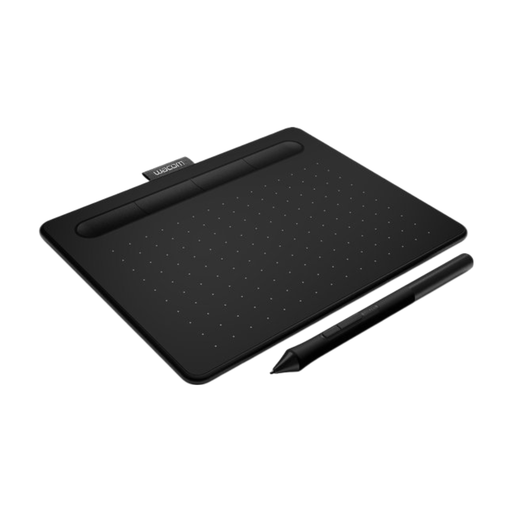 Image unavailable
A screen-free model for anyone who wants more room for pen strokes and is happy to look at the monitor while drawing.
Active area: 263 × 148 mm. Connects via USB-C or Bluetooth.
 Image unavailable
Worth comparing if you’re looking for a large screen-free working area and have plenty of room on your desk.
Active area: 349 × 195 mm. Connects via USB-C or Bluetooth; programmable ExpressKeys and a Touch Ring.
 Image unavailable
A compact screen-free option if being able to put the tablet away is a priority at your shared desk.
Active area: 187 × 105 mm. Connects via USB-C or Bluetooth and has four customisable ExpressKeys.
 Image unavailable
A compact screen-free model to consider if you want to keep desk space to a minimum.
A6-sized active area. Connects via USB-C or Bluetooth and comes with a battery-free pen.
You’ll need a drawing program that lets you use the scan as a reference image or background and draw on a separate layer. Krita documents features for reference images, visibility and layers; check whether the software on your shared computer supports them too.
Don’t assume you can: Wacom and Huion say you need to install a driver for the computer connections mentioned. Check which installations are allowed at your workplace, and make sure the driver is compatible with the exact model and operating system.
Check that your computer can provide the required video connection and power, and see which cables are included. The manual for the XPPen Artist 12 (2nd Gen) describes situations where additional power may be needed; a suitable USB-C cable may be sold separately.
As a consumer, you generally have 14 days from delivery to change your mind, subject to statutory exceptions. You also have statutory rights against the seller if a product is faulty. ACM ConsuWijzer explains that these rights exist alongside any manufacturer’s or seller’s warranty.