
Illustrator with an existing tablet
You create illustrated elements for a poster and want a pen that works with your exact device and gives you the line control you need. Apple, Samsung, Huion and Wacom link pen support to specific models.


First, choose a pen that’s compatible with your exact tablet or pen display model. Then decide whether you need pressure-sensitive strokes or mainly want to sketch and draw lines. A different pen won’t solve screen reflections: look at your workspace and consider a suitable screen solution instead. The right choice will vary depending on whether you use an iPad, Galaxy Tab or a pen display that works with other equipment.
You create illustrated elements for a poster and want a pen that works with your exact device and gives you the line control you need. Apple, Samsung, Huion and Wacom link pen support to specific models.
Reflections can make it harder to assess your design. Apple describes nanotexture for certain iPad Pro configurations, while Samsung specifies which tablets fit its anti-reflective screen protector. Your screen choice is separate from your pen choice.
You mainly use your pen for sketching, lettering and making corrections, and are weighing up ease of use and charging against extra drawing features. Apple describes tilt control for Apple Pencil (USB-C); Logitech mentions tilt control for Crayon and says that the pen is not pressure-sensitive.
Assess screen visibility in bright window light separately from pen compatibility and the line control you need in your drawing app.
| Buying concern | What should you check? | Who is this important to? |
|---|---|---|
| Visibility by the window | Check whether a screen solution fits your exact tablet model; a pen won’t reduce reflections. | I want to assess my poster clearly on screen in bright light by the window. This matters to around 31% of consumers who prioritise seeing their design clearly. |
| Compatibility | Compare your exact tablet model and generation with the pen manufacturer’s compatibility list; for Apple, also check the required iPadOS version. | When I’m looking for a pen for my existing tablet, I want to know first whether it supports that exact model. Around 31% of consumers prioritise compatibility. |
| Line control | Check separately whether you need pressure sensitivity, tilt or other pen controls, and whether they work in your drawing app. | For illustrations and expressive lettering, I want to know how my brush strokes will respond. Around 25% of consumers see line control as their main buying concern. |
| Ease of use and replacement parts | Check how the pen charges and which replacement tips fit the exact version. | I want to weigh up how it charges and which replacement tips I’ll need for my existing setup. Around 13% of consumers give ease of use and replacement parts top priority. |
Apple, Samsung, Huion and Wacom link support to specific pen and device models. Matching brand names alone doesn’t confirm compatibility.
Note down your tablet or pen display model and generation, then compare them with the pen manufacturer’s list before buying. For Apple, also check the required software version.
Logitech describes Crayon as tilt-sensitive, but not pressure-sensitive. A line that changes when you tilt the pen is not the same as a brush stroke that responds to pen pressure.
Check which input features your drawing app and chosen brushes require. If possible, try the brush you want in the app you’ll use for your poster.
The anti-reflective measures mentioned relate to screen glass or a model-specific protector, not the pen. Any screen solution must fit your device.
Assess reflections in your workspace and check that any screen solution you’re considering is compatible, separately from your choice of stylus.
Apple Pencil versions are designed for specific iPads, making them relevant if you already create designs on a compatible iPad.
S Pen versions are relevant if you use a Galaxy Tab that supports the specific pen.
Crayon is an option for iPad users looking for a pen for sketching and writing.
Huion makes replacement pens for specific drawing tablets and Kamvas pen displays.
The Wacom One Standard Pen is designed for the Wacom One drawing devices listed by Wacom.
This selection includes pens for specific Surface and iPad setups, as well as an active stylus that, according to the product information, requires a capacitive touchscreen. Before buying, check that it’s compatible with your device and the way you work.
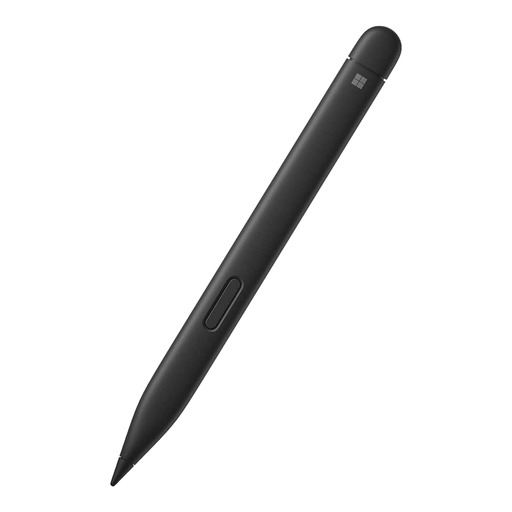 Image unavailable
Could suit drawing on a compatible Surface device if pressure-sensitive input is important to you.
The product information lists pressure sensitivity, 4,096 pressure levels and haptic feedback. Check the requirements for your Surface model and setup.
 Image unavailable
For illustrating and colouring on a compatible iPad when you’ll make use of its extra pen controls.
Apple describes pressure and tilt sensitivity, squeeze controls, rotation, and magnetic pairing and charging. The product information lists iPad Pro 11- and 13-inch (M4), iPad Air 11- and 13-inch (M2), and iPad mini (A17 Pro); check that your exact model and drawing app are compatible.
 Image unavailable
An option for sketching and shading on a compatible iPad if tilt control suits the way you work.
Apple describes the pen as tilt-sensitive; pairing and charging are done using a USB-C cable. Check the compatibility list for your iPad.
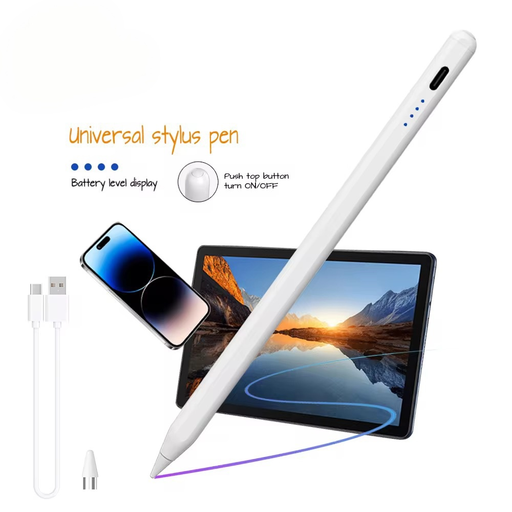 Image unavailable
The product information lists drawing on a capacitive touchscreen as a use for this stylus.
According to the product information, setup is done through an app. Check that your tablet has a capacitive screen and that installing the app suits the way you work.
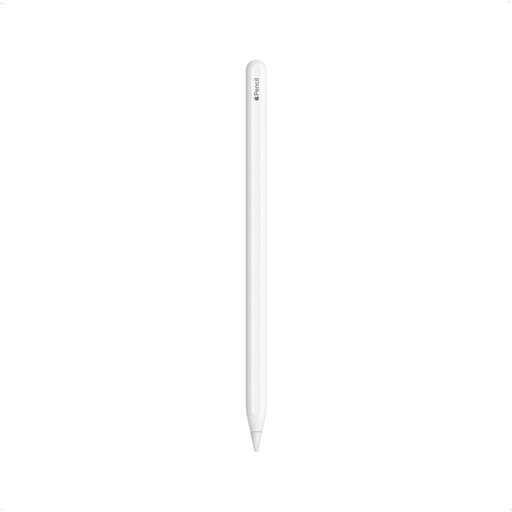 Image unavailable
For drawing and sketching if your iPad is among the models compatible with this version.
The product information lists double-tap functionality and magnetic pairing and charging. The models listed include iPad Pro 12.9-inch (3rd to 6th generation), iPad Pro 11-inch, iPad Air (4th and 5th generation) and iPad mini (6th generation).
Not directly: the anti-reflective measures mentioned are part of the screen glass or a model-specific protector. Apple lists nanotexture for certain iPad Pro configurations, while Samsung specifies which Galaxy Tab models fit its protector. So consider your screen separately from your pen.
First, find your exact tablet model and check the pen manufacturer’s compatibility list. Apple Pencil Pro pairs and charges magnetically with a compatible iPad; according to Apple, Apple Pencil (USB-C) pairs and charges using a USB-C cable. For Huion and Wacom pens, check the list for your specific device.
Choose a replacement tip that’s explicitly compatible with your pen version. Apple lists replacement tips for Pencil Pro, Apple Pencil (1st and 2nd generation) and Apple Pencil (USB-C). For the pen included with the Tab S11 series, Samsung explains how to replace the tip.
For a distance purchase, the seller must provide information about the cooling-off period. According to the Dutch government, this is 14 days in many cases, although there are exceptions. Check the terms that apply to your purchase; this is statutory consumer protection, not a promise about how long a pen will last.