Start with the device you already use: a pen for an iPad or Galaxy Tab must be compatible with your exact model, while a graphics tablet connected to a computer offers a different way to draw. Choose pressure sensitivity if you want to vary your lines by pressing harder or more softly; for simple outlines, a pen without this feature may be enough. A sketch doesn’t automatically become a scalable vector logo and may need further refinement.
Who is this choice relevant to?
iPad owner who wants to sketch straight away
You want to draw a logo idea on the screen you already own. Choose a pen that’s compatible with your iPad model and gives you the line control you need. Apple lists the compatible models and features for each Pencil version.
Computer user developing a logo
You want to draw at home on a Mac or PC using a separate graphics tablet and pen. Also consider how you’ll turn the sketch into editable vector shapes later; Adobe describes vectorisation as a further refinement step.
Galaxy Tab owner with an idea to draw
You want to draw directly on your Galaxy Tab. Samsung explains the differences between S Pen versions, so check which pen is compatible with your exact tablet model.
What should you consider when choosing?
Start with the device you want to keep using, then decide whether you need pressure-sensitive line variation or simply want to create a basic sketch.
When choosing a drawing pen for a logo concept at home, there are four main reasons you might prefer one version over another.
| What to consider |
What to look for |
Who is this important for? |
| Tablet compatibility |
Compare your tablet’s full model number with the compatibility details for the specific pen; with Apple, also check for any software requirements. |
If I want to use my existing tablet, the pen must be compatible with the exact model. Around 36% of consumers put compatibility first. |
| Drawing on a computer |
Choose between drawing on a screen and working on a separate drawing surface. Also check support for your computer, drawing app and connection. |
If I want to create my sketch as part of my existing computer workflow, I’ll look for a suitable graphics tablet. Around 29% of consumers prioritise this way of working on a computer. |
| Line control |
Check whether the specific pen is pressure-sensitive; tilt sensitivity doesn’t automatically mean that pressure changes the line. |
If I want to vary my lines by pressing harder or more softly, I’ll look for explicit pressure sensitivity. Around 21% of consumers prioritise this level of line control. |
| A simple first sketch |
Decide which pen features you really need and how you might later refine the sketch into editable vector shapes. |
For an initial outline, I mainly want a practical set-up and don’t need to use every extra pen feature. Around 14% of consumers focus primarily on creating a simple concept sketch like this. |
Common buying mistakes
-
Choosing a pen by brand name without checking your tablet model
Different pen versions aren’t automatically compatible with one another. A pen that doesn’t work with your tablet won’t meet your drawing needs.
Before buying, compare the full model numbers of your tablet and pen with the manufacturer’s compatibility information.
Choosing the wrong pen can cost you extra time if you have to replace or return it.
-
Confusing tilt sensitivity with pressure sensitivity
A pen that responds to its angle doesn’t automatically vary the line according to how hard you press. Logitech explicitly states that the Crayon isn’t pressure-sensitive.
Look for an explicit pressure-sensitivity specification for the exact version you’re considering.
-
Mistaking an initial sketch for the finished vector logo
A drawn concept doesn’t automatically become a scalable file with editable shapes. Adobe describes vectorisation as a further step.
Decide in advance how you’ll develop the concept for the different formats you need your logo in.
Brands to consider
Apple
Apple Pencil models are worth considering if you already have a compatible iPad and want to draw directly on its screen.
- Apple lists features such as squeeze and barrel roll for Apple Pencil Pro. The USB-C version is described as tilt-sensitive.
- Compatibility varies by Pencil and iPad. Don’t assume every version offers the same features.
Samsung
A model-specific S Pen is an option if you want to draw directly on a compatible Galaxy Tab.
- Samsung lists pressure detection for the Galaxy Tab S11 Series S Pen EJ-PX730BWEGEU.
- Samsung explains the differences between S Pen versions; the features of one model don’t automatically apply to other pens.
Wacom
Intuos graphics tablets are designed for drawing on an existing Mac or PC using a separate drawing surface.
- Wacom describes the Intuos S as having a battery-free, pressure-sensitive pen for use with a computer.
- Whether you choose a separate drawing surface or draw directly on a tablet screen depends on how you work.
XPPen
The Deco 01 V3 is a separate graphics tablet for a computer-based drawing set-up.
- XPPen specifies a battery-free pen with 16,384 stated pressure levels for this model.
- The stated number of pressure levels is a manufacturer’s specification and doesn’t, on its own, prove an advantage over another model.
Logitech
Crayon is a pen for compatible iPads if pressure-controlled line variation isn’t essential.
- Logitech describes Crayon as a pen for iPad.
- Logitech states that Crayon isn’t pressure-sensitive. Also check the version and its compatibility with your iPad.
Products for drawing on a computer or tablet
This selection includes separate graphics tablets for use with a computer, as well as pens for selected tablets and other specifically named devices. Check that each model suits your device and the way you draw.
 Image unavailable
Wacom One pen display 14.0"
A pen display for anyone who wants to draw a logo concept on a computer screen. Check that your computer and USB-C connection are suitable for this set-up.
View at Joybuy
 Image unavailable
Wacom Intuos Pro Large Pen Tablet – Pro Pen 3
A separate graphics tablet for digital drawing on a computer. Check that this way of working suits your sketching workflow.
The product name lists 8,192 pressure levels and Bluetooth and USB-C connectivity. The description also mentions installing Wacom drivers.
View at Joybuy
 Image unavailable
Wacom Intuos S Black Graphics Tablet
A separate graphics tablet for use with a computer. Before buying, check the connection and make sure the required Wacom driver is suitable for your set-up.
View at Joybuy
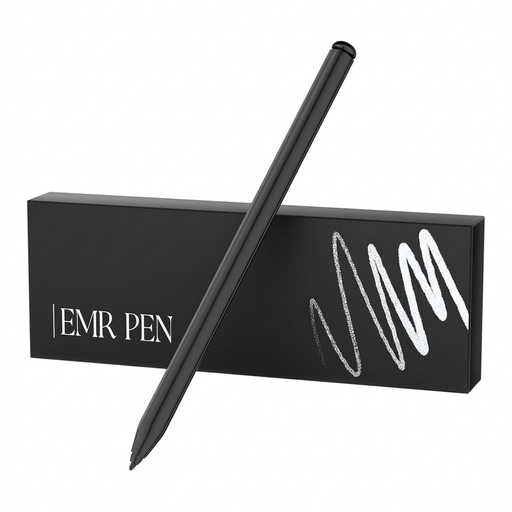 Image unavailable
Zspeed EMR Stylus Pen SP-18 for reMarkable 1 and 2 and Kindle Scribe
A pen to consider if you use one of the specifically named devices; check compatibility with your version.
The product name lists 4,096 pressure levels.
View at Joybuy
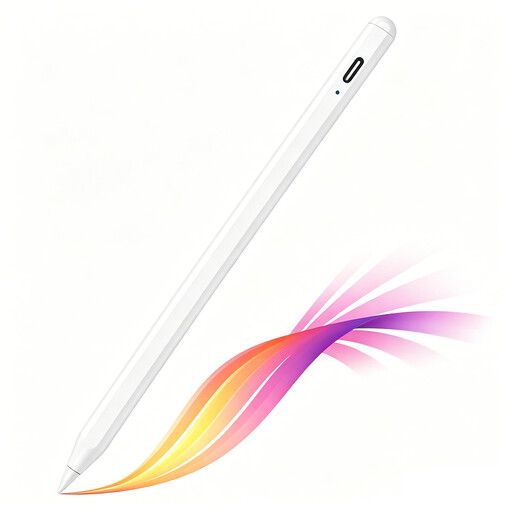 Image unavailable
iPad stylus with USB-C, tilt detection and palm rejection
An option for sketching on selected iPad models. Check that your iPad is compatible with this version.
The product name lists USB-C charging, tilt detection and palm rejection; these features don’t automatically mean the pen is pressure-sensitive.
View at Joybuy
Frequently asked questions
Will every Apple Pencil work with every iPad?
No. Apple lists the iPad models supported by each Pencil version and, where applicable, the minimum iPadOS version required. Check the full model name before buying.
Do I need to pair or charge a drawing pen separately?
It varies by model. Apple says Apple Pencil (USB-C) pairs and charges via a USB-C cable; XPPen lists the Deco 01 V3 as having a battery-free pen. Follow the instructions for the version you choose.
Is a hand-drawn logo sketch ready to use as a scalable final logo?
Not necessarily. Adobe describes converting a sketch into editable vector shapes as a further refinement step.
What are my rights when shopping online in the Netherlands?
According to ACM ConsuWijzer, for eligible online purchases you generally have a statutory cooling-off period that ends 14 days after delivery; check the listed exceptions. You’re also entitled by law to a product that meets what you could reasonably expect from it.


