
Vandaag of morgen in huis

Kwaliteit gegarandeerd

Welkomstaanbiedingen ontgrendelen: GRATIS bezorging | Tot 80% korting | Gratis 30 dagen JoyPlus-proefperiode
Download de app
Double-walled glasses look fantastic. Your coffee, tea, or cocktail appears to float, the temperature stays perfect for longer, and you won't burn your fingers. But the reality can sometimes be disappointing. A beautiful glass that starts leaking after just a week, a set that doesn't fit under your coffee machine, or glasses that turn dull and full of condensation after a single dishwasher cycle.
Before you invest in a new set, it's wise to know what to look for. While many marketing campaigns promise the world, a few hidden flaws can quickly turn your purchase into a disappointment. We'll discuss the most common pitfalls and how to avoid them.
cappuccino glasses, but after making a cappuccino with your own machine, it overflows. Manufacturers sometimes use terms like 'cappuccino' or 'latte' loosely. Without paying attention to the exact capacity in millilitres (ml), you might buy glasses that are impractical for your needs.thermo glasses are created equal. The claim "suitable for hot drinks" isn't always a guarantee of durability. Glasses of inferior quality can crack due to a sudden temperature change (thermal shock), for example, if you pour boiling water into them.To ensure you make a smart purchase, focus on a few objective features rather than on marketing claims.
The material is crucial. Most high-quality double-walled glasses are made from borosilicate glass. This type of glass is lighter, yet stronger and far more resistant to thermal shock than normal glass. It can handle the transition from cold to hot without issue. Cheaper alternatives sometimes use tempered glass, which is less suitable for the temperature fluctuations associated with glasses for hot drinks.
Look beyond the name and check the capacity in millilitres.
latte macchiato glass showcases the drink's layers.By choosing the right size, you ensure that your new double-walled coffee glasses are genuinely practical for your coffee maker and habits.
Always check the manufacturer's specifications. Does it explicitly state that the glasses are dishwasher-safe? Brands like Bodum often indicate this clearly, but sometimes with the recommendation to place them on the top rack. If nothing is mentioned, hand washing is the safest choice to extend the lifespan of the silicone valve. The same applies to microwave or oven use; this is only safe if the manufacturer explicitly states it.
We have highlighted a few popular choices and matched them with different user profiles, based on their specifications.
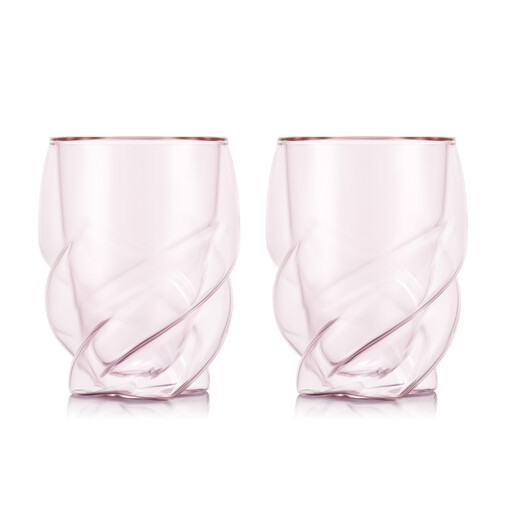
Why it's a match: For those who see coffee not just as a drink, but as a presentation. The ergonomically twisted outer wall and subtle pink hue create a unique, eye-catching look. Ideal for a stylish cappuccino or tea.
Made from mouth-blown borosilicate glass, which is more resistant to thermal shock. The 270 ml capacity is a practical size for most standard cappuccinos.
Unique design with a functional grip. According to the manufacturer, they are dishwasher, microwave, and oven safe (up to 180°C / 356°F).
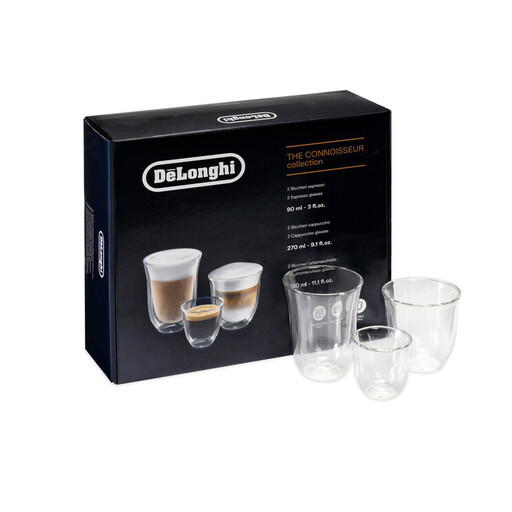
Why it's a match: This glass set offers a complete and practical solution. With specific sizes for espresso, cappuccino, and latte macchiato, you'll immediately have the right glass for every coffee variation.
Tackles the 'wrong size' pitfall head-on by offering a set with specific, functional sizes: espresso (90 ml), cappuccino (270 ml), and latte (330 ml).
A complete and versatile set for the most common coffee drinks. According to De'Longhi, the glasses are dishwasher-safe.
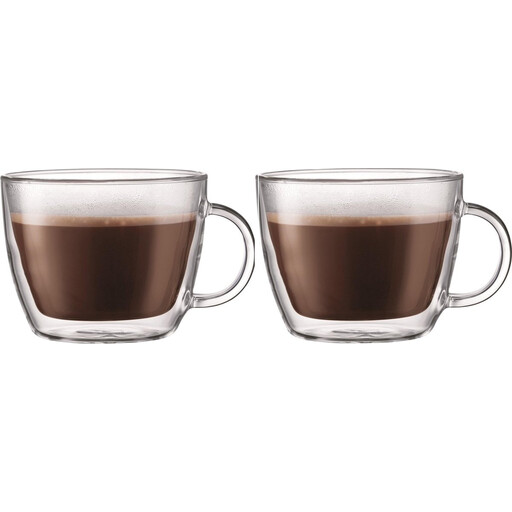
Why it's a match: For those who find a standard latte macchiato glass too small. These glasses are perfect for a large homemade latte, a generous cup of tea, cold brew, or even soup.
With a generous capacity of 450 ml, this glass solves the frustration of undersized options. You won't have to worry about whether your drink will fit.
Very spacious capacity for various drinks and dishes. Made of heat-resistant borosilicate glass and, according to Bodum, suitable for the dishwasher, freezer, microwave, and oven (up to 176°C / 350°F).
We've compiled a complete, up-to-date list of products that meet these selection criteria and current regulations.
Condensation between the two glass layers is almost always the result of a damaged silicone valve on the bottom. This can happen from contact with sharp objects or from the high temperatures and harsh detergents in a dishwasher. Once the seal is no longer watertight, moisture can penetrate during washing. Unfortunately, this cannot be repaired.
No, they are not unbreakable. Although heat-resistant glasses made of borosilicate glass are more resistant to temperature changes and generally stronger than normal glass, they are still glass objects. A hard knock against the countertop or a drop on the floor can still cause them to break. So, handle them with care.
The only reliable source for this is the manufacturer's product information. Does it explicitly state that the glass is dishwasher-safe? Then you can assume it is. It is often recommended to place them on the top rack and use a program with a lower temperature. When in doubt, or if nothing is mentioned, hand washing is always the safest option to maximise its lifespan.
