
Vandaag of morgen in huis

Kwaliteit gegarandeerd

Welkomstaanbiedingen ontgrendelen: GRATIS bezorging | Tot 80% korting | Gratis 30 dagen JoyPlus-proefperiode
Download de app
Coffee that cools down quickly, condensation on the table or a glass that becomes too hot to hold: these are familiar problems with standard coffee cups. Double-walled coffee cups and double-walled coffee glasses can help reduce heat transfer and condensation, but not every model is suitable for every type of coffee or situation.
Marketing copy often focuses on a “thermal effect”, while important details receive less attention. Pay particular attention to these three common pitfalls:
Capacity is usually stated in millilitres. Use this guide as a practical starting point:
Also check the clearance beneath your coffee machine’s spout. A large glass may be impractical if it does not fit beneath the machine.
For glass coffee cups, borosilicate glass is a popular choice of material. It is known as a type of glass that is suitable for temperature changes, but it is still important to follow the brand’s specific usage instructions. Some models are also made from tempered glass.
The double wall creates an insulating layer of air. As a result, the outside often feels less hot when holding hot drinks, while cold drinks are less likely to cause condensation. The construction does not keep a drink hot or cold indefinitely; the starting temperature, quantity and surroundings still have an impact.
A silicone valve or opening underneath can help regulate the air pressure between the glass layers in some thermal glasses. According to Bodum’s product information, this feature is included in various PAVINA and BISTRO models. Do not remove such an opening yourself, and check the care instructions.
If you want to spend less time washing up, look for dishwasher-safe coffee cups. Always check whether this applies to the entire product. For glass sets, the manufacturer and product page may also specify restrictions regarding microwave, oven or freezer use.
Also consider:
For intensive use, insulated stainless-steel coffee cups may be more practical than glass. They are generally less prone to breaking, but are usually not suitable for microwave use and do not show off the colour of coffee as well.
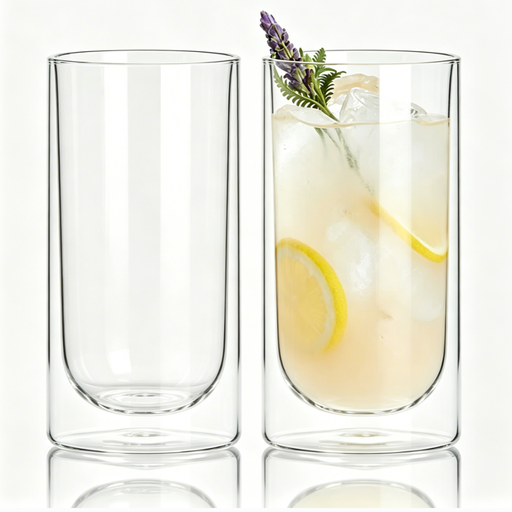
Why it suits this profile: This set of two glasses holds 280 ml, making it suitable for everyday coffee, tea and some cappuccino drinks.
The capacity is clearly stated and the double wall is designed for hot and cold drinks. Before buying, however, check the specific dishwasher instructions.
Set of 2, 280 ml per glass, suitable for hot and cold drinks according to the product description.
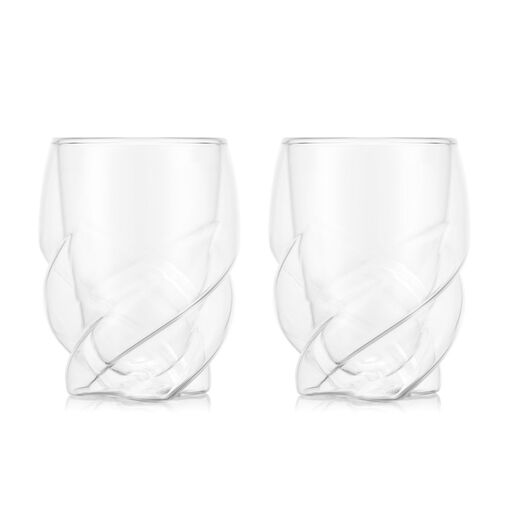
Why it suits this profile: This set combines a 270 ml capacity with borosilicate glass and a twisted outer wall for extra grip.
The product information specifies the material, capacity and a silicone pressure-regulating opening. This makes the construction verifiable rather than relying solely on an insulation claim.
Mouth-blown borosilicate glass, set of 2 and, according to Bodum, dishwasher-, microwave- and oven-safe up to 180 °C.
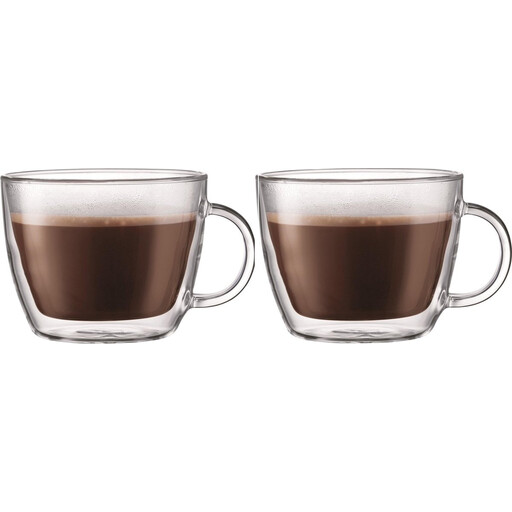
Why it suits this profile: The 450 ml capacity leaves plenty of room for lattes, iced coffee, desserts or larger hot drinks.
The generous capacity prevents milk foam or ice from filling the cup too quickly. However, check that 450 ml fits beneath your coffee machine.
Mouth-blown heat-resistant borosilicate glass, double wall and set of 2. According to Bodum, the cups are dishwasher-, freezer-, microwave- and oven-safe up to 176 °C.
A coffee cup set is practical for a household, office or hospitality venue because all the cups have the same capacity and shape. A set of two suits a smaller household, while a set of four or six is more convenient when entertaining or for everyday shared use.
For espresso, choose smaller espresso cups, such as a 150 ml set. For cappuccino, cappuccino glasses holding around 190 to 270 ml are often a more logical choice. If you want to use one type of crockery for several drinks, consider thermal glasses holding 250 to 350 ml. For hospitality use, pay particular attention to stackability, the risk of breakage and the cleaning instructions.
We have put together a complete, up-to-date list of products that fully meet these strict selection criteria and the applicable European safety regulations.
It varies from product to product. Some Bodum models are listed as dishwasher-safe by the manufacturer. For other glass and metal cups, check the product page. Do not use damaged glasses, and position fragile models so that they do not knock against other crockery.
A double wall slows down heat transfer, but it does not guarantee a fixed length of time that the drink will stay hot. The temperature depends on the amount of coffee, the starting temperature, the material and the surroundings. For a warmer result, rinse the cup with warm water beforehand. Always drink carefully: even if the outside feels comfortable to hold, the coffee may still be hot.
Many models are also designed for iced coffee, cold brew, soft drinks and other cold beverages. The double wall can help reduce condensation on the outside. However, avoid sudden temperature changes and check whether the glass is suitable for freezer, microwave or oven use. The manufacturer’s instructions are decisive here.
