
Vandaag of morgen in huis

Kwaliteit gegarandeerd

Welkomstaanbiedingen ontgrendelen: GRATIS bezorging | Tot 80% korting | Gratis 30 dagen JoyPlus-proefperiode
Download de app
A donut dog bed looks soft and inviting, but not every model suits every dog. A small dog may lose its sense of security in a bed that is too large, while a larger dog may not have enough space with raised sides or a base that is too thin. Terms such as “calming”, “orthopaedic” and “extra sturdy” only mean something once you have checked the underlying product specifications.
For dog owners in the Netherlands, three pitfalls are particularly important:
Measure your dog from the nose to the base of the tail while they are lying down in a relaxed position. Add around 15 to 25 centimetres if your dog likes to sleep fully stretched out. Dogs that curl up can usually manage with a more compact size.
A practical guide:
Also consider the height of the sides. A dog bed with raised sides is useful for dogs that like to rest their head on something, but very high sides may be less accessible for an older or less mobile dog.
A fluffy dog bed feels comfortable, but the filling also affects how well the bed retains its shape. PP cotton filling is light and soft. Some models describe their filling as resilient or supportive. Check whether the inner cushion can be cleaned separately and whether the filling needs to be fluffed up again after use.
For dogs that prefer a firmer surface, a bed with egg-crate foam or another foam structure may be more suitable. FUNNYFUZZY’s product information describes this structure as providing postural support. This is a product claim made by the brand, not a medical guarantee. An orthopaedic dog bed may therefore be a practical choice for an older dog, but persistent joint or mobility problems should be discussed with a vet.
A washable dog bed is only truly practical if you can remove the cover without too much effort. A concealed zip or a zip on the underside keeps the fastening mechanism out of direct sight. Pay close attention to the washing instructions: for several models, only the cover or central cushion is machine washable, while the inner filling may only be spot-cleaned.
An anti-slip dog bed with rubber dots or an anti-slip layer can reduce movement on a smooth floor. Always place the bed on a flat, dry surface. Anti-slip features do not eliminate every risk of movement, particularly when a dog jumps into the bed enthusiastically.

Why it suits this profile: The 60 cm diameter is designed for small dogs and cats that like to curl up. The soft plush finish and round shape make it a straightforward choice for a first dog bed.
The product information states that it has a removable central cushion with a zip and rubber anti-slip dots. However, check the current care label before buying.
60 cm diameter, PP filling, removable central cushion and a compact shape for small dogs.
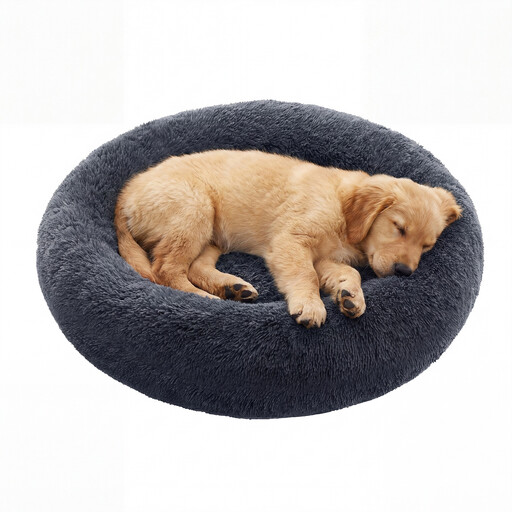
Why it suits this profile: According to the product description, this spacious round model is intended for medium-sized to larger dogs weighing up to around 30 kg. The high sides suit dogs that like to lie against a soft support.
According to the product specifications, the cover is removable and machine washable. The description also mentions a concealed zip and an anti-slip base.
100 cm diameter, plush polyester and PP cotton filling; suitable for dogs that like to curl up or nestle against a raised side.

Why it suits this profile: The 90 cm size suits medium-sized dogs and can also be used in a spacious crate or designated resting area. The sturdy sides help define the sleeping space.
According to the product information, the central filling can be removed via a zip. The outer cover is washable according to the accompanying care label; the inner pad is not machine washable.
90 cm diameter, 20 cm height, PP cotton filling and rubber anti-slip dots on the underside.
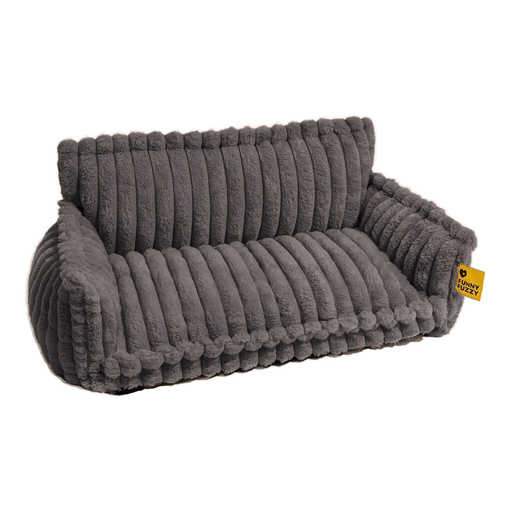
Why it suits this profile: According to the product description, this sofa-style model uses egg-crate foam, a raised headrest and an anti-slip layer. This may suit a dog that prefers lying on a firmer surface.
Rather than relying solely on soft plush filling, the product information also mentions foam, a headrest and a removable machine-washable cover. Check the exact size before ordering.
Egg-crate foam, raised headrest, removable cover and anti-slip fabric. The manufacturer describes the model as orthopaedic; this is a brand claim, not a medical assessment.
A new bed may arrive vacuum-packed. Shake it out thoroughly and give it time to regain its shape. Some models specify 24 to 48 hours. Then place the bed on a flat, dry spot where your dog already likes to rest. A familiar blanket or toy can make the transition easier.
Wash the cover according to the label and do not use bleach or harsh detergent. Allow the inner filling to dry thoroughly before putting the bed back together. Regularly check the zip, seams, anti-slip layer and any loose plush fibres. If the bed is torn or the filling is exposed, stop using it, especially if your dog chews their sleeping area.
We have put together a complete, up-to-date list of products that fully meet these strict selection criteria and the applicable European safety regulations.
According to brands’ own information, soft materials and raised sides may create a feeling of security. The effect varies from dog to dog. Introduce the bed gradually and place it in a quiet corner. If anxiety persists, training and advice from a vet or behaviour specialist are recommended.
Its lifespan depends on the material, how it is used and your dog’s chewing habits. Washing it regularly according to the label, removing hair and checking the seams can help keep the bed usable. Replace it when the filling becomes visible, the cover tears or the base is no longer stable.
Often, but not always the entire bed. With many models, only the cover or central cushion is machine washable. Check the product label, temperature setting and drying instructions before washing.
