
Vandaag of morgen in huis

Kwaliteit gegarandeerd

Welkomstaanbiedingen ontgrendelen: GRATIS bezorging | Tot 80% korting | Gratis 30 dagen JoyPlus-proefperiode
Download de app
A donut dog bed looks comfortable, but not every round dog bed is right for every dog. A bed that’s too small can restrict how your dog sleeps, firm filling can flatten quickly, and a lovely fluffy cover isn’t automatically practical in a home with muddy paws or lots of dog hair.
If you’re looking for a soft, calming or fluffy dog bed, it’s worth looking beyond the colour and appearance. Pay particular attention to the dimensions, cleaning instructions and how stable the bed is on the floor. That way, you can avoid having to buy another one just a few months later.
With a donut dog bed, the raised edges take up some of the total diameter. So an 80 cm bed doesn’t offer 80 cm of completely flat sleeping space. Measure your dog while they’re stretched out and allow extra room for movement. A smaller size may suit dogs who like to curl up, but dogs who stretch out need more space.
A dog bed with a washable cover is more hygienic for everyday use, but that doesn’t always mean you can put the inner filling in the washing machine. On some models, you can remove the cover using a zip, while the inner cushion can only be spot-cleaned or aired. So check exactly what’s washable before you buy.
A dog bed with a non-slip base is more stable on a flat surface. However, rubber dots or a non-slip layer can’t make up for poor placement. The bed may still move on smooth tiles, a wet floor or an uneven surface. Place it somewhere dry and level, and check the underside regularly to make sure it’s in good condition.
As well as the product dimensions, check the recommended dog size:
The sizes shown are the product dimensions. Soft, padded products may vary by a few centimetres due to their stitching and filling.
PP cotton filling is commonly used in this type of product. It feels soft and gives the sides their shape. Check whether the filling needs regular plumping. A donut bed with high sides creates a defined sleeping space for dogs who like to lean against something. The shape may help your dog feel cosy, but it isn’t a treatment for anxiety or other behavioural issues.
For older dogs, an easy-to-use entrance may be more important than extra-high sides. Observe how easily your dog gets in and out, and don’t place the bed somewhere raised or unstable.
A good care routine includes:
Never wash a cover at a higher temperature or on a more intensive setting than the care label allows. Don’t use bleach unless the label says it’s safe. If a cover shrinks in the wash, it may be difficult to fit back over the cushion.

Why it suits this type of buyer: With a diameter of 60 cm, this bed is designed for small dogs and cats who like to curl up. Its dark colour suits a wide range of homes.
The product description mentions a removable inner cushion, rubber dots on the underside and a clearly stated size for small dogs and cats.
60 × 60 × 20 cm, plush fabric, PP filling, removable inner cushion and non-slip rubber dots.

Why it suits this type of buyer: As well as soft plush fabric, this model has a raised headrest and egg-crate foam, according to the product description. It’s a good fit for pets who like to relax somewhere with a sofa-like feel.
According to the product information, the cover is removable and machine-washable. The non-slip fabric helps keep the bed more stable on a flat floor.
Plush fabric, egg-crate foam, raised headrest and removable, washable cover.
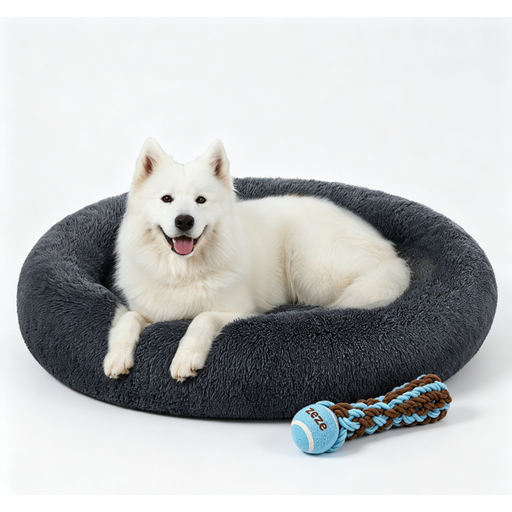
Why it suits this type of buyer: With a diameter of 120 cm, this bed is designed for large dogs or households with several pets. Its spacious shape accommodates a range of sleeping positions.
The product details specify a removable, machine-washable cover and rubber dots on the base. The inner filling should be aired, not machine-washed, according to the instructions.
120 × 20 cm, plush fabric, PP cotton filling, removable cover and non-slip rubber dots.
We’ve put together a complete, up-to-date list of products that meet these strict selection criteria and current European safety regulations.
Many models are vacuum-packed. Once you’ve unpacked the bed, shake and plump it gently, then give the filling time to regain its shape. Some models may need 24 to 48 hours. Place the bed on a dry, level surface and, if you like, put a familiar blanket or toy in the middle.
For the first few days, check that your dog can turn around, get up and get out comfortably. Keep an eye on your dog if they tend to chew. Stop using the bed if the stitching, zips or filling become damaged.
According to product descriptions, the high, rounded sides can create a cosy, enclosed space to rest. This may suit dogs who like to curl up. However, a bed isn’t a substitute for support if your dog’s anxious behaviour persists. Choose a quiet spot and let your dog get used to the bed gradually.
It depends on how often the bed is used, your dog’s coat and how dirty it gets. Remove hair between washes, and wash the cover when it looks dirty or starts to hold odours. Always follow the care label. For many models, the inner filling isn’t machine-washable.
Measure your dog from nose to the base of their tail while they’re stretched out, then allow extra room to move. Compare this measurement with the flat sleeping area, not just the overall diameter. A 60 or 70 cm bed may suit a small dog; medium and large dogs often need 80 to 140 cm, depending on how they sleep.
