
Vandaag of morgen in huis

Kwaliteit gegarandeerd

Welkomstaanbiedingen ontgrendelen: GRATIS bezorging | Tot 80% korting | Gratis 30 dagen JoyPlus-proefperiode
Download de app
A donut dog bed for large dogs provides a round sleeping spot with raised sides. It’s particularly suited to dogs who like to curl up, rest against a soft edge or have a regular place to relax indoors. However, not every fluffy design is suitable for a medium-sized or large dog.
When choosing a bed, look beyond the colour and cosy appearance. The size, washability and stability on the floor will determine whether it remains comfortable and practical to use.
On a dog bed with raised sides, the sides take up some of the overall surface area. So a diameter of 90 cm doesn’t mean your dog has 90 cm of clear sleeping space. Measure your dog while they’re lying comfortably, then allow extra room for turning around and stretching out.
A 90 cm bed may suit medium-sized dogs. For large breeds or dogs who like to stretch out, 120 cm or 140 cm is often more practical. Always check the product specifications rather than relying on the label “for large dogs”.
Some designs have only a removable cover. The inner filling may not be machine washable and may need to be spot-cleaned instead. That’s not a problem, as long as you know in advance and can remove the cover easily.
So, check:
Rubber non-slip dots can help limit movement on a smooth floor, but they’re no substitute for a stable surface. On a smooth tiled floor, the bed may still move if your dog is active. Place it flat on a dry floor, making sure it sits fully on the surface. An extra non-slip mat may be useful if the floor is particularly slippery.
A comfortable dog bed should suit the way your dog sleeps. Raised sides are useful for dogs who like to rest their head or feel snug and enclosed. For dogs who often stretch out, a rectangular bed may be more practical than a round donut shape.
Check the listed measurements:
A dog bed for large breeds needs to be wide enough, but the filling should also continue to provide enough support with use. The models mentioned use PP cotton as filling. The product descriptions say this material is soft and resilient, but the fit will ultimately depend on your dog’s weight and behaviour.
A soft plush dog bed feels warm and comfortable, especially in a draughty corner or on a hard floor. Plush can, however, trap hair and dirt. A low-pile or easy-to-remove cover is therefore simpler to maintain than a bed made entirely from long-pile plush.
Also check how the bed is made. A bed with a removable centre mat is easier to clean than one that’s fully stitched together. Check whether the filling could become exposed if a seam comes loose. If your dog likes to chew, supervise them when they first use the bed.
Use a mild detergent and always follow the care label. Bleach and harsh cleaning products can damage the fabric. Allow a washed cover to dry completely before putting the filling back in.
Check the bed regularly for:
A donut bed is intended as a place to sleep and doesn’t replace a crate, restraint or medical treatment. Brands sometimes use terms such as “calming” or “for anxious dogs”. According to the brands’ own product information, the round edge is designed to create a sense of enclosure. That doesn’t guarantee that a dog will feel less anxious. Give your dog time to get used to their new bed.

Why it suits this profile: The round shape and manageable size make this a straightforward first purchase. It may suit a medium-sized dog who likes to curl up.
The 90 cm diameter is clearly stated. The centre mat can be removed using a zip; according to the product information, the inner mat isn’t machine washable.
Plush cover, PP cotton filling, an edge around 20 cm high and rubber non-slip dots on the base.
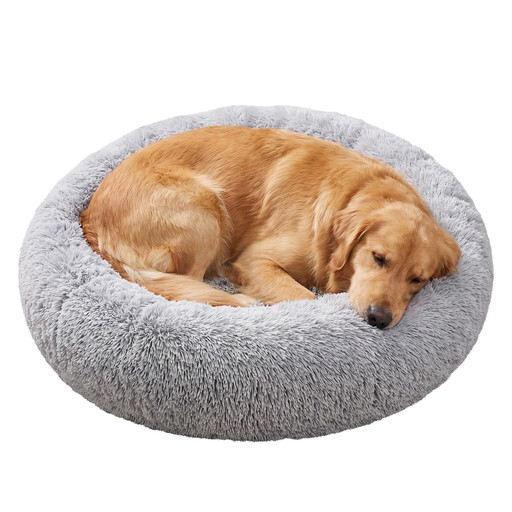
Why it suits this profile: The generous size gives large dogs more room to move and is ideal for homes where a spacious place to relax is a priority.
The dimensions and approximate weight of 3,2 kg are specified. According to the care label, the cover can be cleaned; the inner mat is intended for spot cleaning.
Plush fabric, PP cotton filling, a removable centre mat and a non-slip base with rubber dots.
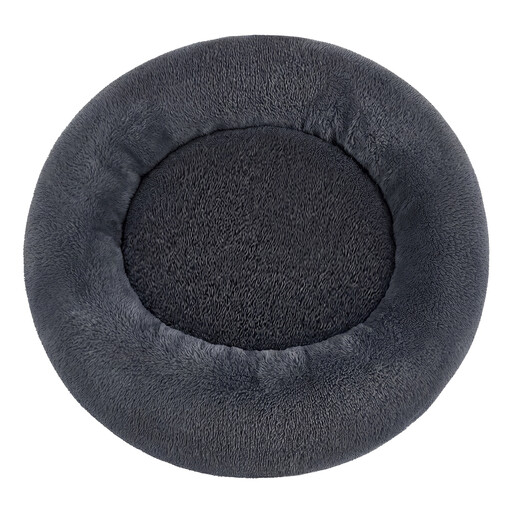
Why it suits this profile: This model can be used in a dog crate or as a separate bed, depending on the space available.
The removable cover and washing instructions are clearly described. The base has rubber dots, but the bed still needs to be placed on a flat, stable surface.
120 cm diameter, plush material, resilient PP cotton filling and a removable, machine-washable cover according to the product information.
We’ve put together a complete, up-to-date list of products that meet these strict selection criteria and the applicable European safety requirements.
Place the bed somewhere quiet where your dog already likes to rest. Once you’ve unpacked it, leave it to air thoroughly and give it a shake, as several models are supplied vacuum-packed. Some product information recommends leaving the bed to expand for 24 to 48 hours.
A familiar blanket or toy can help your dog get to know the bed. Don’t force them to lie in it straight away. And if your dog shows signs of serious anxiety or stress, don’t use the bed as a substitute for proper support.
Measure your dog while they’re lying down, then allow extra room for turning around and stretching out. A 120 cm model may suit many large dogs, while a 140 cm bed offers more space. Check the internal sleeping area too, as the raised sides reduce the usable surface.
It depends on the model. According to the product information, the covers on the beds mentioned can be washed on a gentle cycle. The inner mat or filling usually isn’t machine washable and needs to be spot-cleaned. Always follow the care label.
According to brands’ own product information, a round edge can create a feeling of being enclosed while resting. That doesn’t mean the bed will relieve anxiety or replace behavioural treatment. Choose a quiet spot, introduce the bed gradually and, if the problem persists, ask a vet or animal behaviourist for advice.
