
Vandaag of morgen in huis

Kwaliteit gegarandeerd

Welkomstaanbiedingen ontgrendelen: GRATIS bezorging | Tot 80% korting | Gratis 30 dagen JoyPlus-proefperiode
Download de app
A donut dog bed looks soft and inviting, but not every model suits every dog or cat. A bed may appear spacious in the product photo, while the high edge leaves less room inside. Terms such as “orthopaedic”, “calming” and “water-resistant” are not always explained clearly either.
If you focus only on colour or fluffiness, you could end up buying a dog bed that quickly goes flat, is difficult to wash or slides across the floor. Use these checkpoints to compare a fluffy dog bed based on practical features rather than marketing claims.
A diameter of 70 cm does not mean your dog has 70 cm of clear lying space. The raised edge takes up part of the surface area. Measure your dog while they are lying comfortably, then add some extra room for turning and stretching out.
For a small dog or cat that likes to curl up, 60 cm may be enough. A dog bed for medium-sized dogs often needs to be 70 to 90 cm. For larger dogs, models measuring 100, 120 or even 140 cm make more sense, depending on the actual inner dimensions.
Check whether the cover, central cushion or entire bed can be washed. With various models, the cover is removable and suitable for a delicate wash programme, while the inner filling may only be spot-cleaned or aired.
A dog bed with a removable cover is especially practical for muddy paws, hair and accidents. Also check the fastening: a zip should be well concealed and inspected regularly for damage.
Plush and PP cotton filling provide a soft place to lie, but they do not indicate exactly how well the bed will retain its firmness. A dog that likes lying on its side may benefit more from a firmer core. A dog that curls up may prefer the surrounding edge of a donut bed.
With an orthopaedic dog bed, it is important to examine the construction. Some models use egg-crate foam or other foam structures, while others mainly use polyester or PP filling. The term orthopaedic is not a guarantee of a medical effect. According to the brand’s product description, certain models are designed to provide additional support; this should be regarded as a product specification, not a health claim.
As well as the diameter, pay attention to the height of the edge. A high edge can provide a sense of security for dogs that like resting their head against something. For a dog that stretches out at full length, a flatter soft dog bed may be more practical.
A simple guide:
Always check the size chart and compare it with your pet’s lying length.
Plush, long-pile plush and faux fur feel soft, but they can hold on to hair and dirt. A smoother surface is easier to wipe clean. PP cotton is lightweight and resilient, but may need fluffing from time to time to retain its shape. Foam can provide more structure, but often requires a different cleaning method.
An anti-slip dog bed generally has rubber dots or anti-slip fabric on the underside. This helps prevent movement, but only works well on a flat, dry floor. On smooth tiled flooring, placing a rug underneath the bed can provide extra stability.
Many donut beds are vacuum-packed. After unpacking, give the bed time to return to its original shape; some models specify 24 to 48 hours. Shaking it out and gently fluffing it helps distribute the filling.
Always wash the bed according to the care label. Do not use bleach or harsh cleaning products, and allow all parts to dry completely before using the bed again. Check the seams, zips and loose fibres regularly. If your pet likes chewing, supervision during the first introduction is advisable.

Why it suits this profile: A compact model for small dogs and cats that like curling up. The 60 cm diameter takes up little space in a flat or bedroom.
The product information states the diameter, a height of 20 cm, removable central filling and rubber anti-slip dots. This allows you to check the size and care requirements in advance.
Plush surface, PP filling, removable central cushion and a base with rubber dots.
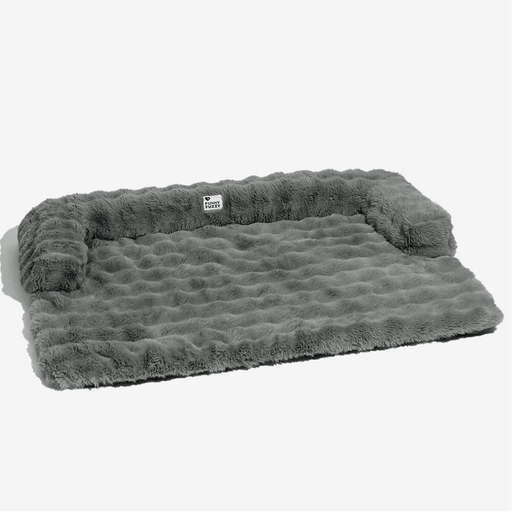
Why it suits this profile: A good choice for anyone looking for more than softness and wanting a more structured place for a dog or cat to lie.
The product description mentions a removable, machine-washable cover and an anti-slip layer. According to the instructions, the inner egg-crate foam core should be cared for separately.
Faux fur, egg-crate foam, raised headrest and removable cover. According to FUNNYFUZZY’s own information, the model is suitable for dogs and cats.
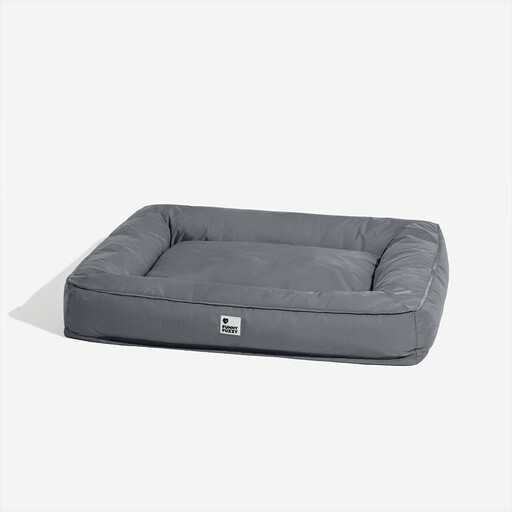
Why it suits this profile: Designed for large dogs and situations where dirt or moisture are more common, such as a dog that goes straight to its bed after being outdoors.
The product information specifies water-resistant Oxford fabric and a fully removable construction. The inner cushion should be spot-cleaned and all parts must be allowed to dry completely.
Water-resistant Oxford fabric, raised edge, surrounding support and machine-washable cover. The manufacturer describes the model as suitable for large dogs.
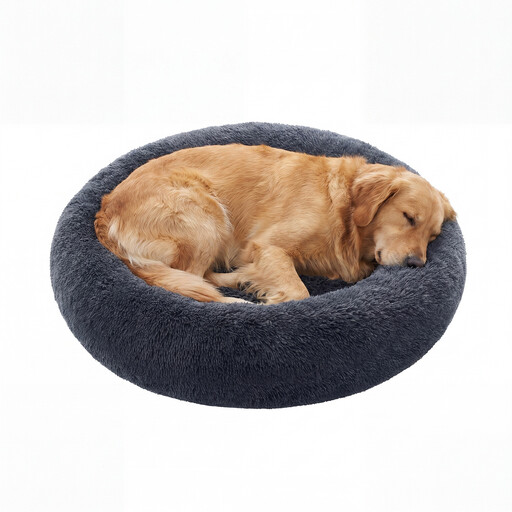
Why it suits this profile: Its generous dimensions are intended for large dogs that do not only sleep curled up, but also like to stretch out at full length.
The product details state 140 × 140 × 20 cm, removable central filling and an anti-slip base. This makes the available space and care requirements easier to assess in advance.
Large surface area, plush fabric, resilient PP filling, removable washable parts and rubber anti-slip dots.
We have put together a complete, up-to-date list of products that fully meet these strict selection criteria and the applicable European safety regulations.
Measure your dog from nose to the base of the tail while they are lying comfortably. Allow extra room for turning and compare this with the inner dimensions, not just the outer dimensions. For small dogs and cats, 60 cm may be suitable; larger dogs often need 90 cm or more.
First, remove the central cushion or inner filling from the cover. Only wash parts that the care label states are machine-washable, usually on a gentle programme. The inner filling can often only be aired or spot-cleaned. Allow everything to dry completely before putting the bed back together.
The lifespan depends on your pet’s weight, sleeping habits, washing routine and chewing behaviour. Fluff up the filling regularly, avoid heavy pressure during storage and check the seams and zips. Replace the bed when the filling becomes visible or the fabric becomes damaged.
