
Vandaag of morgen in huis

Kwaliteit gegarandeerd

Welkomstaanbiedingen ontgrendelen: GRATIS bezorging | Tot 80% korting | Gratis 30 dagen JoyPlus-proefperiode
Download de app
A donut dog bed may look simple at first glance: a round bed with soft padding and raised sides. However, models vary considerably in size, filling, maintenance and stability. Choosing the wrong one could mean your dog does not have enough room, the bed quickly loses its shape or cleaning becomes unnecessarily difficult.
So do not rely solely on photos or words such as “calming” and “extra soft”. Focus on measurable features such as the diameter, the height of the edge, the material, washability and the underside.
With a round dog bed, the raised edge takes up part of the surface. A 70 cm bed therefore does not provide 70 cm of flat sleeping space. Measure your dog both curled up and stretched out. Then add enough room for movement.
A small dog bed for small dogs can still feel cramped for a dog that likes to stretch out. With a dog bed for medium-sized dogs, it is wise to pay extra attention to the internal measurements. For large breeds, 120 or 140 cm models are often more practical, provided you have enough floor space.
Check which part can go in the washing machine. With many models, the central cushion insert can be removed using a zip. According to the product information, the cover can be washed on a delicate cycle, while the inner filling may only be cleaned locally or aired.
This difference matters when dealing with muddy paws, shedding or accidents. A dog bed with a removable cover is generally easier to maintain than a completely enclosed bed. Always follow the care label and do not use bleach or harsh cleaning products.
Rubber dots on the underside can help reduce sliding, but they do not automatically make a bed completely stable. Place an anti-slip dog bed on a flat, dry floor and check that the entire underside is in contact with the ground. On smooth tiles, extra grip underneath the bed may still be useful.
A donut-style bed is particularly suitable for dogs that like to sleep curled up or rest their head against an edge. Measure your dog from nose to the base of the tail and add room to turn around. Use this guide as a starting point:
The stated size is the product measurement and may vary by a few centimetres with soft, stitched fabric. Vacuum-packed models should be shaken out after unpacking and left to expand.
A plush dog bed feels soft and is suitable for dogs that like to nest. Polyester plush and long-pile fleece are commonly used materials. Pay attention to the fabric’s texture: long fibres may feel comfortable, but can sometimes require more attention when it comes to hair and dirt.
PP cotton or PP filling is used for the sleeping area and the edge. Product descriptions often call this resilient or shape-retaining. This is a material specification, not a guarantee of a particular lifespan. Fluffing the bed regularly helps keep the filling evenly distributed. For older dogs, a sufficiently thick sleeping layer may be more comfortable, but a donut bed is not a substitute for veterinary advice or an orthopaedic aid.
For intensive use, choose a washable dog bed with a zip and removable cover. Check in advance:
An extra blanket over the sleeping area can help you remove hair and dirt more quickly. Only put the cover back on once it is completely dry, so moisture does not remain in the filling.

Why it suits this profile: This 70 cm round model is intended for small to medium-sized dogs and has a straightforward design with a plush cover, PP cotton filling and a removable centre section.
The diameter and height of 70 x 20 cm are specified, allowing you to compare the available space with your dog’s length in advance. The product information also mentions a zip and an anti-slip base.
70 cm diameter, PP cotton filling, plush fabric, removable central cushion and rubber anti-slip dots.

Why it suits this profile: The 100 cm diameter gives medium-sized to larger dogs more sleeping space. The product description mentions a removable outer cover, plush fabric and PP cotton filling.
The generous size prevents you from focusing only on the soft appearance without checking the sleeping area. According to the product information, the cover can be washed on a delicate cycle.
100 cm diameter, 20 cm height, removable cover, machine washable according to the label and anti-slip base.
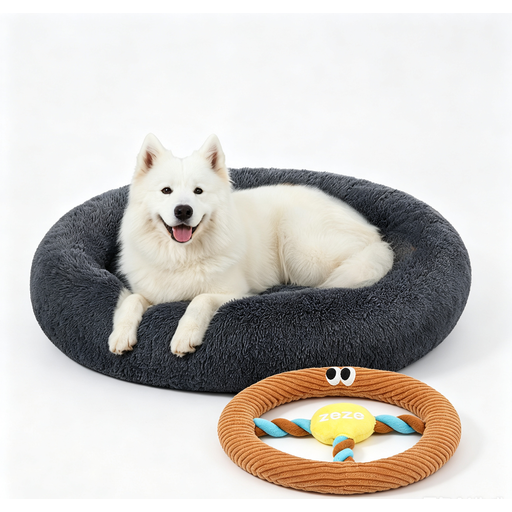
Why it suits this profile: This large model is designed for large dogs and households with several small pets. The 120 cm diameter provides room to turn around and stretch out.
The generous outer dimensions are clearly specified. For maintenance, the product information mentions a removable cover and inner filling that is not machine washable but can be cleaned locally.
120 cm diameter, 20 cm height, PP cotton filling, removable cover and rubber anti-slip dots.
We have put together a complete, up-to-date list of products that fully meet these strict selection criteria and the applicable European safety regulations.
Place the bed in a quiet spot where your dog already likes to lie. A flat surface helps prevent unnecessary sliding. After unpacking, allow a vacuum-packed soft dog bed to expand properly; some models recommend leaving it for 24 to 48 hours. A familiar blanket or toy can make the transition easier.
Check the seams, zips and fabric regularly. If there are loose threads, tears or exposed filling, stop using the bed. Dogs that like chewing their bed need extra supervision. A donut bed is also not a crate, restraint or substitute for supervision.
According to product descriptions, a raised, round edge can create a feeling of being enclosed. Brands sometimes use the term “calming” for this. This is a claim from the brand’s product description and is not a guaranteed effect. Above all, consider whether your dog likes lying against edges and introduce the bed gradually.
This depends on use, shedding and dirt. Shake the bed out regularly and remove hair in between washes. Wash the cover as soon as it is visibly dirty or smells unpleasant, always following the care label. Allow all parts to dry completely before putting them back together.
Measure your dog while lying down and compare the measurement with the product’s full diameter. For a dog that likes sleeping curled up, 60 or 70 cm may be sufficient. Dogs that sleep stretched out need more room. If in doubt, a larger size is usually more practical, provided the bed fits in the chosen room or crate.
